
A telecom team has not yet launched a new hold-message script, and it can still choose who hears it. One proposal plays the new script for everyone, then compares those customers with their own prior month. Which comparison is the stronger test of the script?
Select an answer to reveal the explanation.
Short Explanation
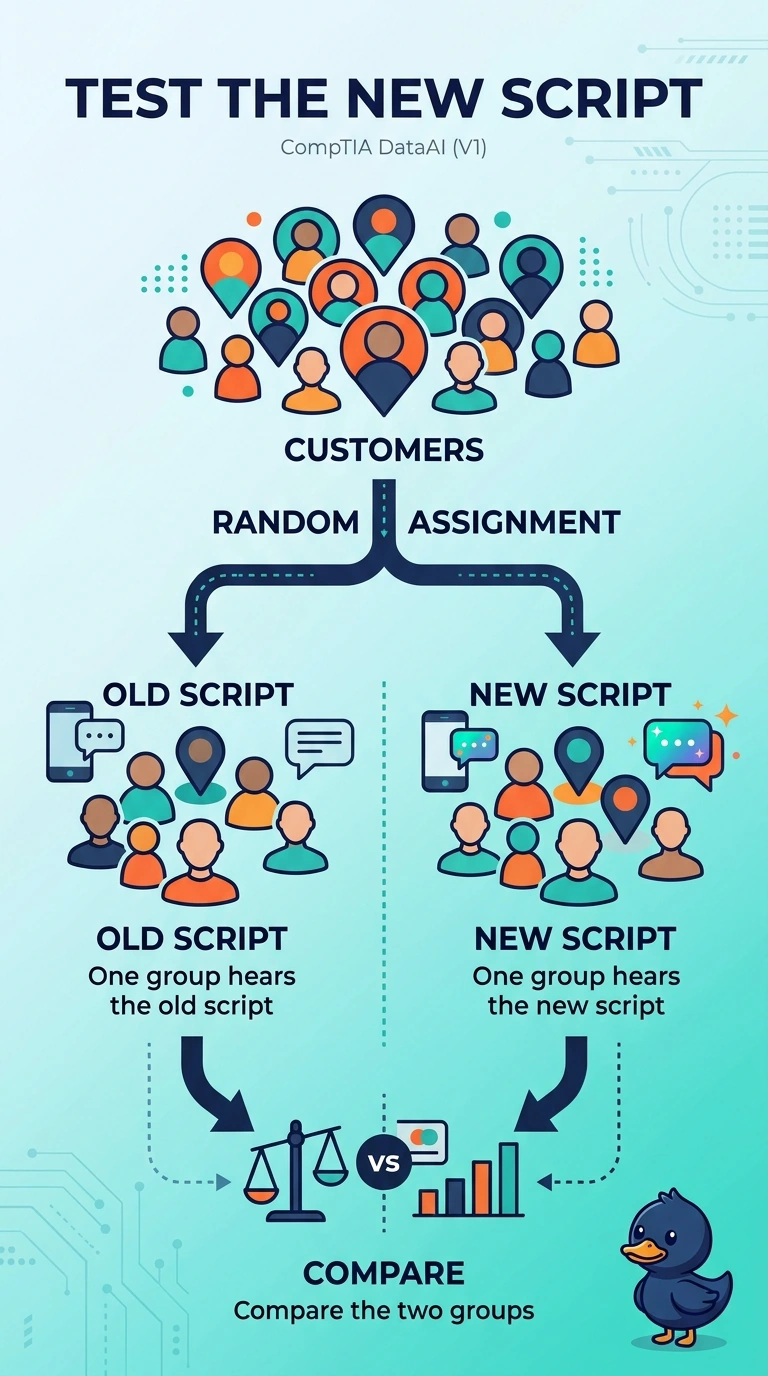
Comparing a customer with their own prior month mixes the new script with everything else that month changed. You get a stronger test by randomly assigning customers to the new script or the old one and comparing those groups. The trap is a raw before-after on the same people.
Full Explanation
An A/B test that assigns each customer to the new script or the old one by chance, then compares the groups, is the stronger test while the team can still choose who hears the script. Chance assignment balances other differences at the start, so the contrast is about the script rather than about who happened to call. A before-after on the same customers, after everyone hears the new script, mixes the script with whatever else changed that month, including season and staffing. Letting agents choose who hears the script lets agent preference separate the groups, so the contrast is no longer the script alone. Comparing the busiest hour with the quietest hour changes the workload and includes no assignment of the script. Exam caveat: a before-after can still describe what happened to these customers and fail as an estimate of the script's effect, because the month changed too. Operational check: review the assignment log, confirm each customer was placed by chance, and confirm the reported contrast is between the two assigned groups rather than between a customer and that customer's prior month.