
A logistics planner models weekly trailer counts that climb for months, so the mean is not stable. The analyst differences the series until that level stops drifting, then fits an ARIMA model. What did that differencing step accomplish?
Select an answer to reveal the explanation.
Short Explanation
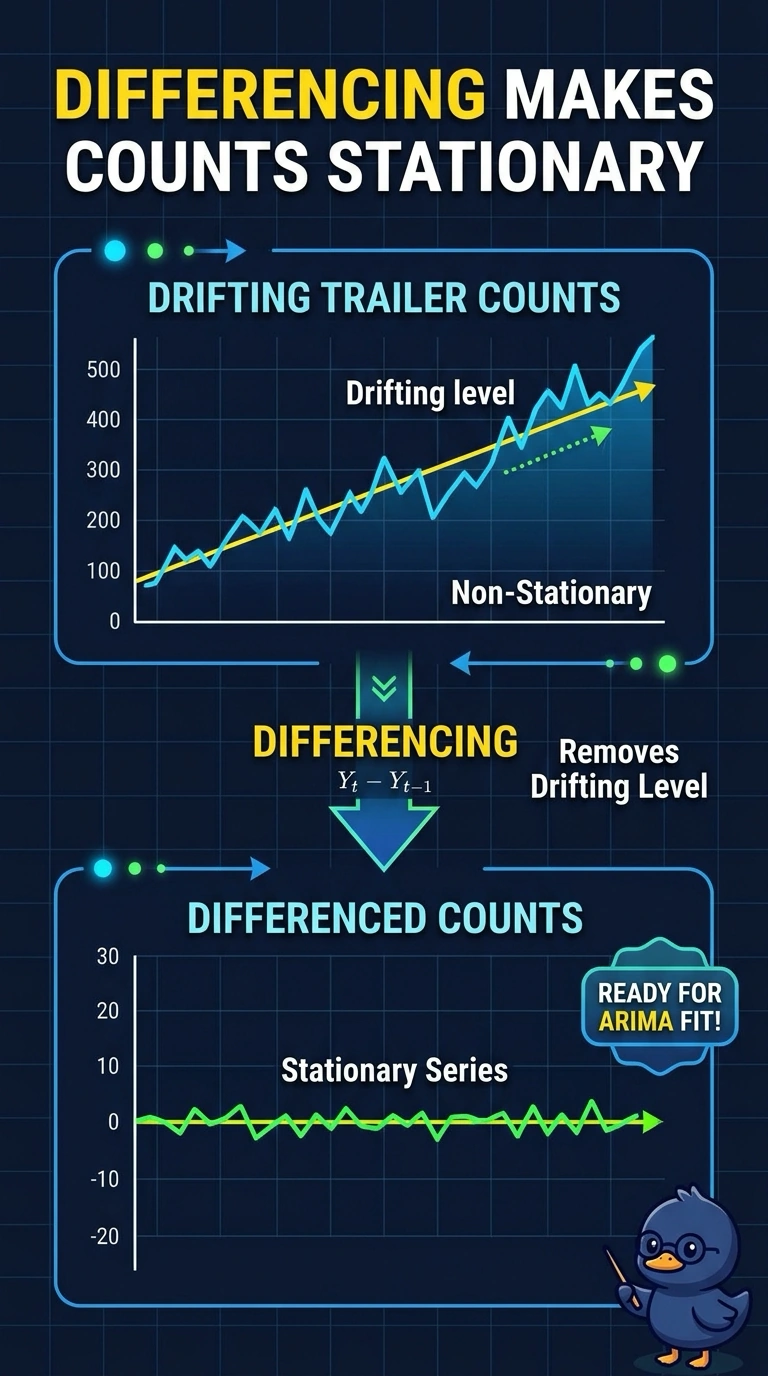
You cannot measure the height of a rising escalator with a ruler glued to one step. Differencing takes the climb out of the weekly trailer counts so ARIMA can treat the result as stationary. The trap is thinking a seasonal tag, or a plain average, did that job.
Full Explanation
ARIMA modeling of a series with a drifting mean starts by differencing until that drift is gone and the result can be treated as stationary. Here each difference subtracts a prior level from the weekly trailer count, so a months-long climb becomes a series that fluctuates without a wandering mean, which is the series the ARIMA fit then uses. Fitting a separate level for each week of the year can describe a repeating seasonal shape, but it leaves a climb that continues across years still in the data. Replacing the counts with their overall average erases the series rather than stabilizing its mean. Recasting the docks as a panel that follows the same trailers is a choice about study units over time, not the differencing operator inside ARIMA. Exam caveat: differencing can be repeated if the level still drifts, but extra differencing without a remaining drift can distort the series. Operational check: plot the differenced weekly counts and confirm the mean no longer trends before accepting the ARIMA specification.