
A factory reliability team records vibration on the same motors every month for two years. A coworker instead wants one snapshot of every motor in the plant, taken on a single day. Which design is the monthly follow-up?
Select an answer to reveal the explanation.
Short Explanation
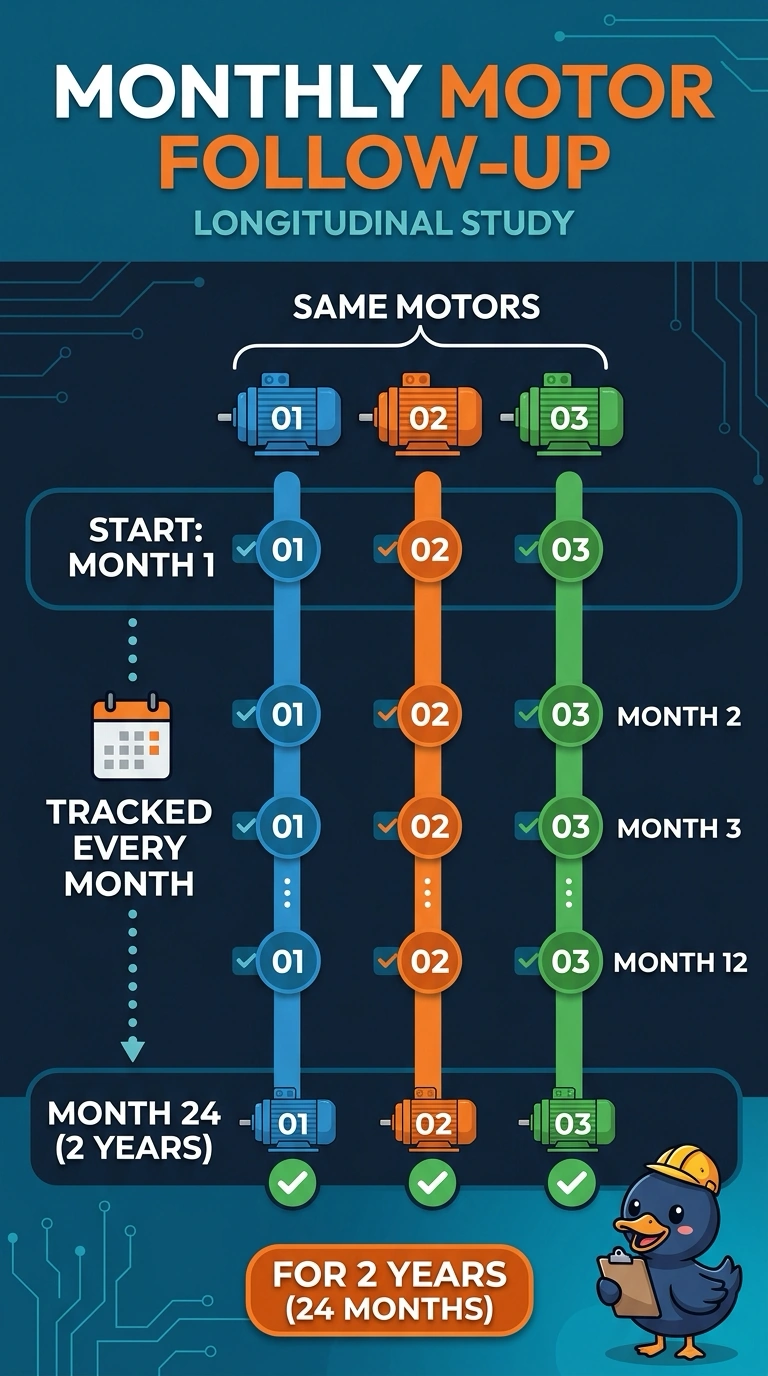
Checking in on the same motors month after month is a diary, not a one-day class photo. You are running a longitudinal study of those motors, unlike a single cross-section of the plant on one day. The trap is calling any file with a date column a longitudinal study.
Full Explanation
A longitudinal study measures the same units repeatedly over time. The reliability team returns to the same motors each month for two years, so the monthly follow-up is longitudinal, while the coworker's single-day snapshot of every motor is one cross-section. A repeated cross-section would draw a fresh set of motors each month and would not track the same units, which is not what the team recorded. Survival analysis of time-to-failure, especially a version that drops motors still running, answers a different question and is not the name of this repeated vibration design. A randomized trial would assign motors to maintenance policies before comparing outcomes, and the stem describes measurement of the existing motors, not assignment. Exam caveat: a date column on a new sample each month is still a repeated cross-section, not a follow-up of the same motors. Operational check: confirm the motor identifiers repeat across the monthly files rather than a new draw of motors appearing each month.