
A factory compares the mean tensile strength of fiber from two suppliers. Batches are independent, and each supplier's strengths look roughly bell-shaped. Which test fits that difference in means?
Select an answer to reveal the explanation.
Short Explanation
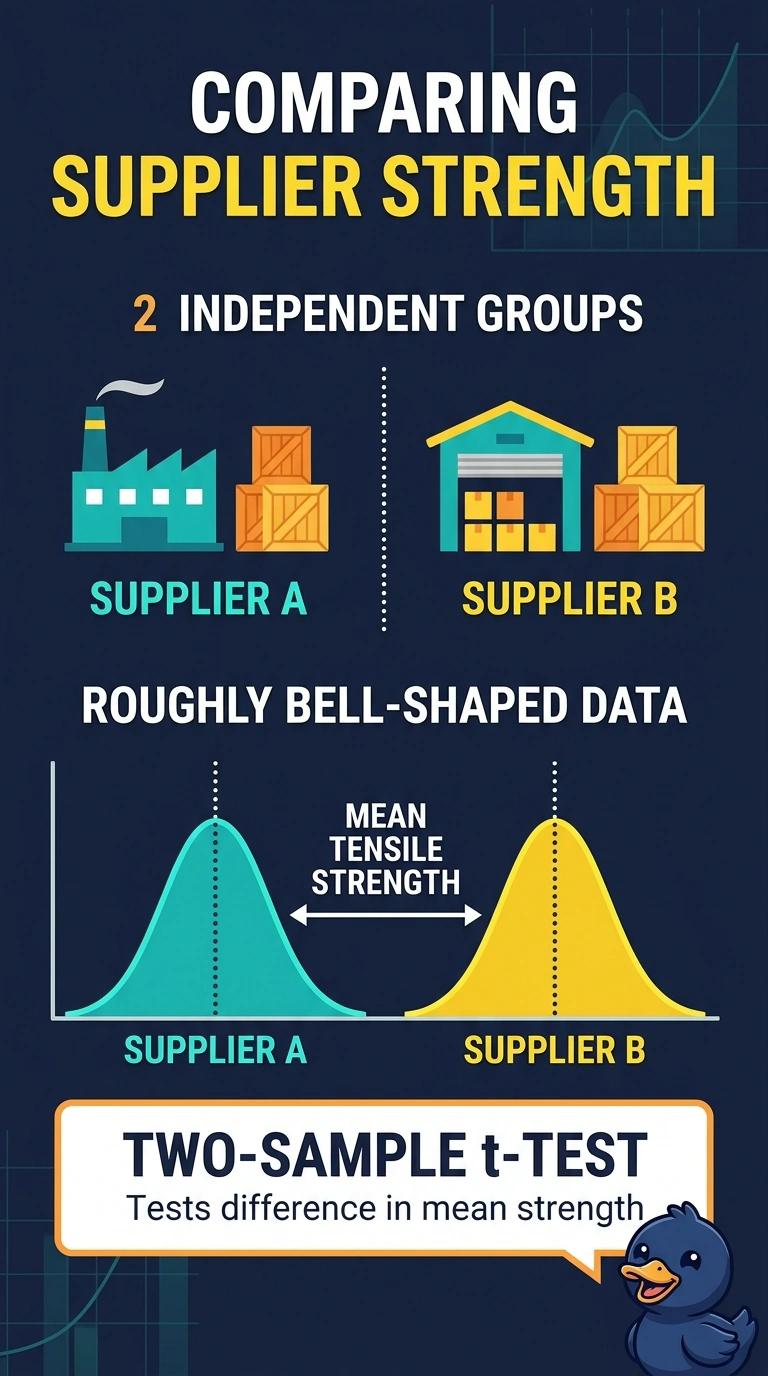
Picture two separate piles of fiber, one from each supplier, and you only want to know whether the average strengths differ. That comparison is a two-sample t-test. A paired test, a chi-square on labels, or an ANOVA built for three or more groups answers a different question.
Full Explanation
A two-sample t-test compares the means of a continuous measurement between two independent groups when each group's values are roughly bell-shaped and the batches are not matched. Tensile strength is continuous, there are exactly two suppliers, and the batches are independent, so the test speaks directly to the mean difference the factory cares about. A chi-square test of association needs two categorical factors, such as supplier name against a pass-or-fail label; it does not compare mean strength. One-way ANOVA is the tool for three or more group means, and this study has only two suppliers. A paired t-test requires matched measurements, such as the same unit tested under both conditions; independent batches from separate suppliers do not form those pairs. Exam caveat: the two-sample t-test addresses whether the means differ, not whether every batch from one supplier beats every batch from the other. Operational check: confirm each batch belongs to only one supplier and that no lot was measured under both suppliers before the two-sample test is run.