
A grocery chain's analyst builds a 95% confidence interval for mean basket size from a random sample of receipts. A manager says there is a 95% chance the true mean sits inside that particular interval. Which reading of the interval is right?
Select an answer to reveal the explanation.
Short Explanation
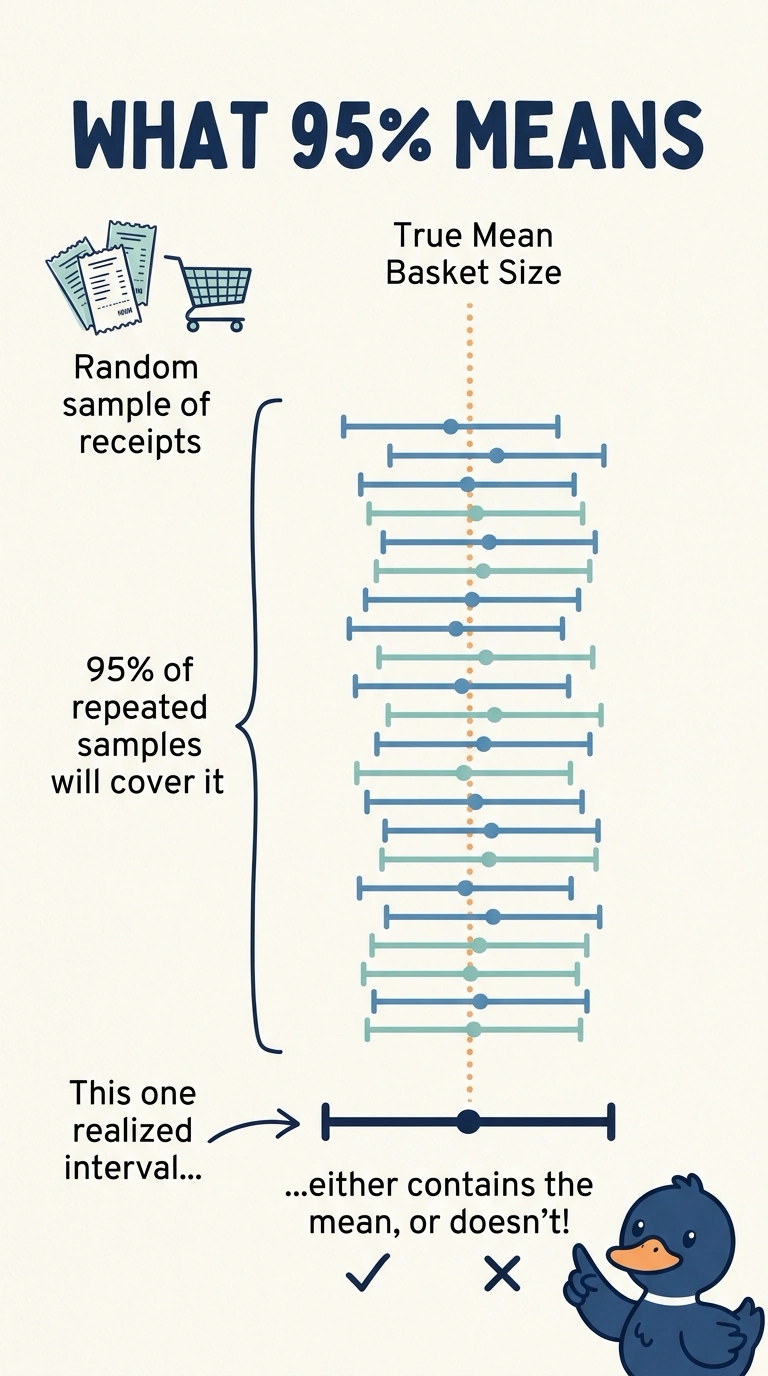
A confidence interval is a net you cast with a known method, not a promise that this one cast already holds the fish. The trap is reading the percentage as the chance the mean sits inside the interval you just computed. That percentage belongs to the procedure over repeated samples, and this finished interval either contains the mean or it does not.
Full Explanation
A 95% confidence interval comes from a procedure that, before any receipt is drawn, is built so that 95% of the intervals it produces will contain the fixed mean basket. After this sample is drawn, the endpoints are ordinary numbers and the mean is either inside them or outside them. The percentage is the long-run coverage of the method, not a probability attached to the single interval already printed. Treating that printed range as a 95% chance of containing the mean moves a property of the procedure onto one realized interval. A span meant to hold most individual baskets is a prediction interval about new observations, which answers a different question from the mean. Raising the confidence level forces the procedure to cover the mean in a larger share of repeated samples, so the interval gets wider for the same sample, and it still is not a probability statement about this one range. A normal approximation can be reasonable for the sampling distribution of the mean, but that approximation does not convert the computed interval into the probability that the parameter lies inside it. Exam caveat: a Bayesian credible interval does assign a probability to a parameter given the data, and that wording belongs to a different object than this frequentist interval. Operational check: confirm the report says repeated samples from the same procedure would cover the mean 95% of the time, rather than that this interval has a 95% chance of holding the mean.