
An AI tool reviews the customer master table and suggests address corrections, which are currently applied to the table automatically. Audits find that some corrections were wrong and overwrote valid addresses. The business wants to keep using the tool. Which control best addresses the problem?
Select an answer to reveal the explanation.
Short Explanation
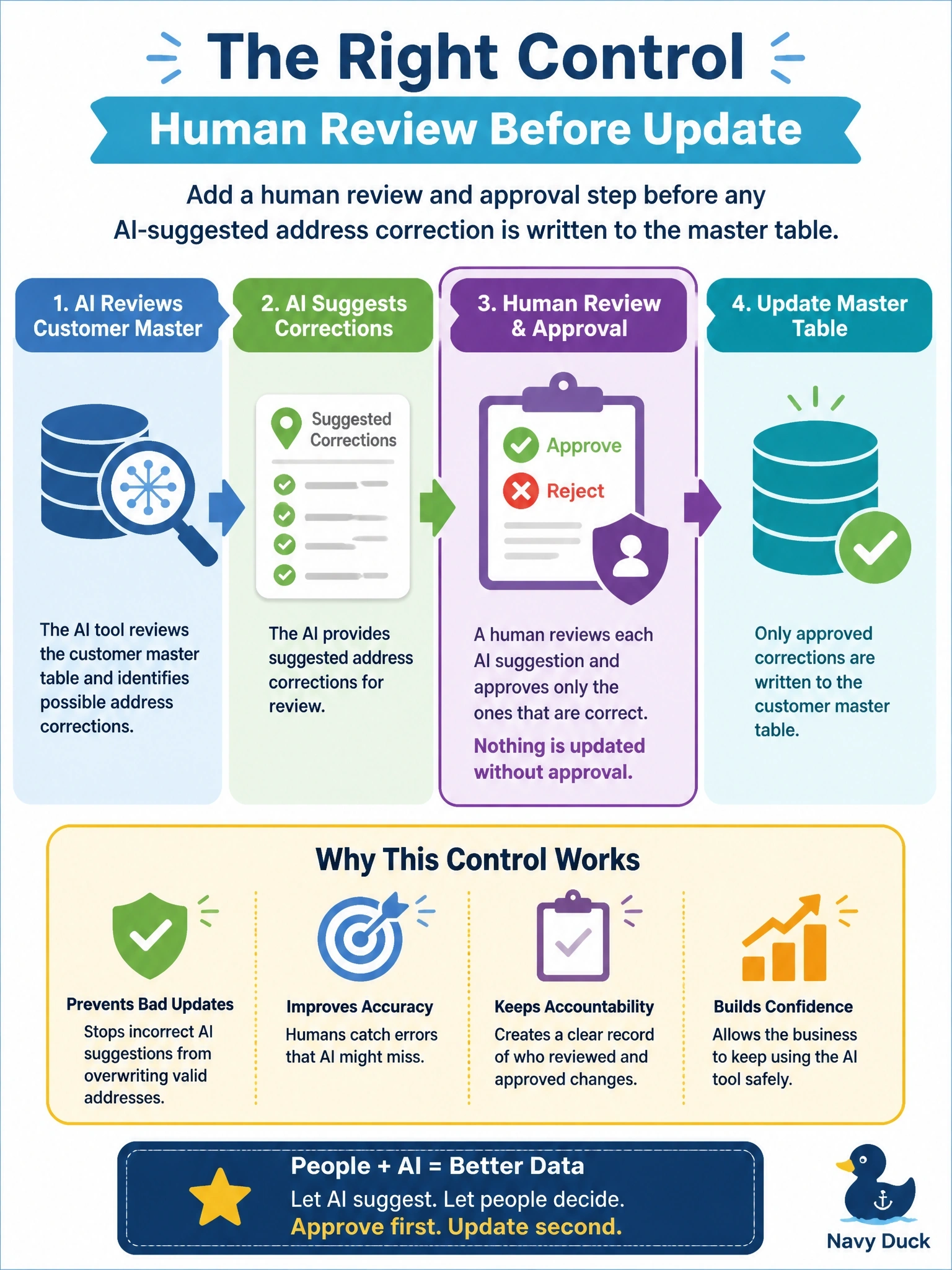
AI is a great intern: fast, tireless and occasionally confidently wrong. Human-in-the-loop means a person signs off before the intern's changes hit the master records. Running the same unchecked updates at 2 a.m. doesn't make them any less wrong; it just means you'll notice later.
Full Explanation
Human-in-the-loop is a design pattern in which a person reviews, approves, corrects or rejects AI output at defined points, especially where errors are costly or hard to reverse. Master data such as customer addresses feeds billing, shipping and compliance processes, so an incorrect automated change can propagate widely. Routing AI-suggested corrections into a review queue, where a data steward approves them before they are written, keeps the tool's productivity while preventing wrong changes from reaching the master table; reviewer decisions can also be fed back to improve the tool. Scheduling the automatic updates for off-peak hours changes only when the errors are applied, not whether they occur, so valid addresses would still be overwritten. Raising the reported confidence scores would cause more suggestions to be applied automatically without making them more accurate, increasing the number of bad changes. Disabling logging removes the audit trail needed to detect and reverse wrong changes and would violate basic data governance; the problem is too little oversight, not too much. Exam caveat: human-in-the-loop can be targeted, for example auto-applying only high-confidence, low-impact changes while routing others to review, but consequential changes need a person. Operational check: measure the error rate of suggestions approved by reviewers against the earlier automatic rate and confirm every applied change records who approved it.