
A new data platform is being designed. Stakeholders ask who should decide how long customer data is retained and which business roles may view it, and who should configure the database to enforce those decisions. Which split of responsibilities reflects sound data governance?
Select an answer to reveal the explanation.
Short Explanation
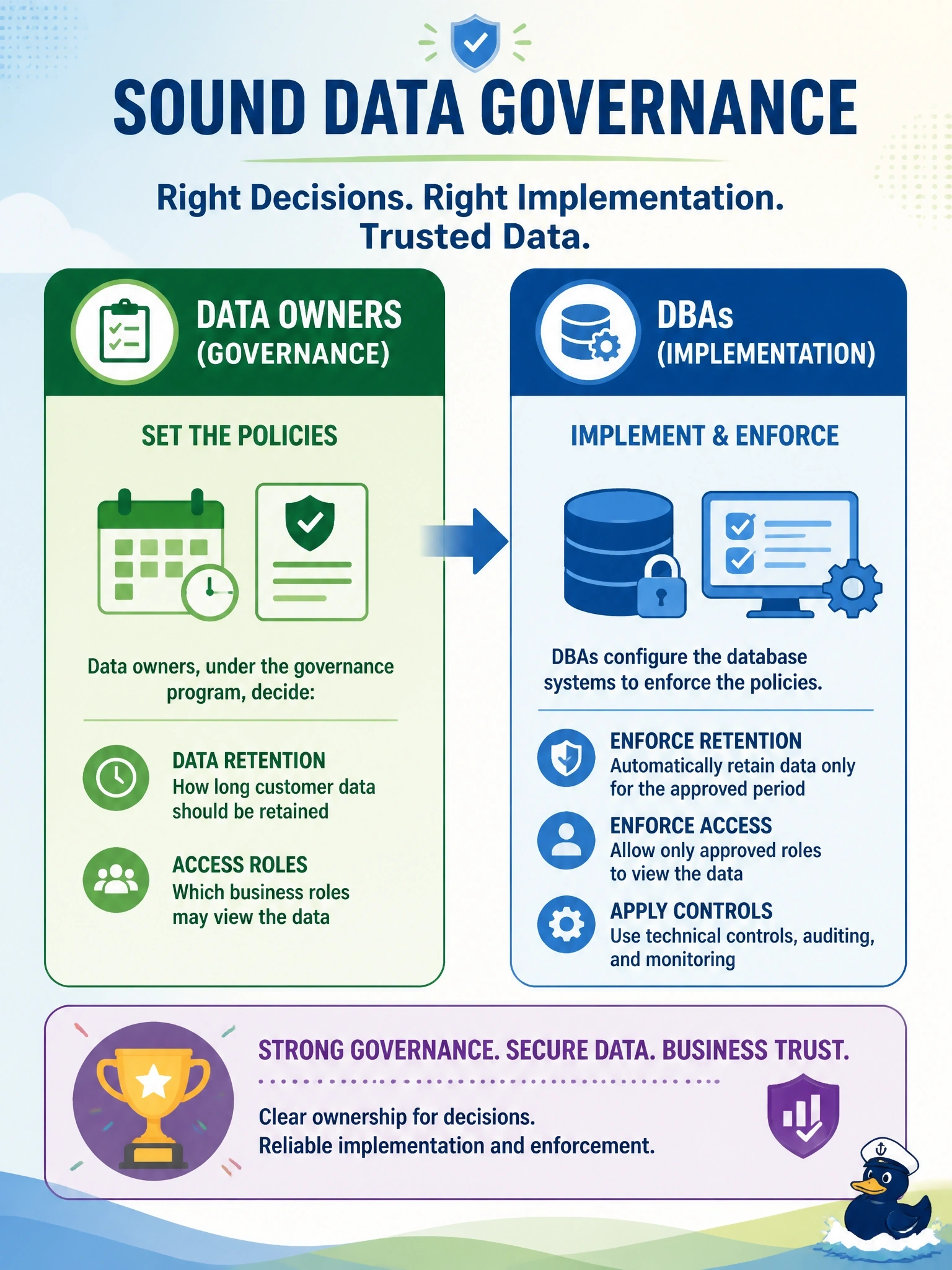
Think of governance like your building's rules: the owners decide who gets which keys and how long things are kept, and the facilities team installs the locks. DBAs are the facilities team, and they make the rules work in the database. The trap is assuming the people with the technical access should also make the business decisions.
Full Explanation
Data governance establishes accountability for data through roles, policies and processes. Data owners, usually business leaders accountable for a data domain, working within a governance council or program alongside legal and compliance, decide classification, retention periods and who may access the data based on business need and regulatory obligations. Data stewards help define standards and quality rules. DBAs and other custodians implement those decisions technically: configuring roles and permissions, scheduling retention purges, enabling auditing and reporting compliance back. Having DBAs set the policies confuses technical capability with business accountability; they may lack the legal and business context, and it concentrates both decision and enforcement in one role, weakening oversight. Embedding policy in application code scatters rules across systems, makes them hard to audit and leaves direct database access uncontrolled. A cloud provider's defaults are generic settings; under the shared responsibility model, the customer remains accountable for its own data governance decisions. Exam caveat: DBAs still contribute expertise, such as advising on feasibility and the cost of retention options, but the decision rests with the owner. Operational check: confirm each major dataset has a named owner recorded in the data catalog and that every access grant traces to an owner's approval.