
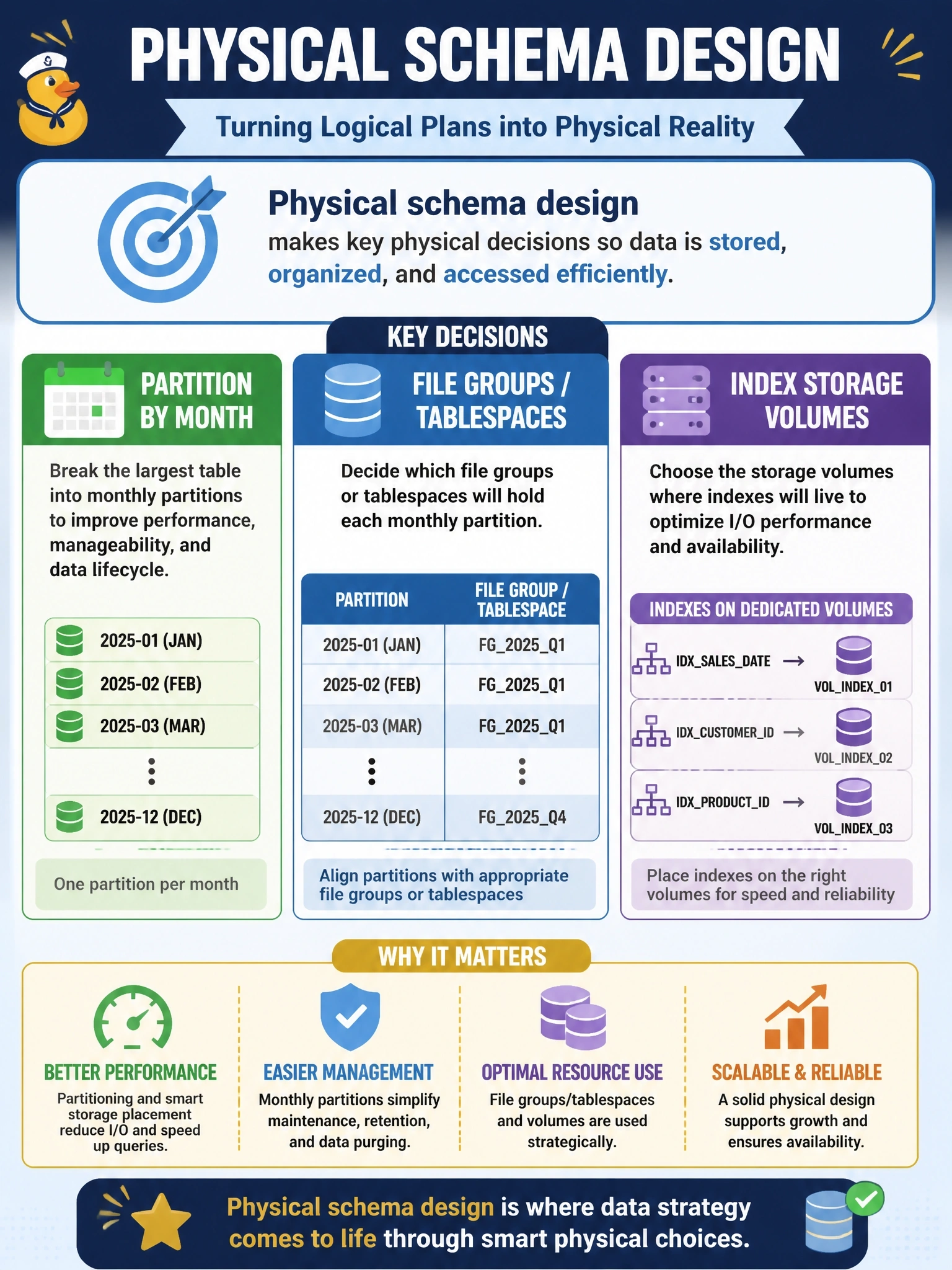
With the logical model approved, a DBA is now deciding how to partition the largest table by month, which file groups or tablespaces hold each partition, and on which storage volumes the indexes will live. Which design activity is this?
Select an answer to reveal the explanation.
Short Explanation
Now you're down in the basement deciding where the pipes and wires actually run. Partitions, file groups and index placement are all about how the data sits on real storage. That's physical design; the trap is calling it logical because it touches tables.
Full Explanation
Physical schema design maps an approved logical model onto a specific database platform and its storage. Typical decisions include data types and lengths, index selection and placement, partitioning strategy, allocation of objects to file groups or tablespaces, placement on storage volumes, compression and fill factors. These choices determine performance, manageability and maintenance windows without changing what the data means. Partitioning a table by month, assigning partitions to file groups and placing indexes on particular volumes are therefore physical design. Logical schema design deals with entities, attributes, keys and relationships independent of storage and was already completed and approved in this scenario. Requirements gap analysis compares current capabilities with required ones during planning and does not produce storage layouts. Entity relationship modeling captures entities and relationships, usually as an ERD, and is part of logical design rather than storage engineering. Exam caveat: physical design is engine-specific; vocabulary such as file group or tablespace varies by product, but the concept of mapping objects to storage is common. Operational check: document each physical decision in the design documentation, then confirm in a test environment that partition elimination occurs for month-filtered queries and that index and data files sit on the intended volumes.