
A three-person development team with no dedicated DBA is launching a new application. It wants the cloud provider to handle engine patching, automated backups and high availability so it can focus on its own schema and queries. Which deployment option fits best?
Select an answer to reveal the explanation.
Short Explanation
When you don't have anybody to mow the lawn, you hire the landscaping service. DBaaS is that service for your database: patching, backups and failover come with it. You still own your schema and your data, though.
Full Explanation
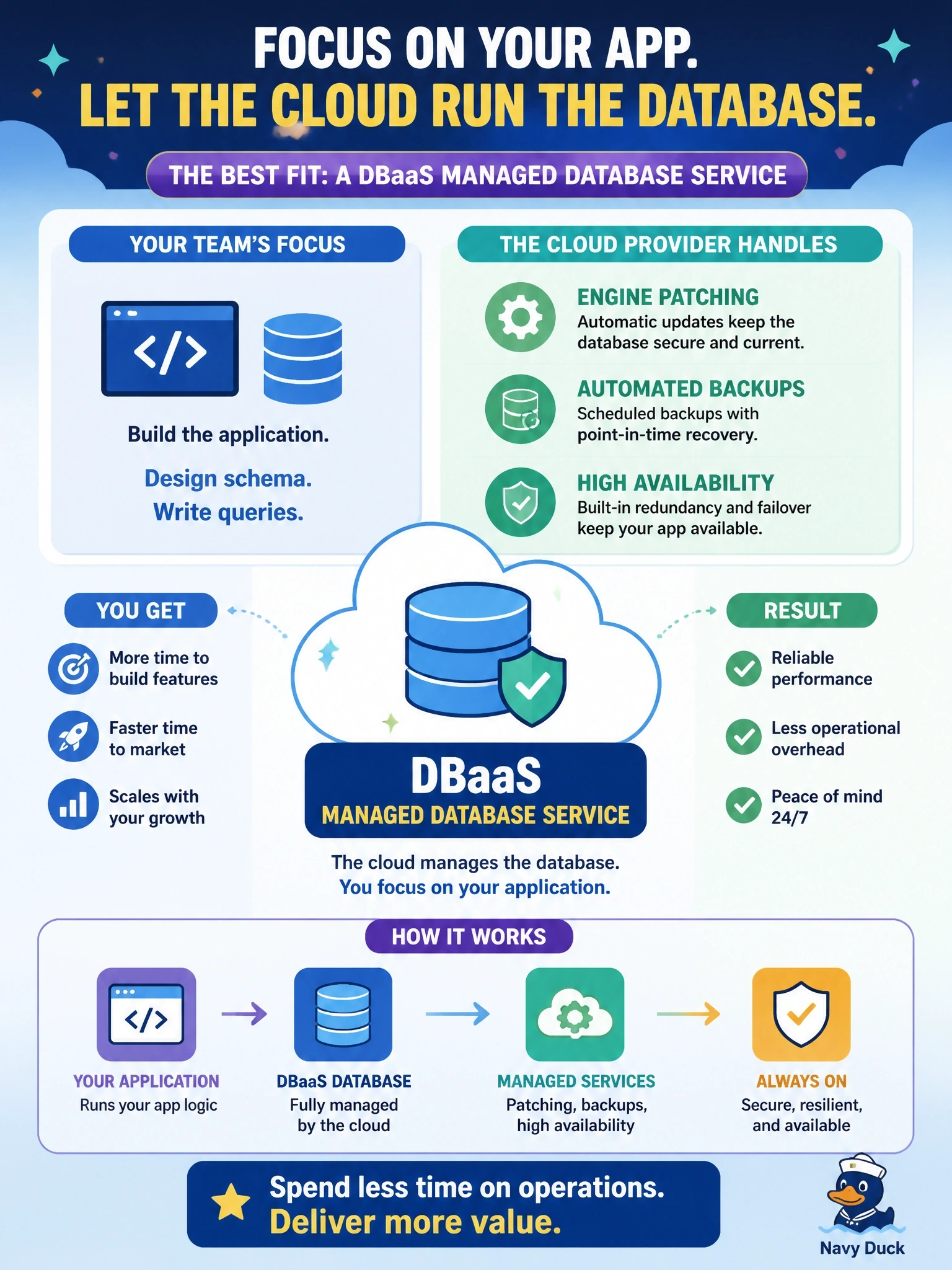
Database as a Service is a managed offering in which the provider operates the database engine and its infrastructure, including installation, patching, automated backups, replication or failover for high availability, and monitoring of the underlying hosts. The customer remains responsible for schema design, query performance, data, user access and configuring options such as backup retention, which matches a small team without dedicated DBA capacity. IaaS virtual machines provide raw compute and storage, so the team would have to install the engine, patch it, script backups and build high availability itself, which is the operational burden it wants to avoid. An on-premises cluster with a vendor support contract still leaves the team to run hardware, operating systems, patches and backups; support contracts provide help, not operations. Rented bare-metal servers in colocation are similar: the facility supplies power, cooling and network, while every layer of software administration remains with the customer. Exam caveat: managed does not mean hands-off for data protection; the customer must still verify backup retention, test restores and secure access. Operational check: review the service's shared responsibility matrix, enable automated backups with the required retention and test a point-in-time restore before going live.