
A sales department uses a hosted SaaS customer relationship management application, and the IT team wonders how its database responsibilities differ from those of a DBaaS deployment. Which statement accurately describes the SaaS case?
Select an answer to reveal the explanation.
Short Explanation
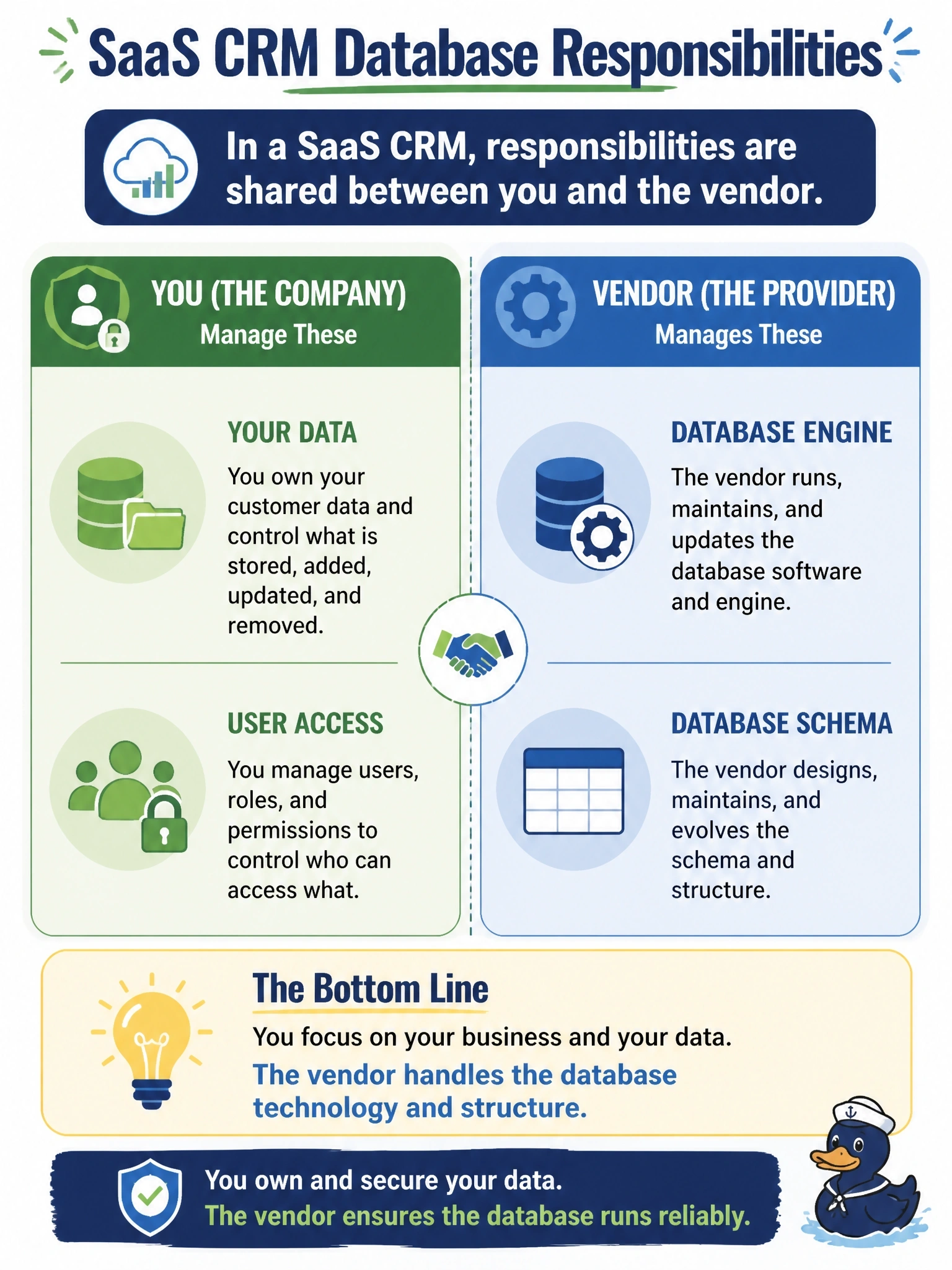
With SaaS you're a tenant using a fully furnished apartment: you look after your stuff and who gets a key, and the landlord handles the plumbing. You don't get to rearrange the database behind the app. That's the difference from DBaaS, where the database itself is yours to design.
Full Explanation
In Software as a Service the vendor delivers a complete application and operates everything beneath it: infrastructure, operating systems, the database engine, the schema and application code. The customer's responsibilities are its data, how the application is configured, which users have access and with what permissions, and compliance obligations for the information it stores. Database-level administration is not available; data is accessed through the application interface, reports, exports or APIs. Claiming the company patches the CRM's database engine reverses responsibilities, since the customer has no access to the engine in a SaaS model. Choosing the engine version and tuning indexes describes DBaaS, where the customer receives a managed database and still owns schema design and query tuning; the stem's point is that SaaS removes even that layer. Managing the operating system describes IaaS, the opposite end of the spectrum, where the customer administers the OS and everything above it. Exam caveat: the customer still retains accountability for data protection in every model, even when the vendor operates the platform. Operational check: confirm in the SaaS agreement how data can be exported, how backups and retention are handled, and how user provisioning and access reviews are performed.