
The business owner of a hosted database service asks the provider for evidence that the agreed availability commitment was actually met during each month of the last quarter. Which SLA component provides this evidence?
Select an answer to reveal the explanation.
Short Explanation
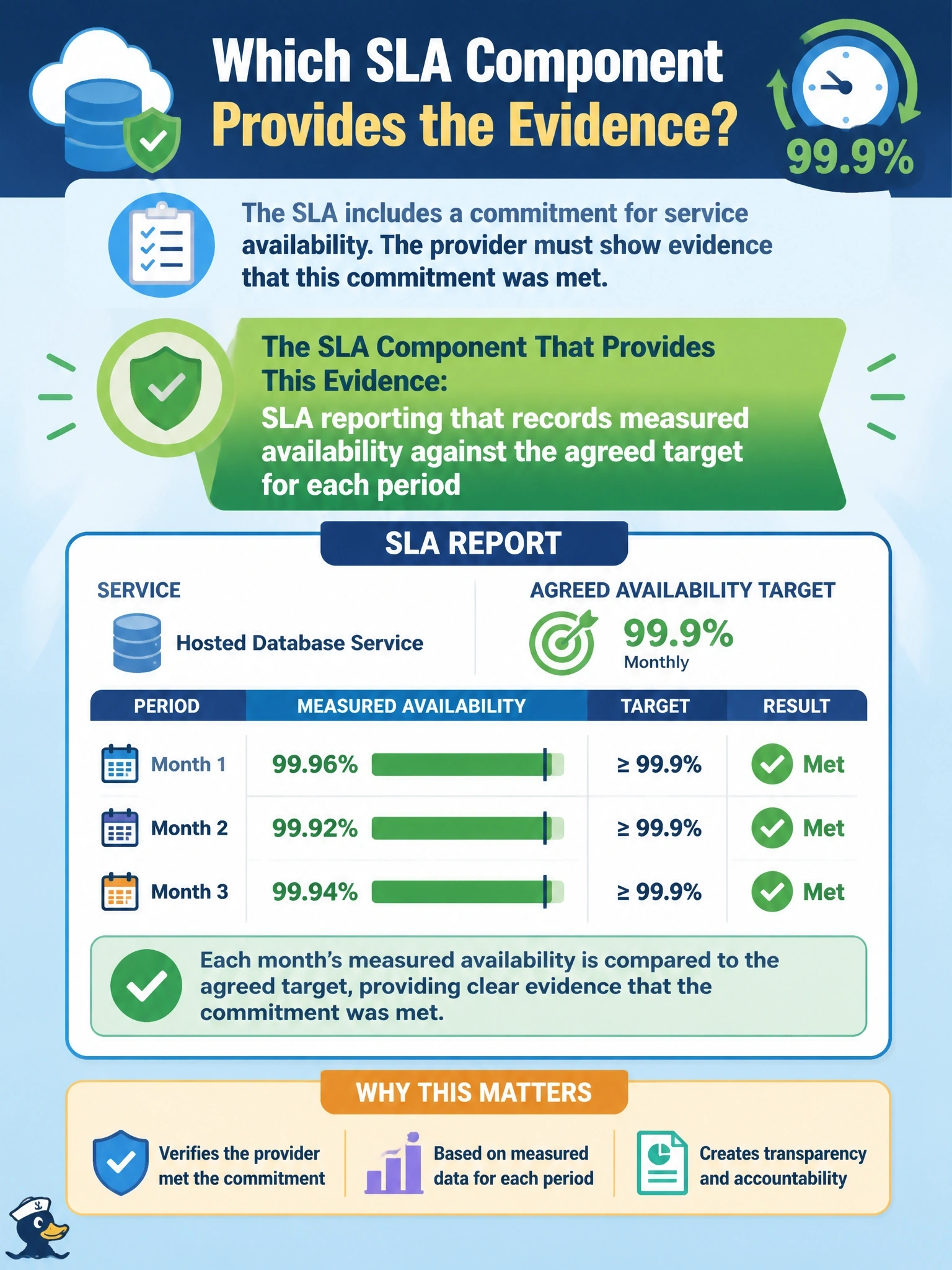
Think of SLA reporting as the report card. The KPI sets the grade you need, and the report shows the grade you actually got each month. Escalation is what happens during a crisis, not the paperwork that proves compliance.
Full Explanation
SLA reporting is the agreed mechanism for demonstrating compliance: at defined intervals the provider publishes measured values for each KPI, the targets, the calculation method, any excluded events such as approved maintenance, and the incidents that affected the result. For availability, the report states measured uptime per month against the committed percentage, giving the business owner verifiable evidence and a basis for service credits if a target was missed. Escalation procedures govern who is contacted and when during an incident; they support compliance but do not document the measured outcome over a period. A gap analysis compares a current state with required capabilities during planning and is not a recurring record of service performance. Resource projection forecasts capacity such as storage growth and has no bearing on whether last quarter's availability target was achieved. Exam caveat: reporting is only credible when the measurement source and method are agreed in advance; otherwise each side's numbers can differ. Operational check: confirm the report's availability figures can be reconciled with independent monitoring data, such as synthetic transaction checks from the customer side, and that exclusions match those defined in the SLA.