
A production database outage has run past the response time agreed in the SLA. The on-call engineer is working the problem but is unsure which manager, vendor contact or business owner must be informed, and at what point. Which SLA element should have answered this?
Select an answer to reveal the explanation.
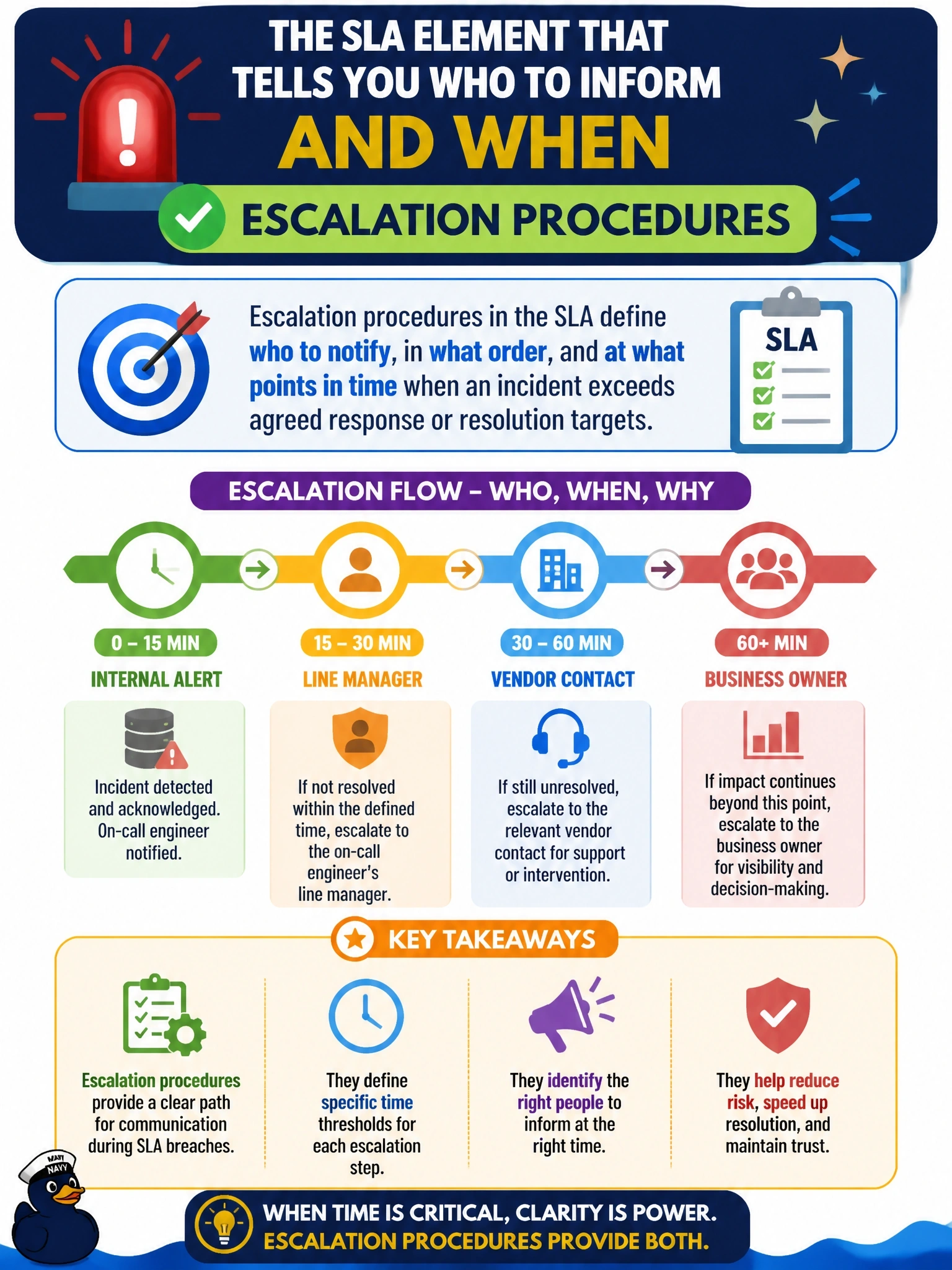
Short Explanation
Escalation procedures are the phone tree for when things go sideways: who you call, and when you call them. KPIs tell you that you've missed the target, but they don't tell you who needs to hear about it. That's the trap here.
Full Explanation
Escalation procedures define how incidents move up the support chain: the contacts at each level, the time thresholds or severity conditions that trigger each step, the channels used and the information that must be provided. In an SLA they ensure that a breach or impending breach reaches the right technical, vendor and business stakeholders without delay, so that decisions about workarounds, failover or customer communication are made by people with authority. Key performance indicators define what is measured and the targets, such as availability and response time; they reveal that the service is out of compliance but do not say whom to notify. The service reporting schedule covers periodic documentation of performance against KPIs, typically monthly or quarterly, which is after the fact rather than during an active incident. A resource projection plan forecasts future capacity needs and belongs to requirements gathering, not incident handling. Exam caveat: escalation can be hierarchical, toward management, or functional, toward specialists such as a vendor; a good procedure covers both. Operational check: review the SLA's escalation matrix to confirm each severity level has named roles, current contact details and time-based triggers, and test it during the next disaster recovery exercise.