
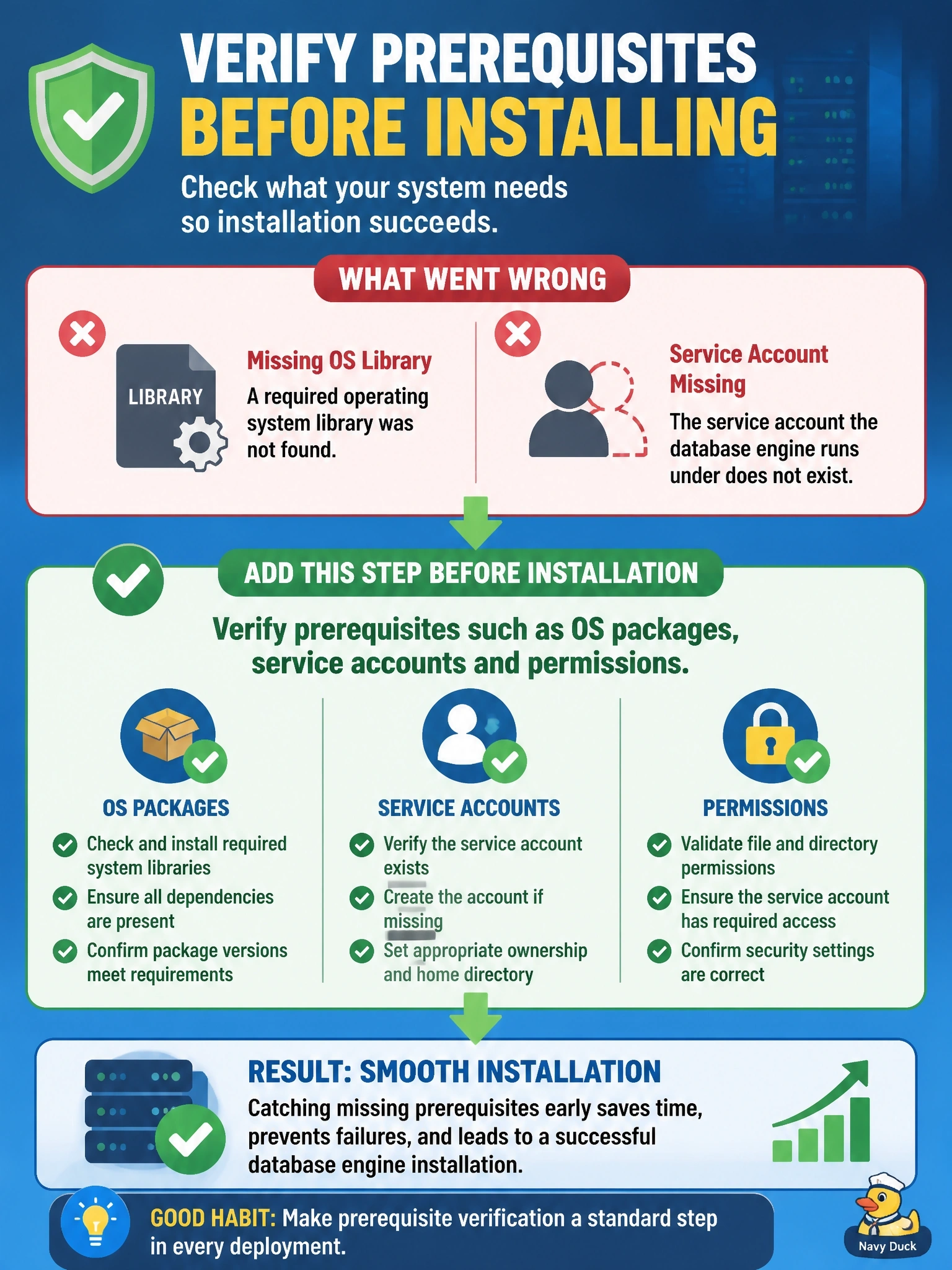
An installation of a database engine on a new Linux server fails partway through. The log shows that a required operating system library is missing and that the service account the engine runs under does not exist. Which deployment step should the team add before the next attempt?
Select an answer to reveal the explanation.
Short Explanation
It's a pre-flight checklist. Pilots don't discover a missing fuel cap on the runway, and you shouldn't discover a missing library halfway through an install. Check the prerequisites first and the install has a fighting chance.
Full Explanation
The prerequisites phase of a database deployment confirms that the target environment meets every documented requirement before installation begins: supported operating system and version, required packages and libraries, kernel or system settings, storage layout and permissions, network ports, and the service account under which the engine will run, with the rights it needs. Running a checklist or automated preflight check catches missing libraries and accounts early, avoiding partially installed software that must be cleaned up. Provisioning instances from a template is a valid deployment practice, but placed after a failed installation it does nothing to discover the missing prerequisites; a template would have to bake them in from the start. Importing data and validating row counts belongs to a later phase and cannot occur until the engine is installed and running. Regression testing confirms existing behavior after a change, which is irrelevant to an engine that has never been installed on this server. Exam caveat: prerequisites include non-technical items too, such as licensing and change approval, depending on the organization. Operational check: script the prerequisite checks for packages, account existence, directory ownership and port availability, run them on the server, and proceed with installation only after every item passes.