
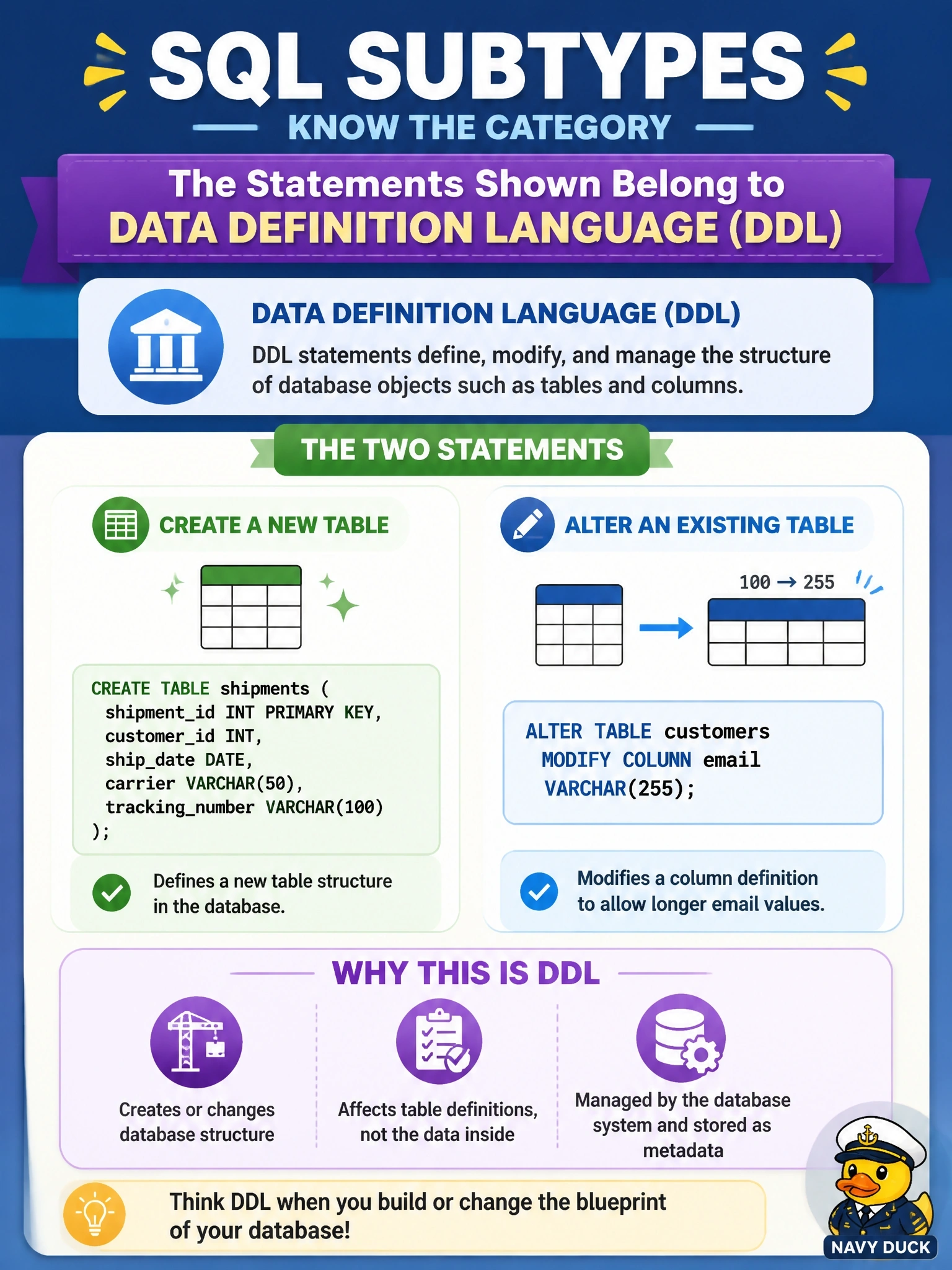
A developer must create a new shipments table and lengthen the customers table's email column from 100 to 255 characters. Which SQL subtype covers both statements?
Select an answer to reveal the explanation.
Short Explanation
If you're changing the shape of the house, walls and rooms, that's DDL. Moving the furniture around is DML. CREATE TABLE and ALTER TABLE both change structure, so they're DDL; don't let the word "modify" drag you toward DML.
Full Explanation
Data Definition Language consists of statements that define or change database objects themselves: CREATE, ALTER and DROP for tables, views, indexes and similar objects, along with TRUNCATE in most classifications. Creating the shipments table is a CREATE TABLE statement, and widening the email column is an ALTER TABLE statement that changes the column's data type length; both change the schema rather than the rows stored in it. Data Manipulation Language works on the data inside existing objects through INSERT, UPDATE and DELETE; it can change every row in a table but cannot add a table or change a column's definition. Transaction Control Language manages units of work with statements such as COMMIT, ROLLBACK and SAVEPOINT, and it does not create or alter objects. Data Query Language covers retrieval with SELECT, including joins, nested queries and window functions, and never changes either structure or data. Exam caveat: in several engines DDL statements commit implicitly or cannot be rolled back, so schema changes deserve the same change-management care as data fixes. Operational check: run the two statements in a non-production copy, then query the data dictionary or information schema to confirm the new table exists and the email column now reports a length of 255.