
311 agents keep flagging weak chatbot draft replies. Which practice best turns that signal into safer iteration?
Select an answer to reveal the explanation.
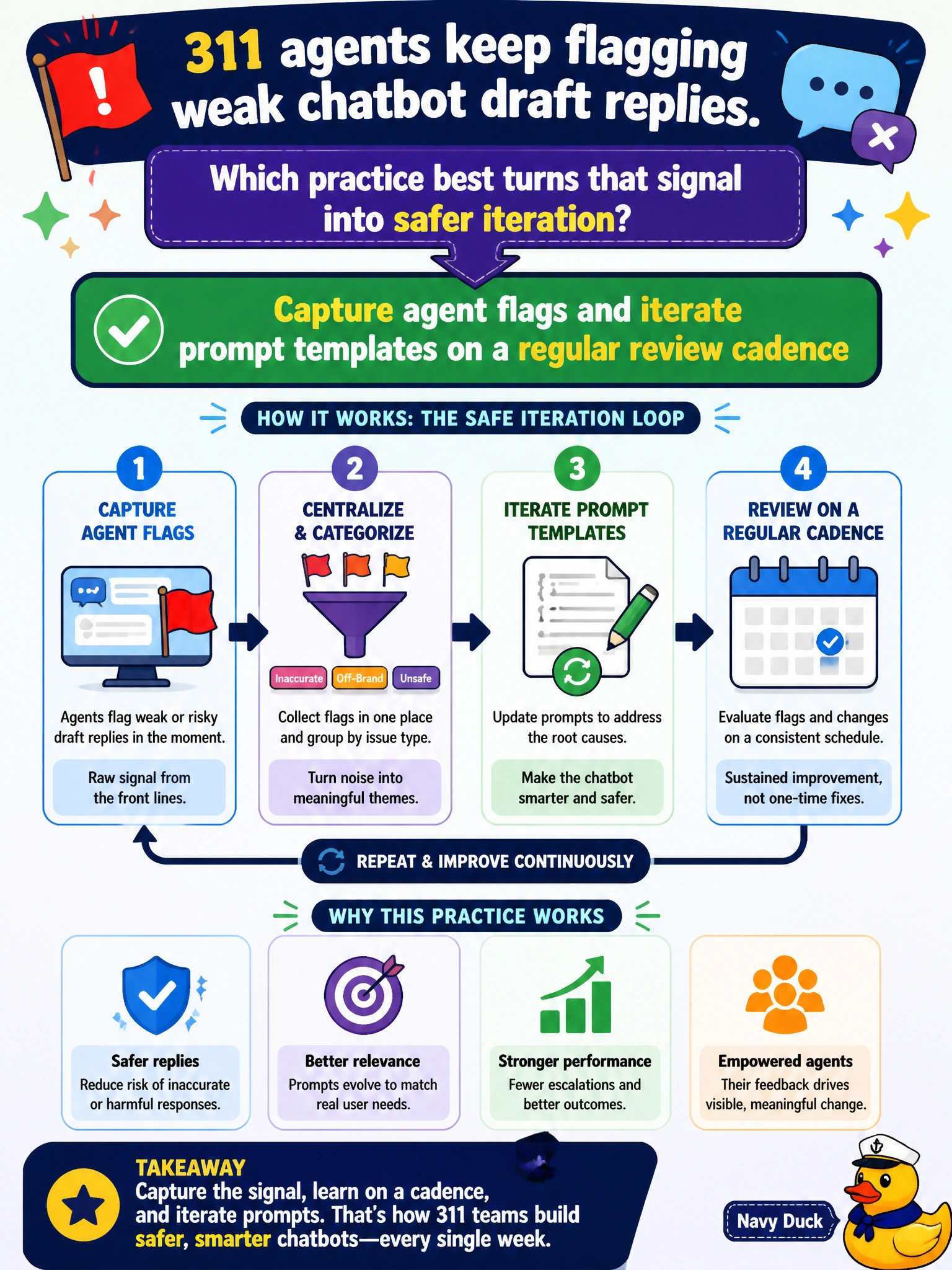
Short Explanation
Those agent flags are free coaching notes, not noise. Feeding them into a steady prompt-template review cycle is how 311 keeps the drafts from going sideways. You'll miss the fix if you retune chunk sizes, update access controls, or refresh redaction rules, since none of them touch the prompt wording that's making drafts weak.
Full Explanation
Feedback and iteration close the municipal AI lifecycle. When 311 agents flag weak chatbot draft replies, the productive practice is to capture those flags systematically and iterate prompt templates on a regular review cadence. Agent marks are high-signal, domain-grounded labels about tone, policy correctness, escalation needs, and missing context. Feeding them into scheduled prompt revisions improves draft quality without waiting for resident harm, and it creates an auditable improvement loop security and service leaders can inspect.
Logging agent flags and retuning embedding chunk sizes on a regular review cadence fails because chunk sizes govern retrieval granularity, not the prompt wording, tone, and policy logic the agents flagged as weak. Aggregating agent flags and updating access controls on a regular review cadence fails because access controls govern permissions and who can do what, not the quality of the draft replies themselves. Cataloging agent flags and refreshing PII redaction rules on a regular review cadence fails because redaction rules govern privacy masking, not draft correctness, tone, or escalation handling.
Exam caveat: human operator flags are intended inputs to prompt-template iteration, not a signal to retune embedding chunking, update access controls, or refresh PII redaction rules. Operational check: log agent flags with categories, review them on a fixed cadence with prompt owners, ship template changes through evaluation, and track whether flagged-issue rates decline after each iteration.
Prefer to study offline? Printable PDF study book + test engine ($7.50, unofficial). These questions stay free here.