
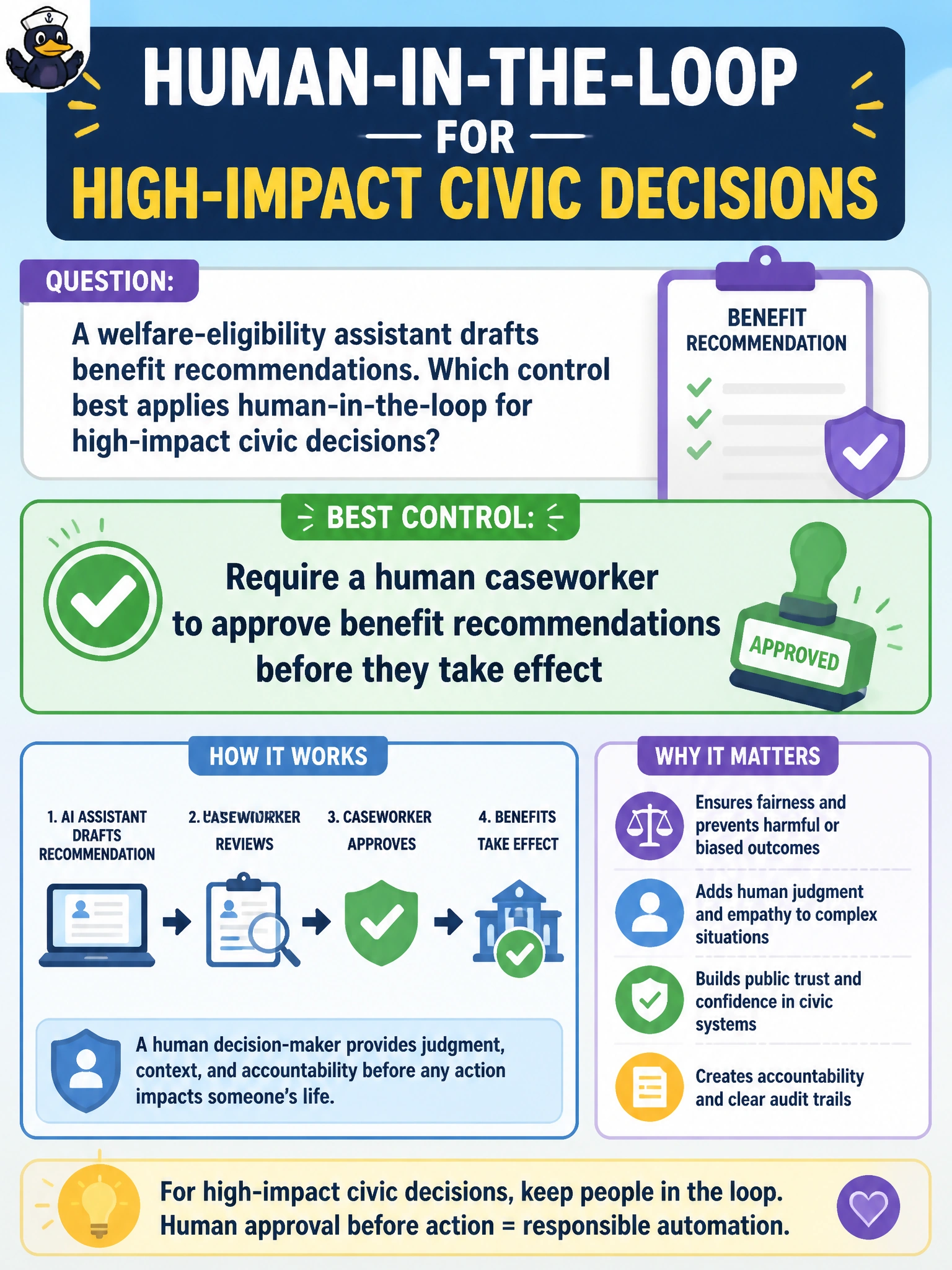
A welfare-eligibility assistant drafts benefit recommendations. Which control best applies human-in-the-loop for high-impact civic decisions?
Select an answer to reveal the explanation.
Short Explanation
Benefits change real lives — this is not a spell-check checkbox. Keeping a caseworker approval gate means the AI drafts, humans decide. Auditing approved benefit recommendations after they take effect means you'll catch errors only after the benefits or denials are already live.
Full Explanation
Human-in-the-loop is the appropriate oversight control when AI drafts high-impact civic decisions such as welfare-benefit recommendations. Requiring a human caseworker to approve recommendations before they take effect keeps the assistant in an advisory role while humans retain authority over eligibility determinations that affect housing, income support, and legal rights. Caseworkers can weigh exceptions, documentation quality, and equity considerations that models routinely miss, and the approval gate creates accountability for contested outcomes.
Having a human caseworker audit approved benefit recommendations after they take effect catches errors only after decisions have already taken effect, so it lets wrongful grants and denials reach residents before any human reviews them and lacks the mandatory pre-effect approval gate that true human-in-the-loop requires. Requiring a human caseworker to review confidence scores alongside benefit recommendations only adds context without requiring approval of the recommendations themselves, so recommendations can still take effect without human authorization and it lacks the mandatory approval gate before a recommendation takes effect that true human-in-the-loop oversight requires. Requiring a human caseworker to approve benefit recommendation templates before deployment only governs upfront design and still lets individual recommendations take effect without per-case review, so it lacks the mandatory per-decision approval gate before a recommendation takes effect that true human-in-the-loop oversight requires.
Exam caveat: for high-impact municipal decisions, drafting is not deciding—human approval before effect is the expected HITL pattern. Operational check: enforce a hard workflow block until caseworker sign-off, log override and approval reasons, and sample post-decision audits for disparity or policy drift.
Prefer to study offline? Printable PDF study book + test engine ($7.50, unofficial). These questions stay free here.