
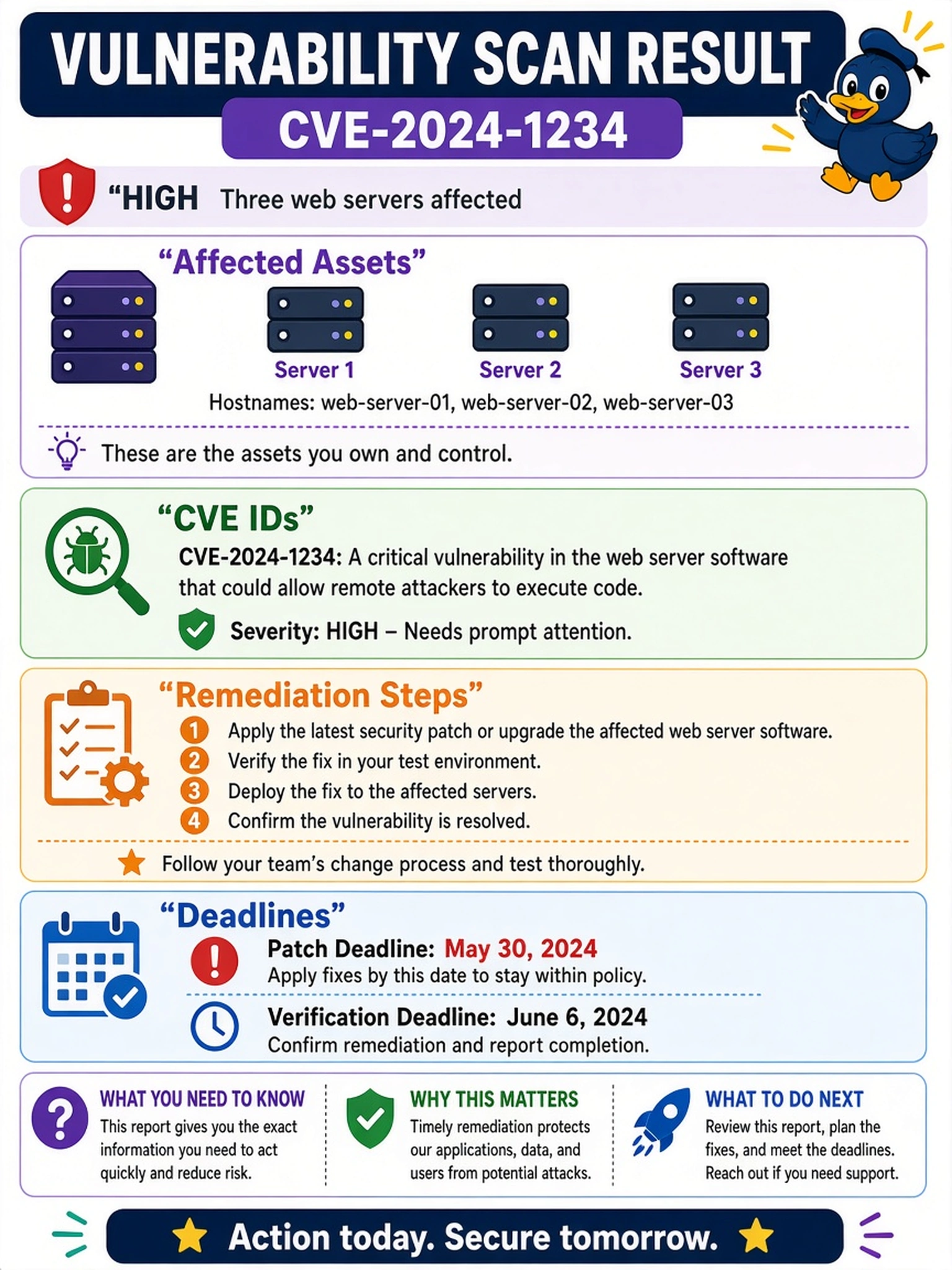
A vulnerability scan found CVE-2024-1234 on three web servers owned by an application team. The analyst must send a report to the non-security application owner. Which report content is most actionable for that owner?
Select an answer to reveal the explanation.
Short Explanation
Think of the report like a work order, not a scan dump. If you hand an app owner raw CVSS vectors and plugin IDs, they’ll freeze; give them the asset, the CVE, the fix, and the deadline. That’s how you get the patch applied.
Full Explanation
Actionable vulnerability reporting to an application owner translates technical findings into a work package. The owner needs to know which systems are affected, which CVEs apply, what remediation is required, and by when, because those elements support scheduling, change approval, and verification without requiring the recipient to interpret scanner internals. A report built around asset inventory, CVE identifiers, concrete remediation steps, and deadlines reduces back-and-forth and makes accountability clear. Reports that focus on scanner configuration, raw plugin output, or detailed CVSS vector strings may be useful for security analysts tuning scans or validating scores, but they do not tell an application owner what change to make on which system. Executive summaries and aggregate risk metrics are appropriate for leadership briefings, yet they hide the per-asset detail needed by the team that will execute the fix. Generic hardening guidance and benchmark links are educational rather than operational; they describe a desired state but do not map a specific vulnerability to a specific server, service, or patch release. Exam caveat: choose the answer that enables the recipient to act, not the answer that proves the analyst performed a scan. Operational check: verify each listed asset has an owner, CVE, action, and due date, then confirm the change window.