
During a patch cycle, three legacy production servers cannot be patched during the approved maintenance window. The vulnerability analyst is preparing a patch exception report for management. What should the report emphasize to communicate operational constraints without downplaying exposure?
Select an answer to reveal the explanation.
Short Explanation
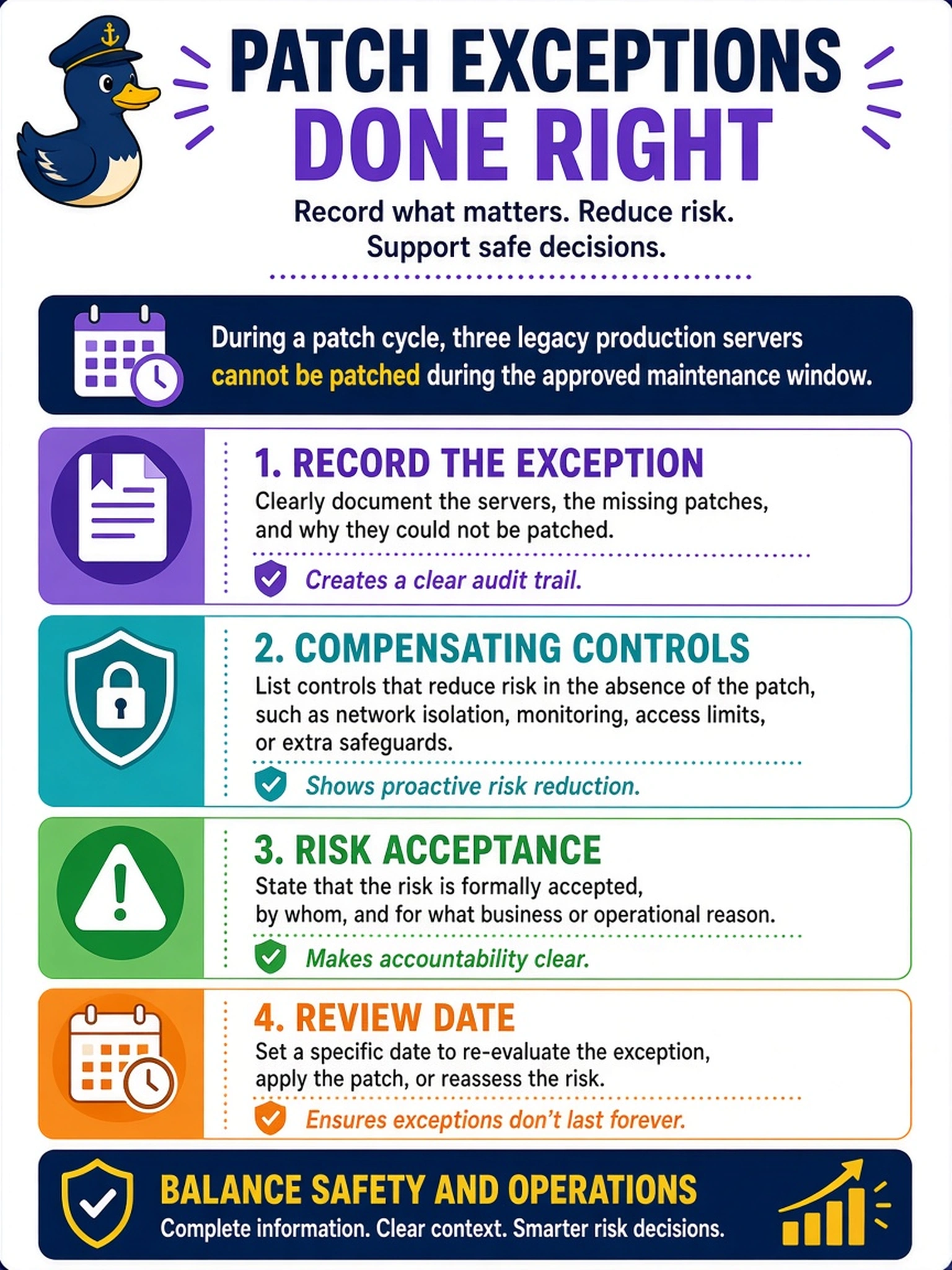
Think of a patch exception as a signed waiver, not a get-out-of-jail-free card. You still show what controls reduce the risk and when you'll review it. If the report just says business critical, you've traded a vulnerability for a surprise.
Full Explanation
A patch exception report exists to make risk visible when remediation is temporarily impossible. The analyst should identify each affected asset, the reason it missed the window, the compensating controls that reduce likelihood or impact, the accepted risk owner, and a review date. This preserves the vulnerability's severity while acknowledging operational constraints, so leadership can decide whether the temporary exposure is acceptable. Saying systems are exempt because they are business critical confuses importance with immunity; criticality can justify urgency, not eliminate exposure. Marking tickets false positives misrepresents confirmed findings and breaks auditability, because the defect remains present even when patching is delayed. Removing technical details to simplify the message strips the context needed to judge risk, leaving only a count and inviting underestimation of exposure. Exam caveat: vulnerability management communication must balance operational reality with risk transparency; exceptions are not closure. Operational check: verify every exception entry includes the asset, CVE or finding, compensating control, risk acceptance signature, and next review date before distribution.