
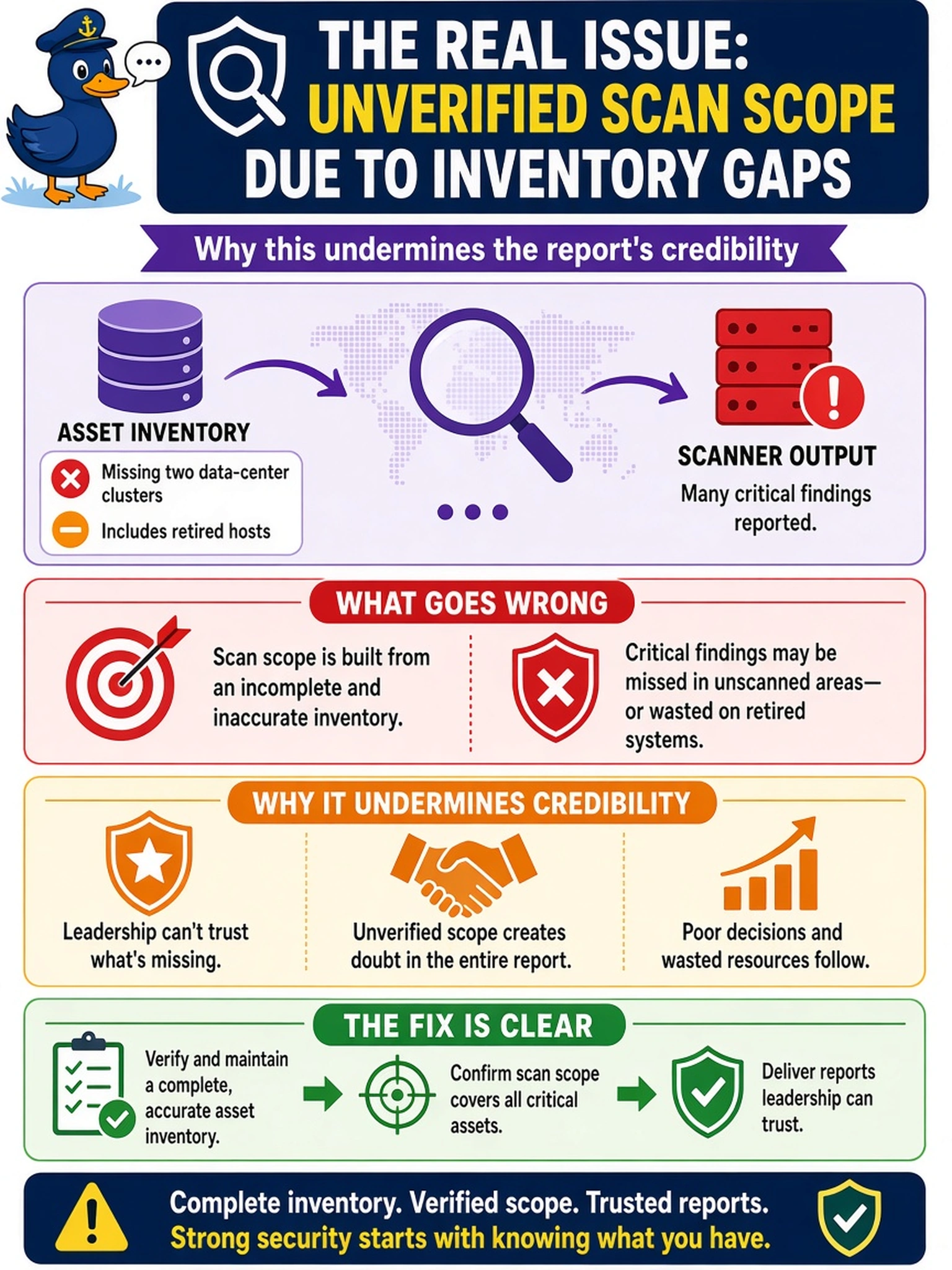
A vulnerability analyst prepares a quarterly report for leadership. The scanner output shows many critical findings, but the asset inventory is missing two data-center clusters and includes retired hosts. Which issue most directly undermines the report's credibility?
Select an answer to reveal the explanation.
Short Explanation
Think of a vulnerability report like a restaurant menu: if the kitchen inventory is wrong, every dish listed is suspect. When your asset inventory is stale, the report's credibility collapses because leadership can't verify what was actually scanned. You can have perfect CVSS math and still fail if the foundation is missing systems.
Full Explanation
Vulnerability reporting credibility depends first on knowing what exists in the environment. If the asset inventory omits production clusters or includes decommissioned hosts, the scan scope is unverified, so the report cannot prove that all relevant systems were assessed or that findings apply to live assets. This breaks the chain of evidence needed for remediation planning, risk acceptance, and executive reporting. A scoring or methodology problem can distort prioritization, but it does not make the report untrustworthy in the same fundamental way when the scanner may have missed entire segments or reported against retired systems. Missing owners affects follow-through, not the accuracy of the reported exposure. Inadequate reporting frequency can reduce timeliness, yet a well-scoped report remains credible for the period it covers. Exam caveat: CompTIA expects analysts to treat inventory as the foundation of vulnerability management, not a secondary reporting detail. Operational check: reconcile scanner discovered assets against CMDB or endpoint inventory, then exclude or re-scan retired hosts before issuing the report.