
Municipal operators need the fastest traffic switchback if a tax-site release fails. Which strategy best prioritizes instant rollback?
Select an answer to reveal the explanation.
Short Explanation
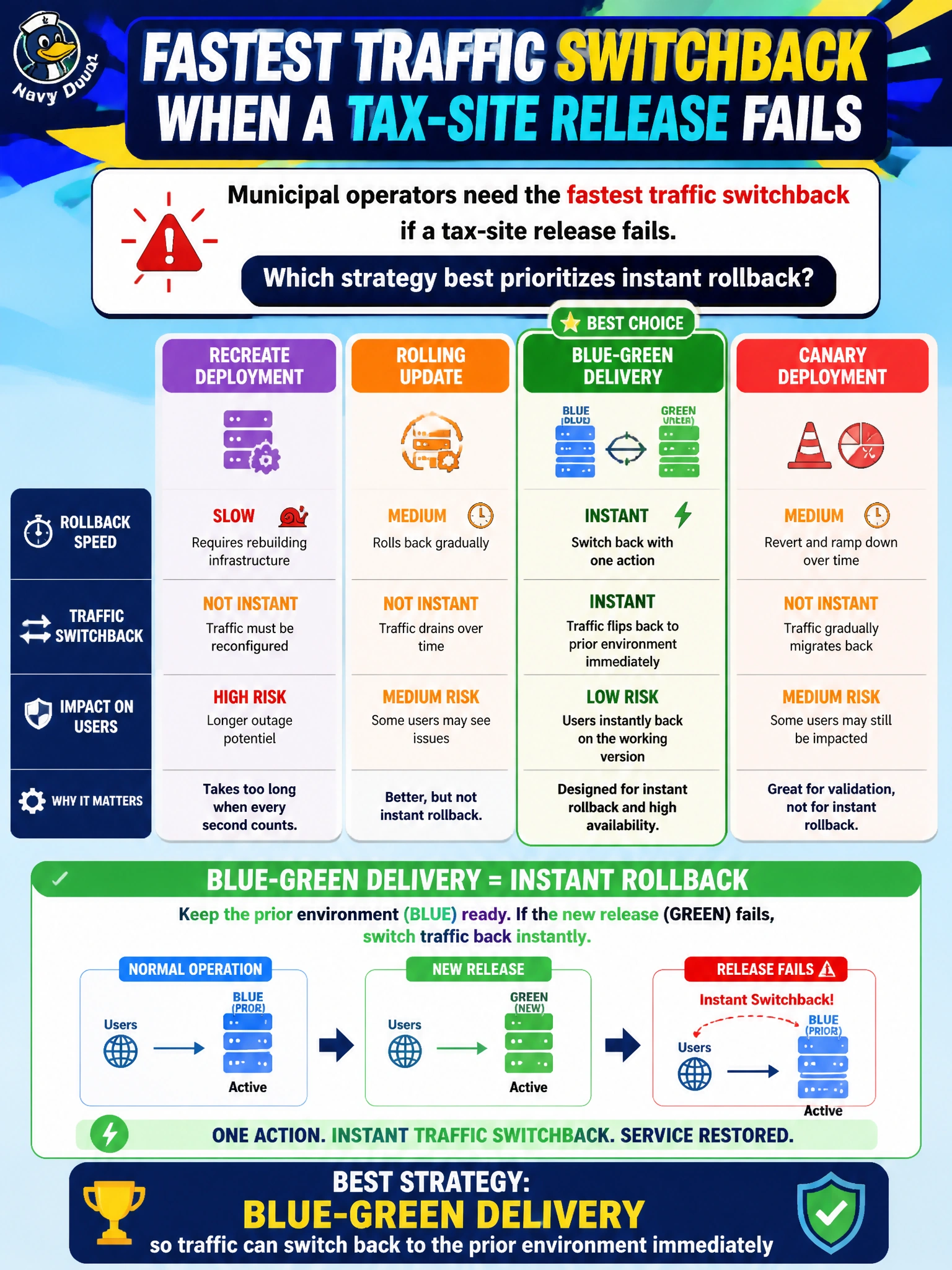
Blue-green keeps the old tax stage lit behind the curtain—flip the switch back if the new show bombs. In-place with no standby or wiping backups is the opposite of instant rollback.
Full Explanation
Blue-green delivery prioritizes fast rollback by keeping the previous environment available so traffic can switch back immediately if the new release fails. Municipal tax-site operators who need the fastest traffic switchback should retain blue as a warm standby after cutting to green. The rollback operation is another router flip, not a rebuild of every node from scratch.
In-place overwrite of the only tax VM with no standby fails by concept because there is nothing to flip back to; recovery means restore or rebuild. A rolling update that must re-image every node before any rollback starts fails the "instant switchback" requirement because rollback is itself a slow roll. Deleting backups after cutover so rollback is impossible by design fails deliberately removes recovery options and contradicts rollback prioritization.
Exam caveat: blue-green's rollback speed advantage assumes the prior environment is retained and still compatible with the data plane for the rollback window. Instant traffic switchback does not fix irreversible destructive migrations completed on a shared database—plan schema compatibility separately.
Operational check: after cutting tax traffic to green, keep blue idle but healthy, inject a simulated green failure, flip back to blue, and measure switchback time. Confirm blue was not wiped at cutover and that citizens recover on the prior version without a full re-image cycle.