
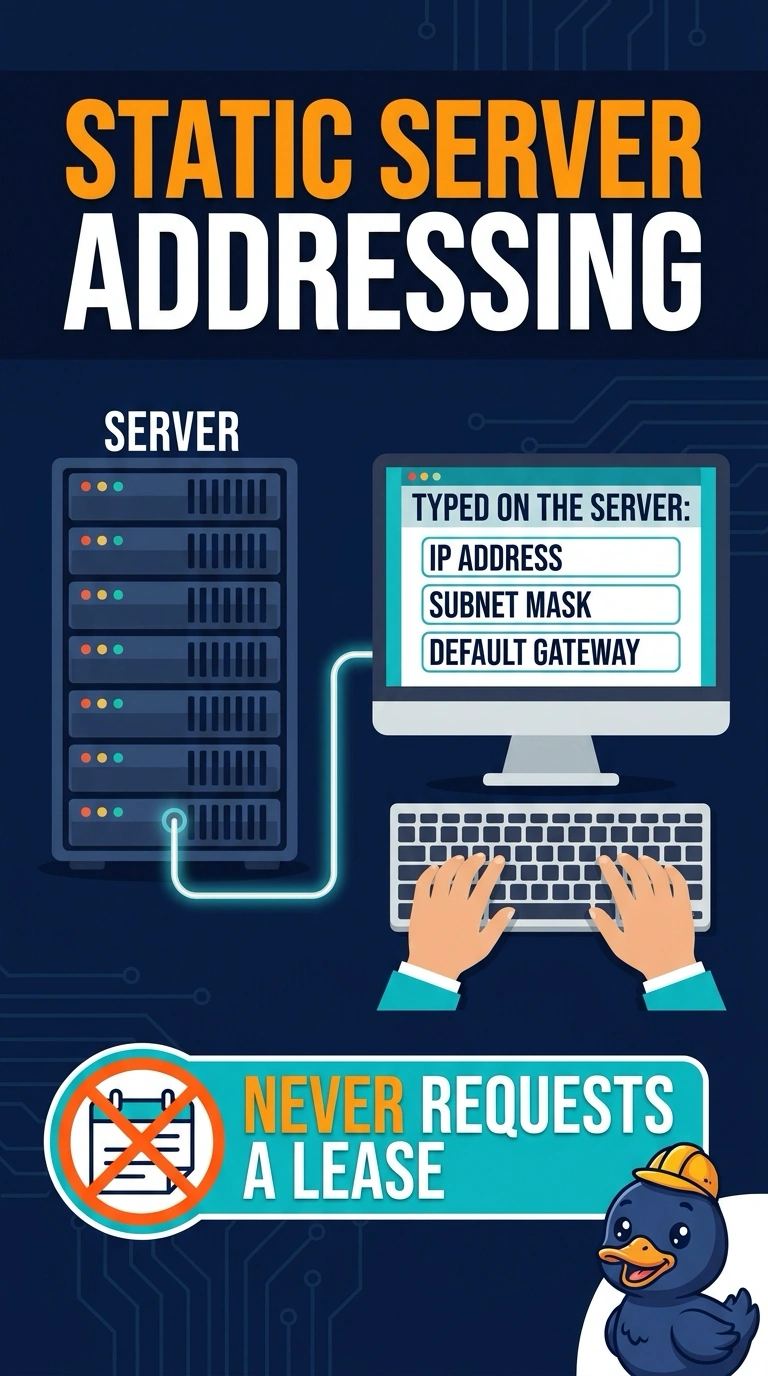
A file server is given its address, mask, and gateway by typing them on the server. It never requests a lease. Which addressing is that?
Select an answer to reveal the explanation.
Short Explanation
Nobody is handing this server an address, so you typed it on the machine and it never asks. That is static addressing. A fallback address, a reservation that lives on the DHCP server, or a rule that every server must be public does not match a hand-typed private setup.
Full Explanation
Static addressing means the administrator configures the address, mask, and gateway on the host, and the host does not use DHCP. The file server matches that. Automatic private addressing is the 169.254.0.0/16 address a client invents when a DHCP request fails. An administrator does not type it in as the plan. A DHCP reservation is configured on the DHCP server and is delivered when the client requests a lease. This server never requests a lease, so the address is not coming from a reservation. A file server on a private LAN does not have to use a public address. Public addressing would expose it, which is a different design than the one described. Exam caveat: document the static address so it is also excluded from any DHCP scope. Otherwise a future client can be handed the same number. Operational check: reboot the server with the DHCP service stopped and confirm it still holds the typed address. Exclude that same address from the DHCP scope so a laptop cannot be handed the server's number later.