
A closet switch must put ports into separate VLANs and must support port security. Which switch meets that requirement?
Select an answer to reveal the explanation.
Short Explanation
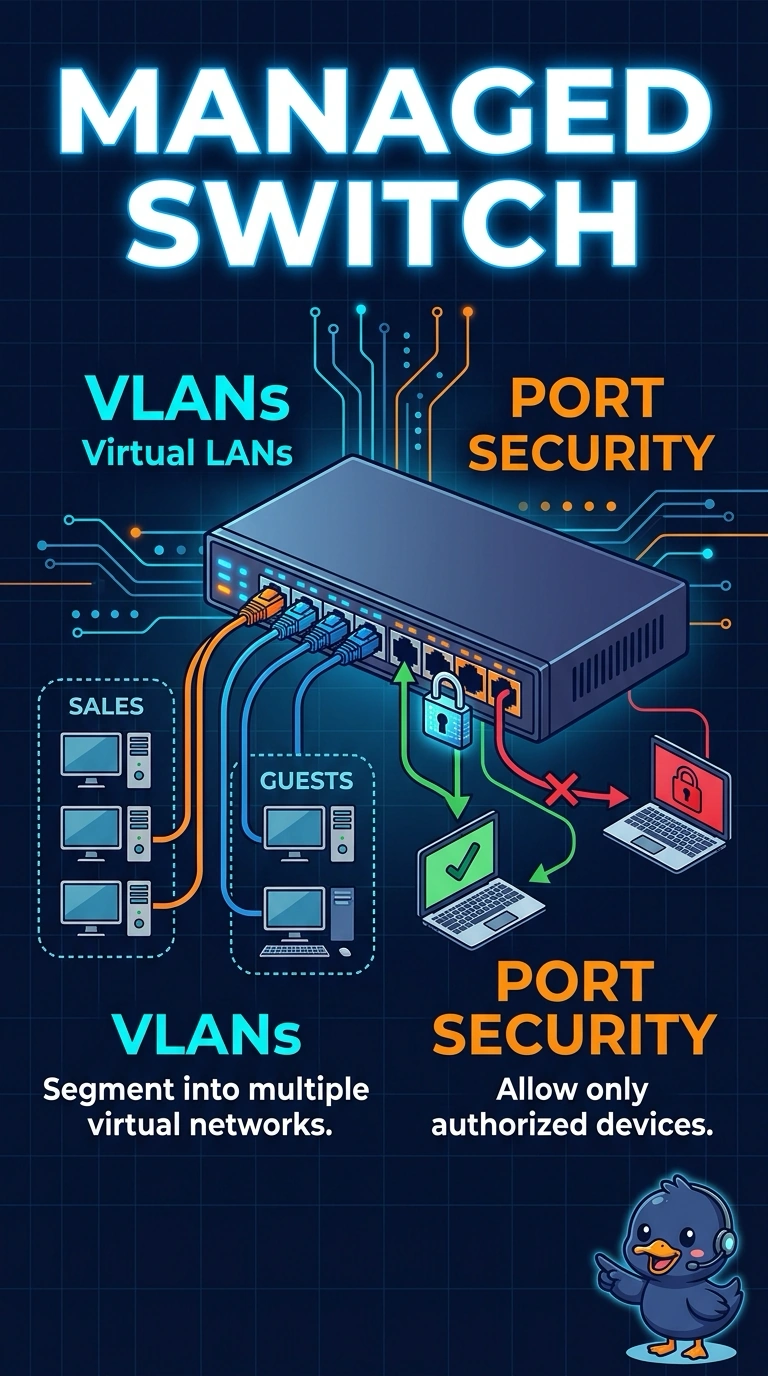
You need a switch you can log into and tell what to do. That is a managed switch. A switch with no settings, a television modem, and a row of jacks cannot build VLANs or lock a port to a device.
Full Explanation
A managed switch has an interface for settings such as VLANs and port security. The closet requirement is exactly those settings, so the managed switch is the one that meets it. An unmanaged switch forwards frames and has no place to configure VLANs or port security. A cable modem terminates a coax internet service. It does not create VLANs for closet ports. A patch panel is a passive place to terminate cables. It does not inspect frames or apply port security. Exam caveat: a managed switch still has to be configured. Buying it does not separate the VLANs until someone builds them. Operational check: sign in to the switch, create two VLANs, and confirm a port-security setting can be applied to a port. Put one test port in each VLAN and confirm they do not share a broadcast. Save the switch config so a reboot does not drop the VLANs. Sign in after a reboot and confirm the VLAN and port-security settings are still there. Write the management address on the closet label.