
A shop router should hide the PCs from the internet and translate their traffic. Which address plan belongs on the inside LAN?
Select an answer to reveal the explanation.
Short Explanation
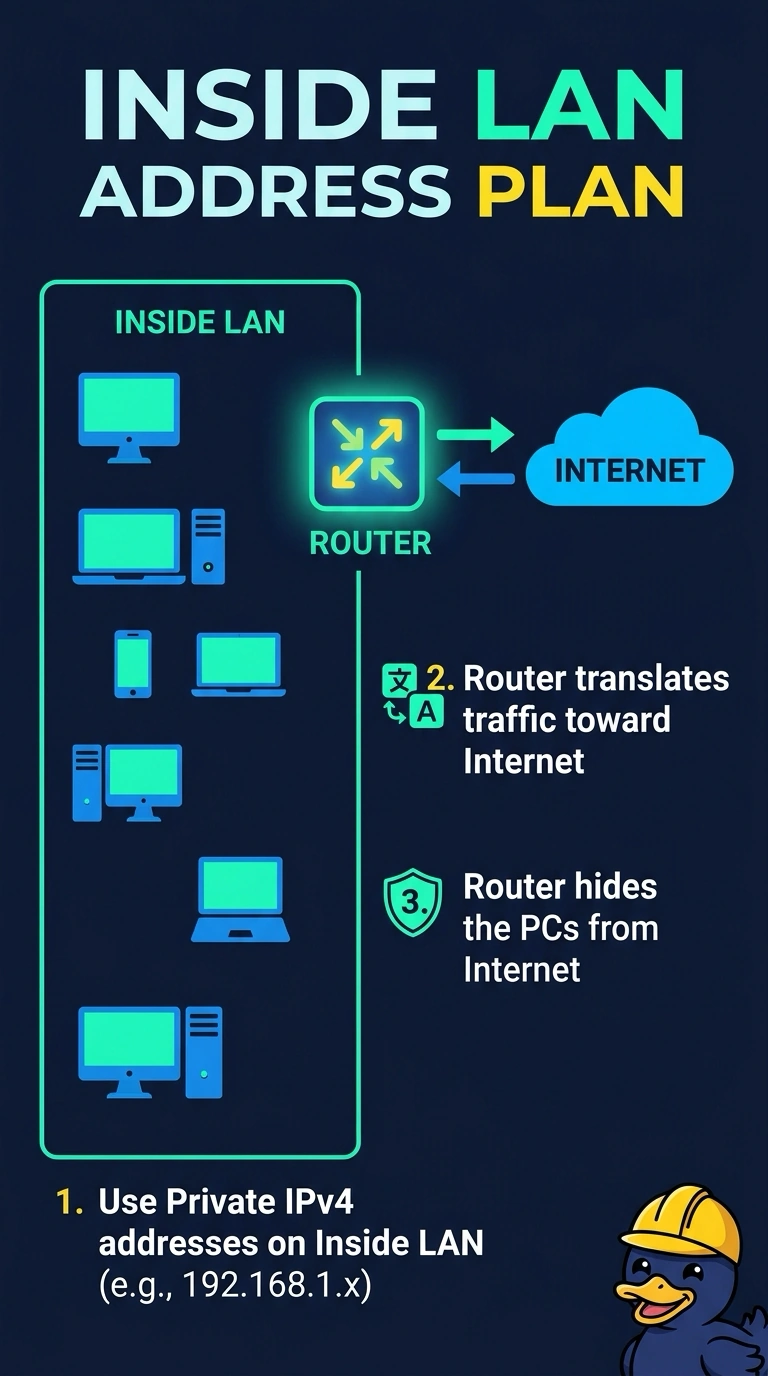
The PCs should wear house numbers that the public street cannot dial directly, and the router should translate at the door. You use private IPv4 addresses on the inside. A public address on every PC, a fallback address that means DHCP failed, or a link-local address that never routes is not the plan.
Full Explanation
Private IPv4 addresses are not routed on the public internet. The router translates them, which is how a small office hides the PCs and still lets them browse. That is the inside plan. A public address on every PC would make those hosts addressable from the internet and would skip the translation the shop asked for. Addresses in 169.254.0.0/16 are the automatic private range a host uses when DHCP does not answer. They are a failure mode, not the addressing plan. IPv6 link-local addresses stay on the local link. They are not the addresses a PC uses to reach the web, and they do not replace the private IPv4 plan with translation. Exam caveat: private addressing only hides the PCs if the router is the path to the internet and it is actually translating. A PC plugged straight into the modem bypasses that. Operational check: confirm the PCs hold private addresses, confirm the router translates, and confirm an outside host cannot open a session straight to a PC. From outside the shop, try to reach a PC address and confirm the attempt fails.