
A copper run must pass beside a large motor, and interference on the link is the concern. Which cable addresses that concern?
Select an answer to reveal the explanation.
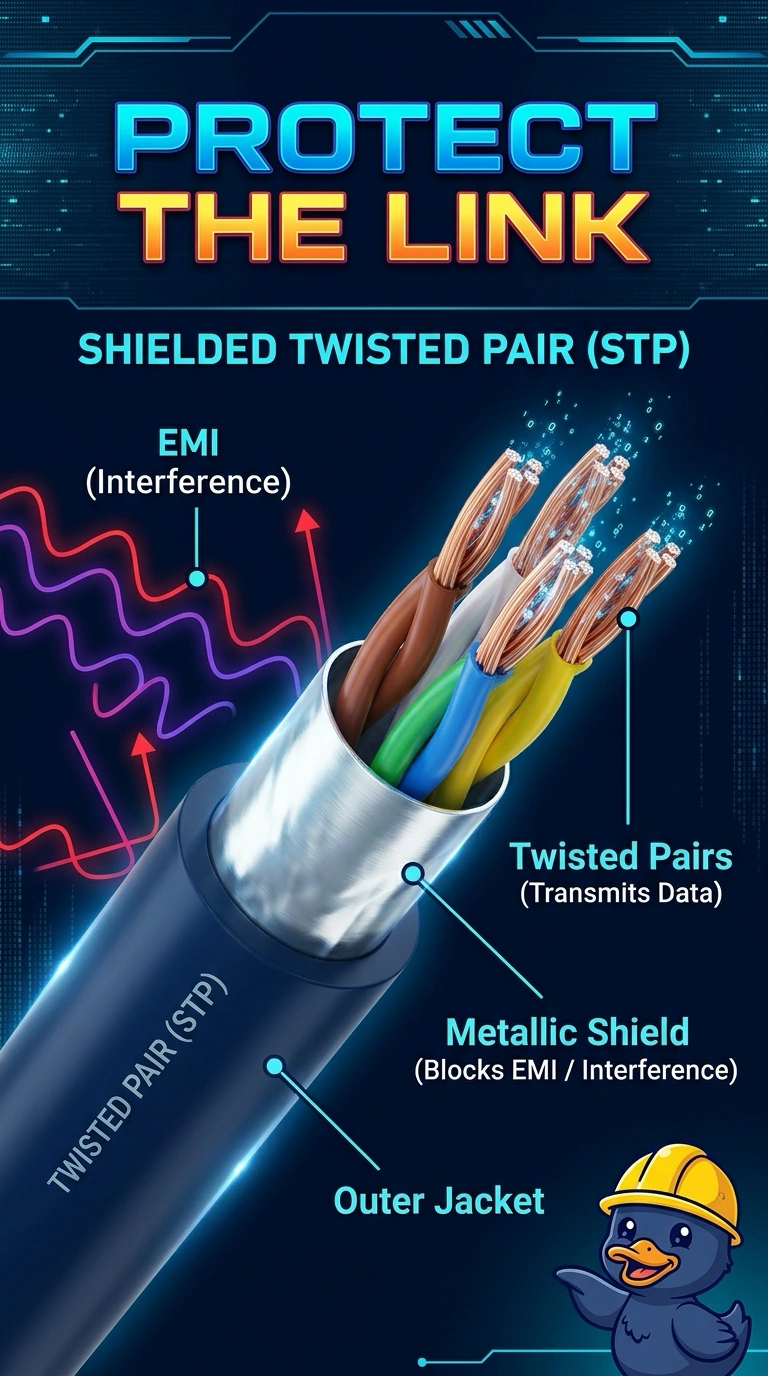
Short Explanation
The motor is a noisy neighbor, so the pairs need a jacket that keeps that noise out. You use shielded twisted pair. A rating for an air return, a rating for a trench, or a cable with no shield does not answer an interference problem.
Full Explanation
Shielded twisted pair adds a foil or braid that reduces electrical interference, which is the concern beside a large motor. Plenum-rated cable is about the jacket in an air-handling space. That rating does not block motor noise. Direct-burial cable is built for moisture underground. An indoor run beside a motor is not a trench. Unshielded cable relies on the twist alone. Choosing it because it has no shield reverses the reason you would pick shielded cable when interference is the problem. Exam caveat: the shield has to be terminated correctly. A shield that is left floating or tied to the wrong place can fail to help or can create its own problem. Operational check: pull the shielded cable, terminate the shield the way the jacks require, and confirm the errors beside the motor drop. Terminate the shield the way the jacks specify, then recheck errors beside the motor. Re-test the error counters after the shield is bonded, not only after the cable is pulled. Compare error counters from before the shield and after it.