
A database server should detect and correct single-bit memory errors. Which memory feature does that?
Select an answer to reveal the explanation.
Short Explanation
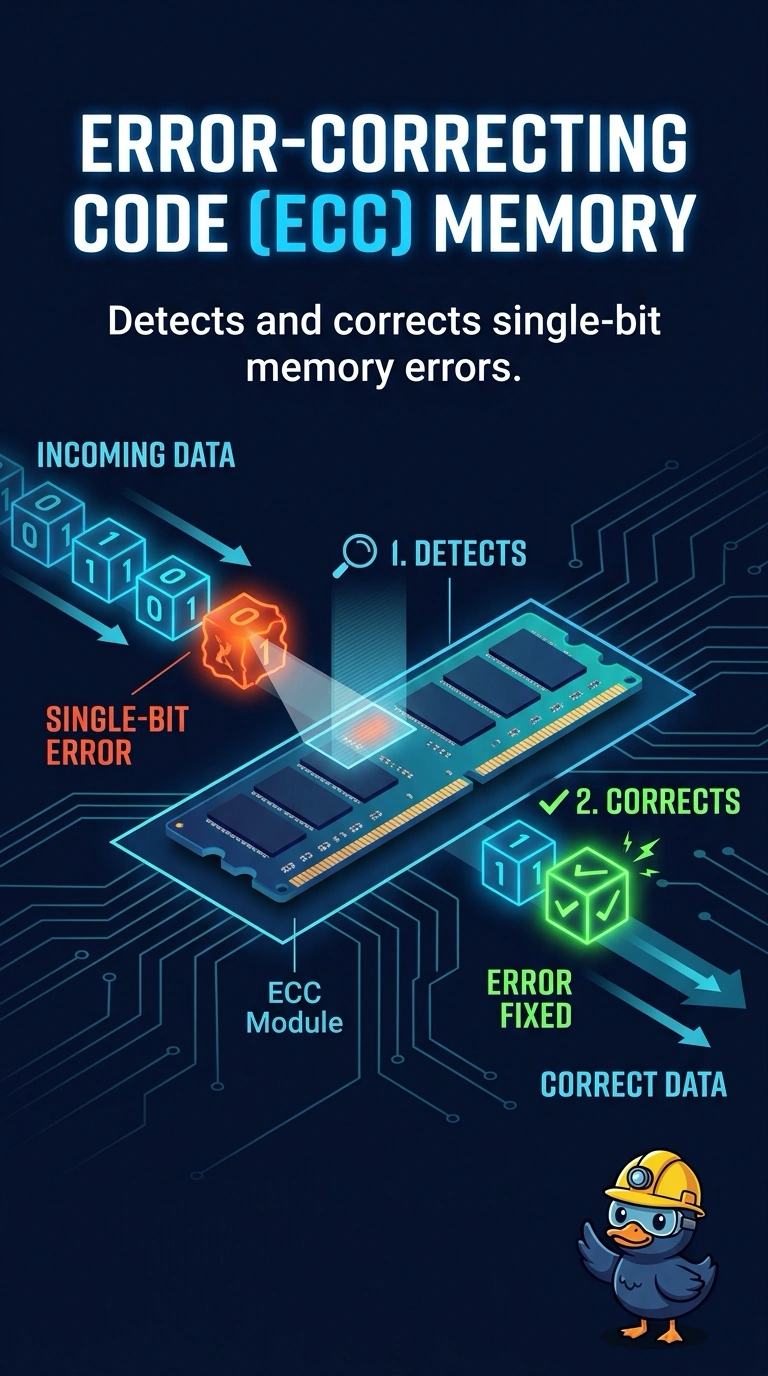
The server wants memory that can catch a flipped bit and fix it, like a spellchecker that repairs one letter. You order error-correcting code memory. Ordinary desktop memory, a two-channel speed setup, and a smaller module shape do not add that correction.
Full Explanation
Error-correcting code memory stores extra information so the system can detect and correct a single-bit error. A database server that must correct those errors needs ECC memory, and a board and processor that support it. Non-correcting desktop memory may detect some faults and will not correct a single-bit error the way ECC does. Dual-channel mode pairs modules to widen the path to memory. It is a performance layout, not an error-correction feature. SODIMM is the small outline used in laptops. The shape of the module does not add correction. Exam caveat: ECC modules in a board that does not support ECC will not give you correction, and they may not boot at all. Match the server's manual. Operational check: confirm the firmware reports ECC enabled after the modules are installed. Reboot twice and read the memory screen so a one-time ECC report is not a fluke. Match the module count to the board's ECC population rules. If the firmware does not say ECC is active, the board or the modules are the wrong mix.