
A racing simulator needs the panel that responds fastest. Wide viewing angles are not the priority. Which panel type fits?
Select an answer to reveal the explanation.
Short Explanation
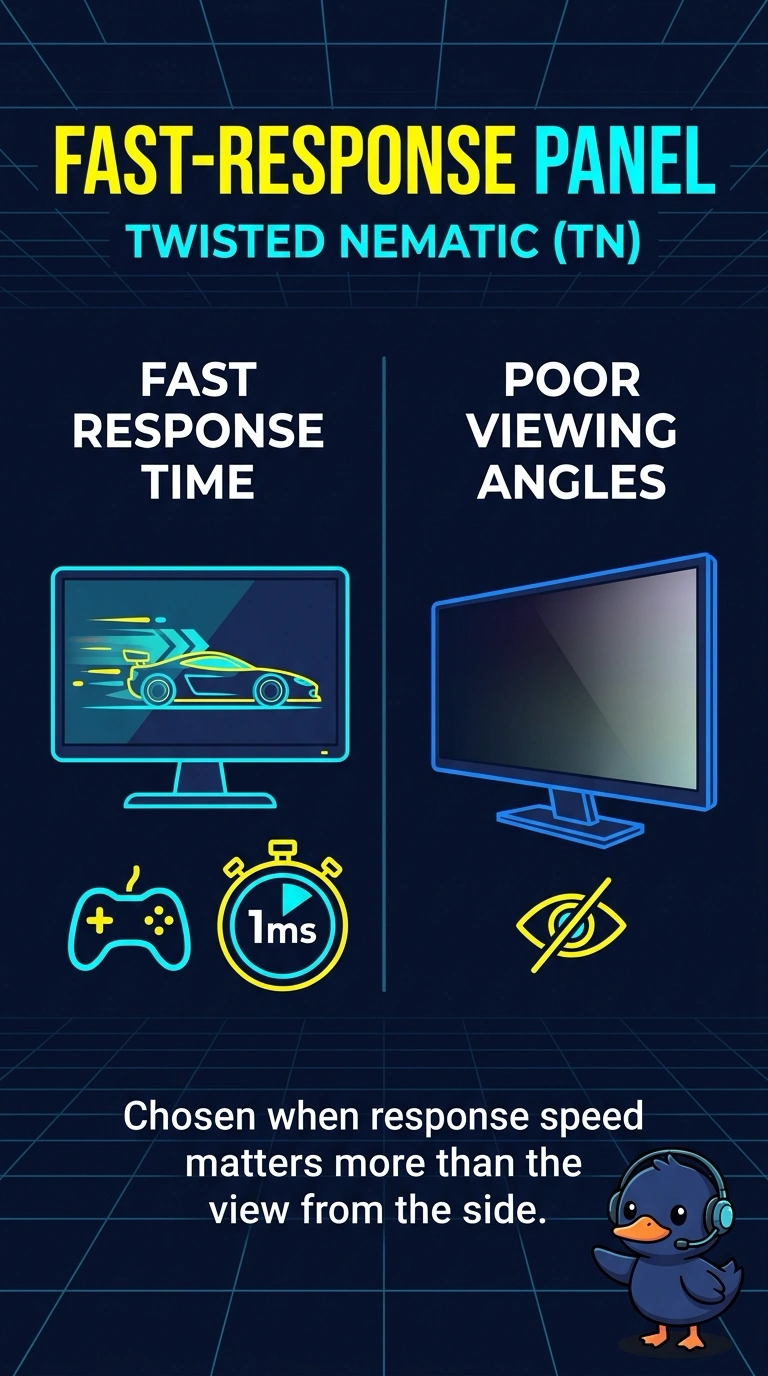
This screen is a stopwatch, not a poster people read from the hallway. You pick the twisted-nematic panel when response time outranks the view from the side. The wide-angle panels and a panel that can ghost a static image are the wrong priority for this simulator.
Full Explanation
Twisted-nematic panels are the usual choice when a fast response matters more than a wide viewing angle. The simulator states that priority, so the twisted-nematic panel fits. In-plane switching holds color from the side and is generally slower to respond than twisted nematic. Choosing it because it is the fastest reverses the two traits. Vertical alignment offers strong contrast and is not the panel you pick for the quickest response. OLED can look excellent and can still retain a static image. It is not chosen here as a burn-in-proof racing panel, and the stem asked for response time over viewing angle. Exam caveat: a quoted response time on a box is a vendor measurement, so compare panels the way the shop will actually use them. Operational check: run the simulator and watch for smear behind fast motion before you mount the panel. Sit at the simulator's seat, not off to the side, when you judge the motion. If fast motion smears, the panel is the wrong type for this simulator. Keep the panel at the seat height the drivers will actually use.