
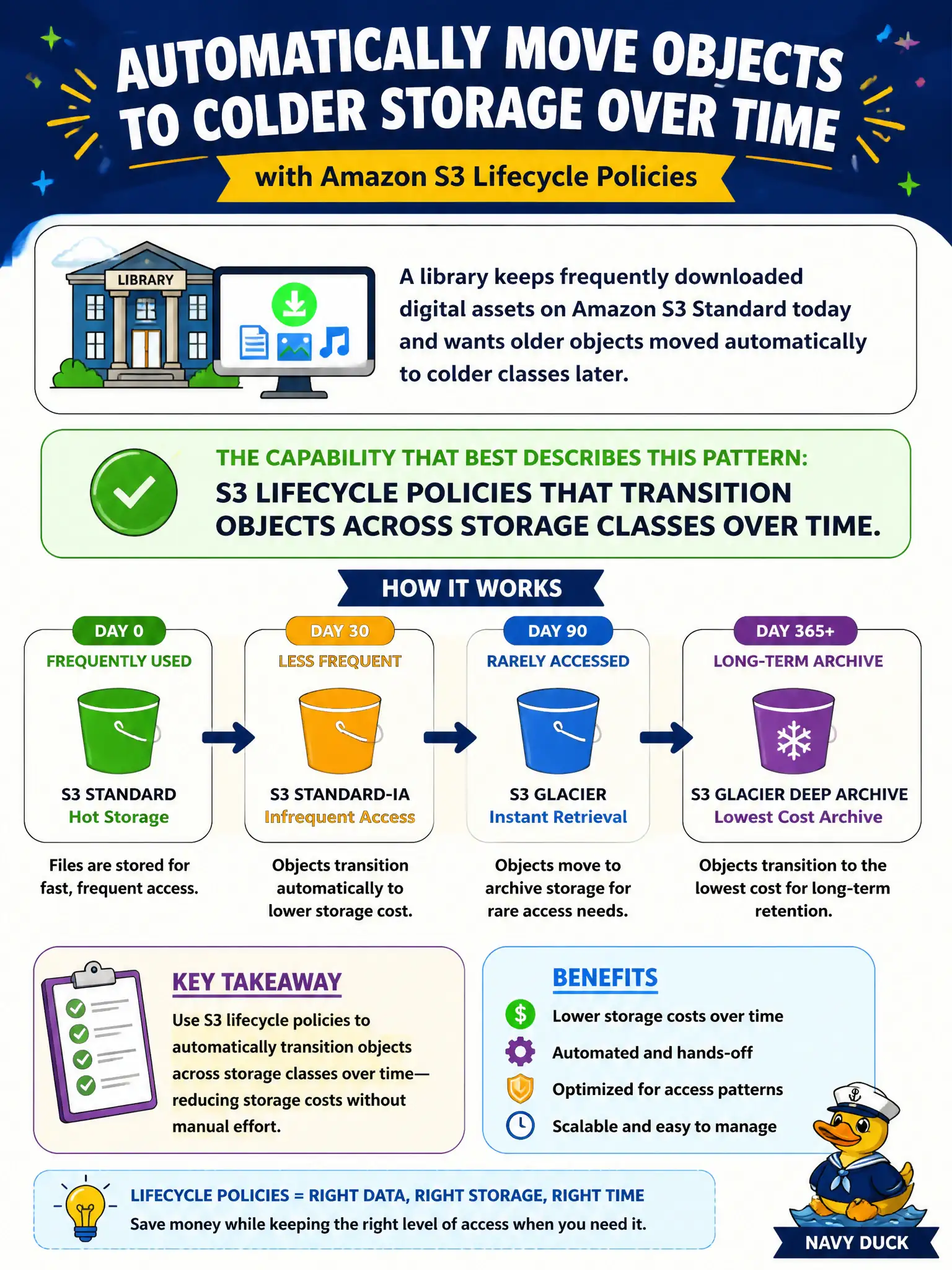
A library keeps frequently downloaded digital assets on Amazon S3 Standard today and wants older objects moved automatically to colder classes later. Which capability best describes that pattern?
Select an answer to reveal the explanation.
Short Explanation
Hot stuff stays on S3 Standard; colder classes wait for later. Lifecycle policies are the autopilot that moves or expires objects as they age—no nightly human script required. Set the rules once and let S3 transition the old library assets down the cost ladder.
Full Explanation
A library that keeps frequently downloaded digital assets on S3 Standard today and wants older objects moved automatically to colder classes later is describing S3 lifecycle policies. Lifecycle configuration transitions objects between storage classes (and can expire objects) based on age or other rules you define. Once set, S3 applies those transitions automatically—no nightly human script required—so popular assets stay on hot storage while aging materials step down the cost ladder into infrequent-access or archival classes appropriate for municipal digital collections.
VPC endpoints provide private network paths to AWS services; they do not rewrite object bytes into Glacier overnight as a lifecycle engine. Security group rules filter network traffic by port and source; they do not age objects based on source IP. Route 53 health checks monitor endpoint health for DNS failover; they do not demote S3 objects after failed probes. Those distractors misuse networking and DNS features as if they were storage lifecycle controls.
Exam caveat: Lifecycle policies both transition and expire. Incomplete multipart upload cleanup is also a common lifecycle use. Distinguish Intelligent-Tiering (automatic access-pattern tiering) from explicit lifecycle transitions when the stem emphasizes rules you configure over time.
Operational check for the library: define prefixes or tags for collections that should cool over time, create lifecycle rules with clear day thresholds, verify transitions in S3 Storage Class Analysis or inventory reports, ensure applications tolerate retrieval delays for colder classes, and document who may restore archival objects so public kiosk downloads of rare historical scans do not generate unexpected retrieval charges without oversight.