
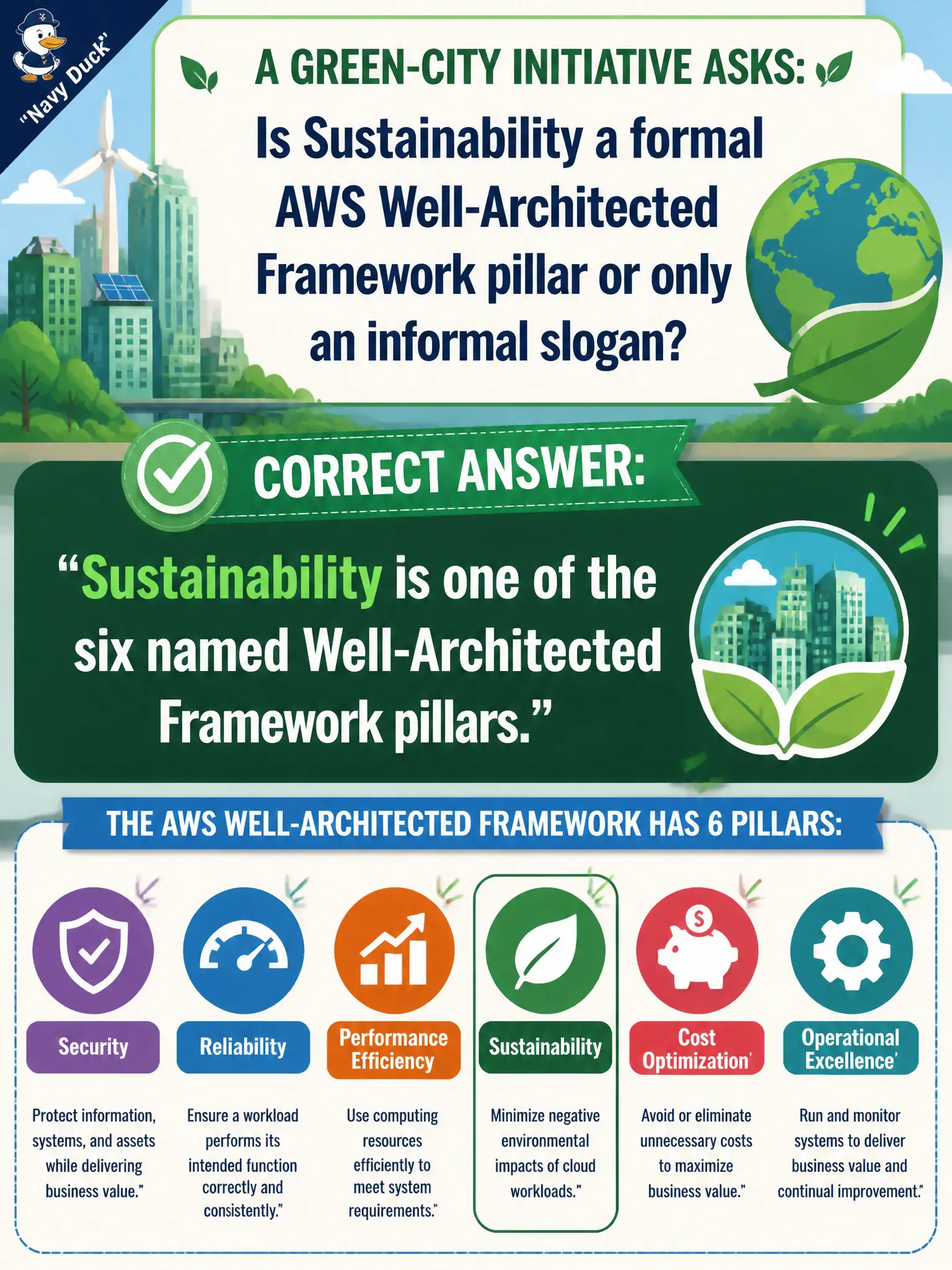
A green-city initiative asks whether Sustainability is a formal AWS Well-Architected Framework pillar or only an informal slogan. What is accurate?
Select an answer to reveal the explanation.
Short Explanation
AWS put Sustainability on the same scoreboard as Security and Reliability — it is a real named pillar, not a bumper sticker. Teams use it when they design workloads to reduce environmental impact in the cloud. It did not erase Cost Optimization, and it is not limited to old basement server rooms.
Full Explanation
Sustainability is one of the six named Well-Architected Framework pillars—accurate for a green-city initiative asking whether it is formal guidance or only a slogan. Municipal architects should treat it as first-class review content alongside Operational Excellence, Security, Reliability, Performance Efficiency, and Cost Optimization.
Calling Sustainability only a marketing slogan denies its pillar status. Claiming it replaced Cost Optimization and is no longer listed separately is false; both exist. Saying it applies only to on-premises data centers and never to AWS Cloud workloads contradicts the Framework’s cloud workload focus.
Exam caveat: CLF-C02 expects six pillars including Sustainability; five-pillar flashcards are outdated. Operational check: add Sustainability questions to the city’s Well-Architected review checklist, identify idle non-production resources to stop, document shared responsibility actions the city owns, and report progress in the green-city steering packet.
Municipal teams should keep a one-page decision record linking this Cloud Practitioner concept to resident outcomes, revisit it after major traffic or compliance changes, and ensure runbooks still match the chosen design.