
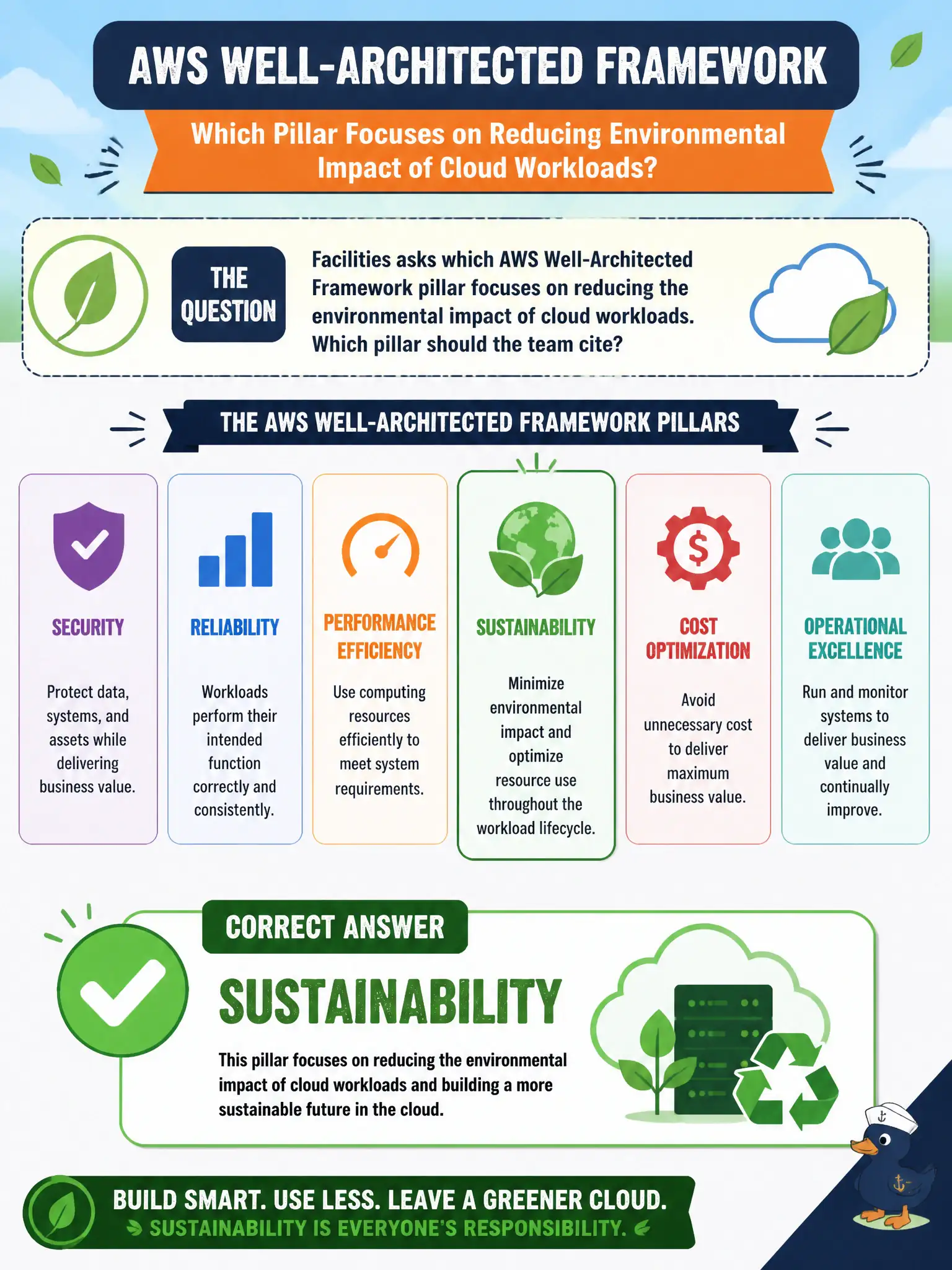
Facilities asks which AWS Well-Architected Framework pillar focuses on reducing the environmental impact of cloud workloads. Which pillar should the team cite?
Select an answer to reveal the explanation.
Short Explanation
Picture a green-building checklist for software, not just for the city hall HVAC. Sustainability is the Well-Architected pillar that asks how workloads use energy and materials, and how to shrink that footprint over time. Cost Optimization cares about dollars, Performance Efficiency about speed and fit, and Operational Excellence about runbooks — none of those is the environmental-impact pillar.
Full Explanation
Sustainability is the AWS Well-Architected Framework pillar that focuses on reducing the environmental impact of cloud workloads—the correct citation when facilities asks which pillar addresses that concern. It guides shared responsibility for sustainability, measuring impact, and maximizing utilization of provisioned resources so municipal cloud estates waste less energy.
Cost Optimization targets spend efficiency, which can correlate with less waste but is not the environmental-impact pillar. Performance Efficiency targets meeting requirements with efficient resources, again related but not the named environmental pillar. Operational Excellence covers runbooks, monitoring, and improvement of operations—not the primary environmental framing.
Exam caveat: Memorize Sustainability as a formal sixth pillar; older materials with five pillars are outdated for CLF-C02. Operational check: identify always-on non-production municipal workloads, shut down or schedule them, prefer higher-utilization managed services where appropriate, and report estimated impact reductions alongside cost savings to the green-city sponsors.
Municipal teams should keep a one-page decision record linking this Cloud Practitioner concept to resident outcomes, revisit it after major traffic or compliance changes, and ensure runbooks still match the chosen design.