
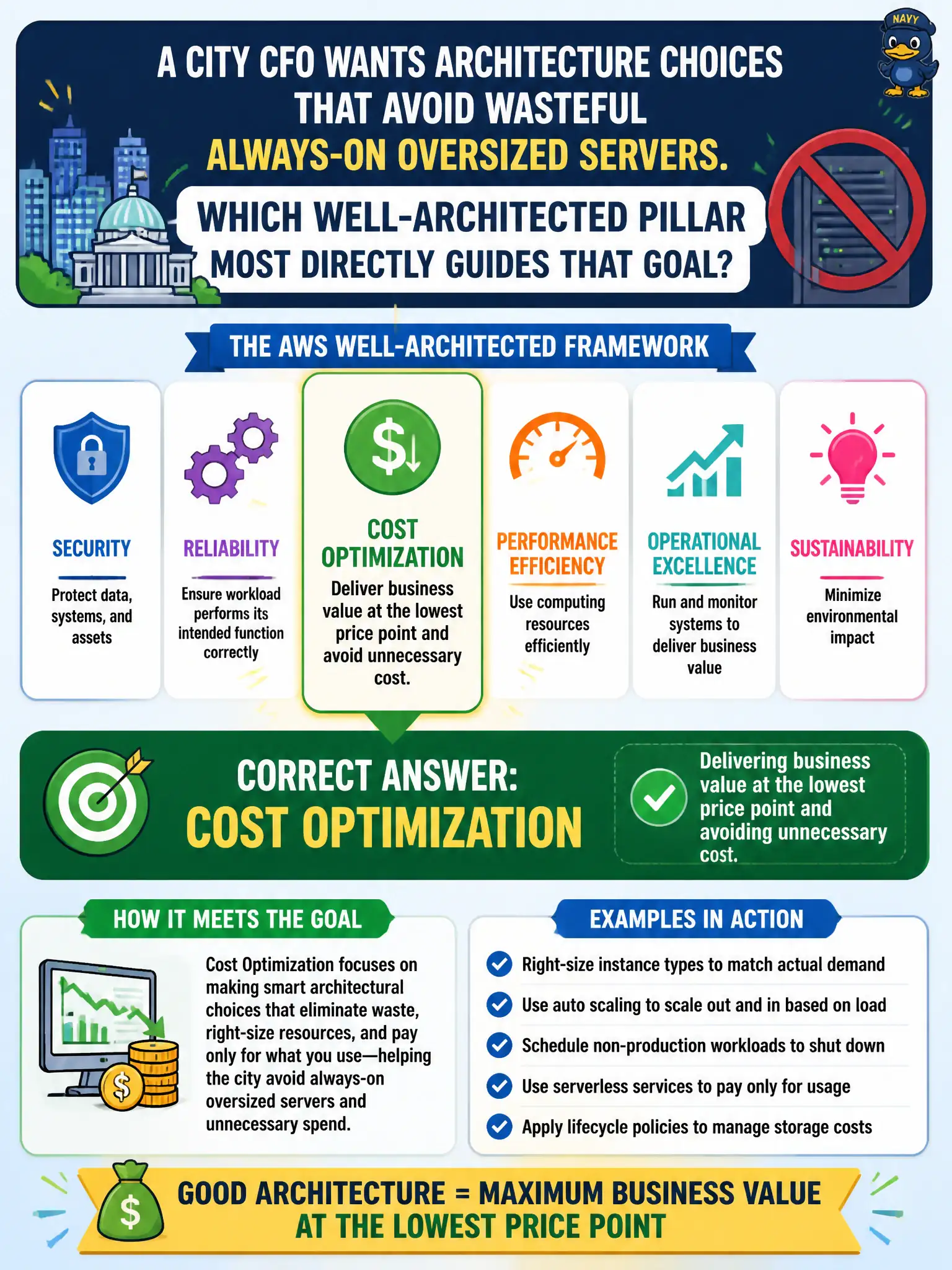
A city CFO wants architecture choices that avoid wasteful always-on oversized servers. Which Well-Architected pillar most directly guides that goal?
Select an answer to reveal the explanation.
Short Explanation
Always-on oversized servers burn money like leaving the stadium lights on all week. Cost Optimization is the pillar that pushes architecture toward value without waste. Right-size and stop paying for idle iron the city does not need.
Full Explanation
Cost Optimization most directly guides a city CFO who wants architecture choices that avoid wasteful always-on oversized servers. The pillar focuses on delivering business value at the lowest price point and avoiding unnecessary cost—right-sizing, elasticity, pricing models, and continual review of spend.
Security alone that only inventories encryption algorithms does not stop idle oversize fleets from burning budget. Reliability alone that only counts how many AZs exist on a slide can increase cost without answering waste. Performance Efficiency alone that ignores whether idle oversize fleets waste budget may chase speed while leaving CFO goals unmet.
Exam caveat: Wasteful always-on oversize → Cost Optimization; do not hide cost questions under Security or Reliability labels. Operational check: inventory always-on municipal fleets, right-size or schedule non-production stops, enable budgets/anomaly detection, and report month-over-month savings from eliminating idle oversize capacity.
Municipal teams should keep a one-page decision record linking this Cloud Practitioner concept to resident outcomes, revisit it after major traffic or compliance changes, and ensure runbooks still match the chosen design.