
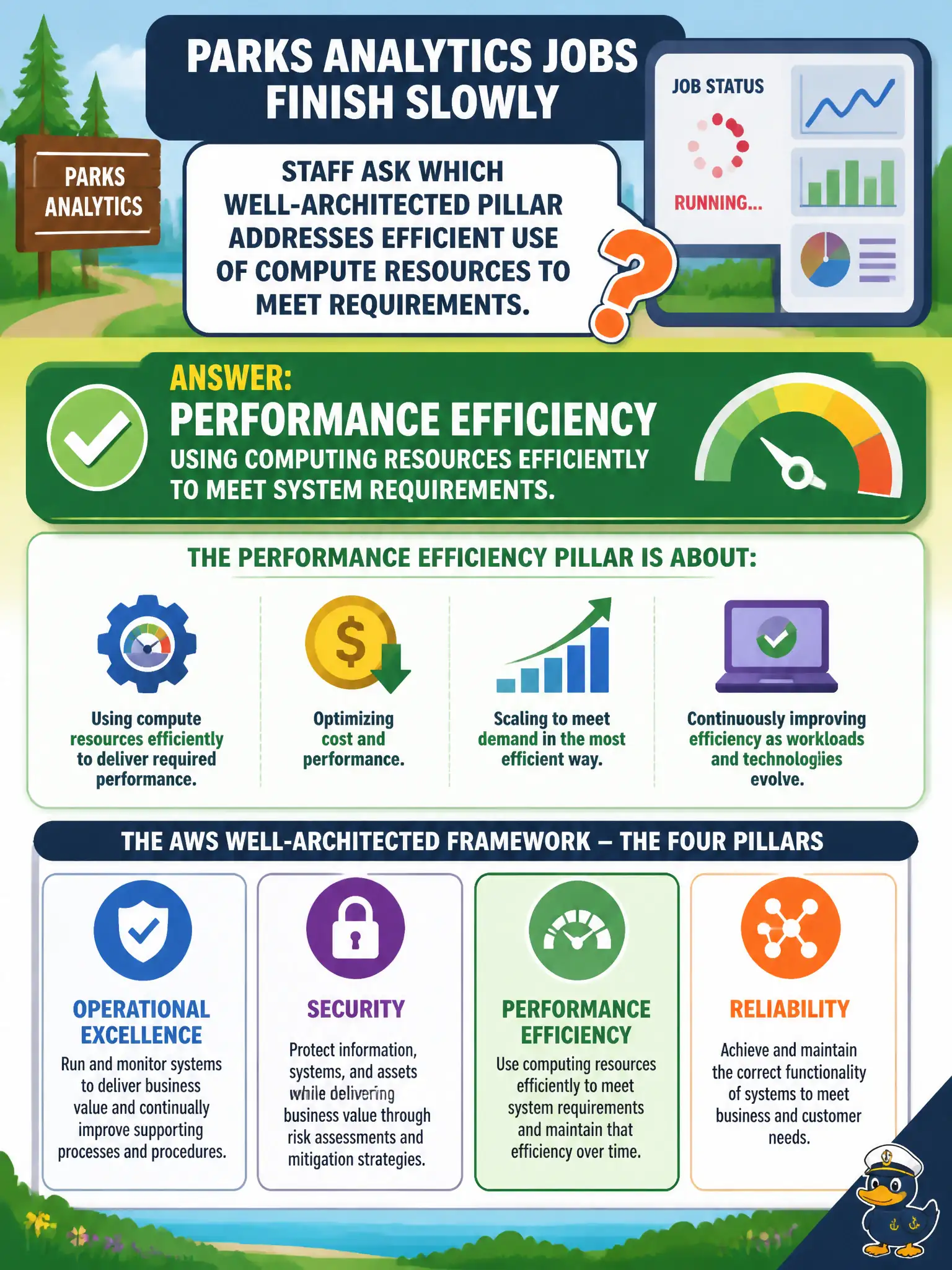
Parks analytics jobs finish slowly and staff ask which Well-Architected pillar addresses efficient use of compute resources to meet requirements. Which pillar is that?
Select an answer to reveal the explanation.
Short Explanation
Slow analytics often means the wrong size wrench for the bolt. Performance Efficiency is the pillar about picking and using compute efficiently so jobs meet needs without wasteful drag. Fix the resource fit; do not stop at MFA trivia.
Full Explanation
Performance Efficiency is the Well-Architected pillar that addresses efficient use of compute resources to meet system requirements—exactly what parks analytics staff need when jobs finish slowly. The pillar guides selection of resource types, sizing, monitoring, and trade-offs so analytics meet time requirements without blindly oversizing.
Security alone covering only MFA on the root user is necessary hygiene but does not speed analytics compute selection. Cost Optimization alone that never considers whether the right compute shape is used may cut spend while leaving jobs incorrectly typed. Reliability alone defined only as keeping a paper backup of passwords confuses credential continuity with compute efficiency.
Exam caveat: Slow jobs + efficient compute to meet requirements → Performance Efficiency, not Security/Cost/Reliability caricatures. Operational check: profile a representative parks analytics job, compare instance or service shapes (CPU/memory/GPU/storage throughput), adopt the shape that meets SLA at acceptable cost, and set monitoring for duration regressions.
Municipal teams should keep a one-page decision record linking this Cloud Practitioner concept to resident outcomes, revisit it after major traffic or compliance changes, and ensure runbooks still match the chosen design.