
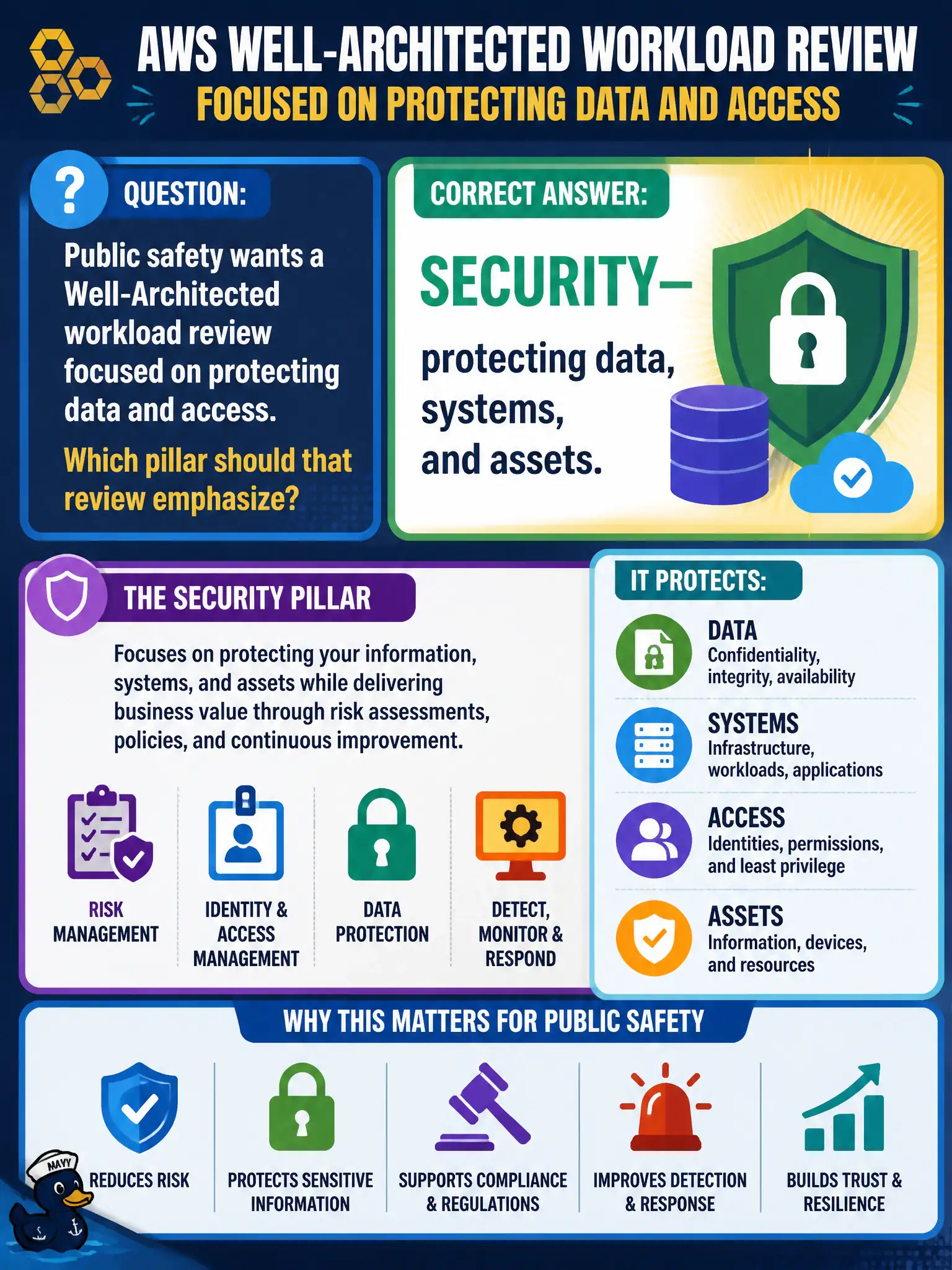
Public safety wants a Well-Architected workload review focused on protecting data and access. Which pillar should that review emphasize?
Select an answer to reveal the explanation.
Short Explanation
Protecting data and who can touch it is the Security pillar’s job. Public safety’s review should lean there first—locks and least privilege, not a cost spreadsheet alone. Name the Security pillar and the focus is clear.
Full Explanation
The Security pillar is what a public-safety Well-Architected review should emphasize when the focus is protecting data and access. That pillar centers on protecting data, systems, and assets—identity, detection, infrastructure protection, data protection, and incident response—aligned to safeguarding sensitive public-safety information.
Cost Optimization alone ignores identity and data protection even when waste is reduced. Performance Efficiency alone treating encryption as optional decoration optimizes compute shapes while leaving confidentiality gaps. Sustainability alone measuring solely carbon of unused test accounts addresses environmental impact, not access control or data protection.
Exam caveat: Map the stem’s verbs—protect data and access—directly to Security; other pillars are valuable but not the emphasis here. Operational check: in the review, verify IAM least privilege, encryption at rest and in transit for sensitive stores, logging of access, and an incident-response runbook—then track remediation of any high findings before go-live.
Municipal teams should keep a one-page decision record linking this Cloud Practitioner concept to resident outcomes, revisit it after major traffic or compliance changes, and ensure runbooks still match the chosen design.