
A county architecture board asks what the AWS Well-Architected Framework is for. Which statement best describes its purpose?
Select an answer to reveal the explanation.
Short Explanation
Think of Well-Architected as a checklist of good cloud habits, grouped into pillars—not a price quote. It guides how you design workloads so they are solid across security, reliability, and the rest. The board wants design guidance, not a billing toy.
Full Explanation
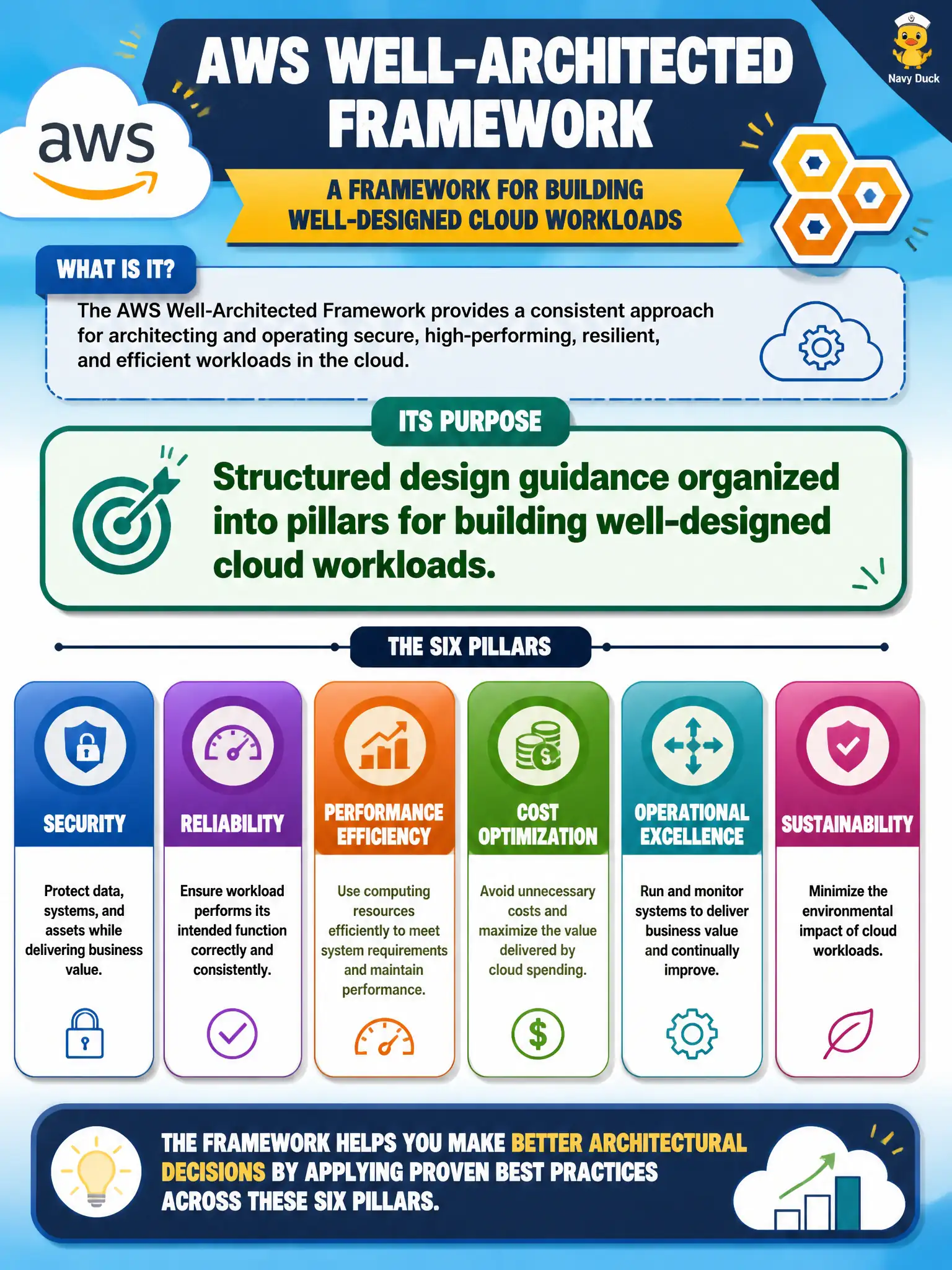
The AWS Well-Architected Framework provides structured design guidance organized into pillars for building well-designed cloud workloads. For a county architecture board, it is a consistent way to review municipal systems—security, reliability, performance, cost, operations, and sustainability—rather than a one-off checklist invented per project.
A billing calculator that only forecasts Reserved Instance discounts is a cost tool, not the Framework’s purpose. A mandatory support ticket template required before opening any AWS account invents a process gate unrelated to architectural guidance. A replacement for IAM that grants every user administrator rights by default contradicts both Well-Architected Security guidance and least privilege.
Exam caveat: Know that Well-Architected is pillar-based design guidance; distractors often invent billing, support, or IAM replacements. Operational check: run a Well-Architected review (or Tool lens questions) on one county workload, record high-risk findings per pillar, and assign remediation owners with due dates before the next architecture board.
Municipal teams should keep a one-page decision record linking this Cloud Practitioner concept to resident outcomes, revisit it after major traffic or compliance changes, and ensure runbooks still match the chosen design.