
Under node memory pressure, a sanitation platform team must reason about which pods the kubelet is more likely to evict first. Which statement is correct?
Select an answer to reveal the explanation.
Short Explanation
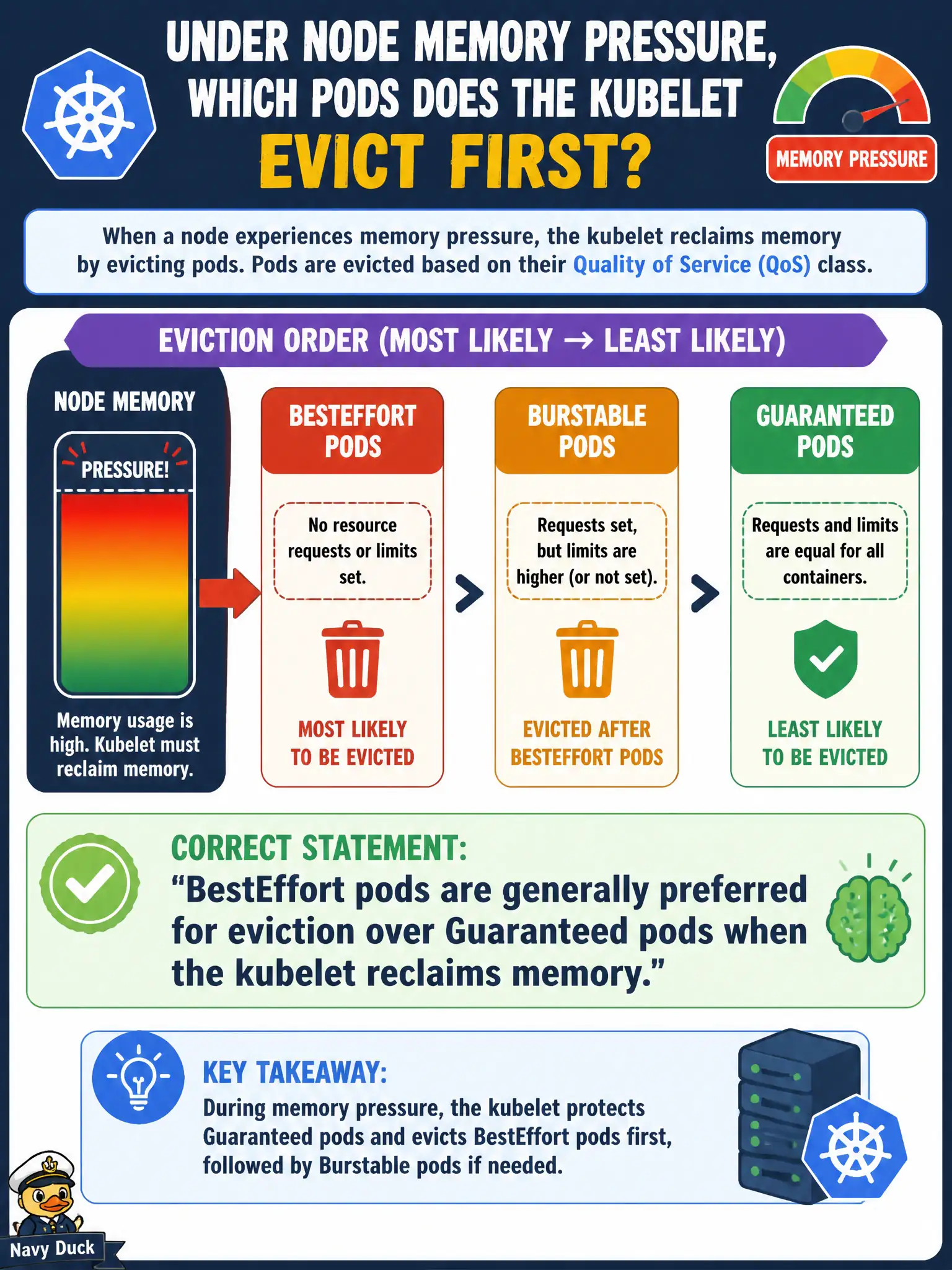
When the node runs out of breathing room, BestEffort pods are the first to get the tap on the shoulder. Guaranteed workloads with matched requests and limits sit higher on the survival list.
Full Explanation
Under node memory pressure, the kubelet reclaims memory using QoS-aware eviction ranking. BestEffort pods—those without requests and limits—are generally preferred for eviction over Guaranteed pods that set matched requests and limits. Sanitation platform teams should therefore expect BestEffort workloads to receive the first tap on the shoulder when the node must free memory for the rest of the building. Guaranteed pods are not always evicted before BestEffort pods; that statement reverses the usual preference order and would undermine why operators bother defining Guaranteed QoS for critical processes. QoS class is not assigned by the Ingress controller and does not ignore requests and limits; QoS is derived from each pod’s resource requests and limits. Burstable pods can be evicted; they typically rank between BestEffort and Guaranteed and are certainly not immune regardless of usage when the kubelet is under memory pressure. Exam caveat: A Guaranteed pod can still OOMKill inside its own cgroup without being the kubelet’s first eviction target. Memorize BestEffort, Burstable, and Guaranteed definitions for CKA-style questions. Operational check: Classify must-keep sanitation pods as Guaranteed where appropriate, avoid unmarked BestEffort for critical services, rehearse MemoryPressure in a lab, and confirm observed eviction order matches policy expectations.