
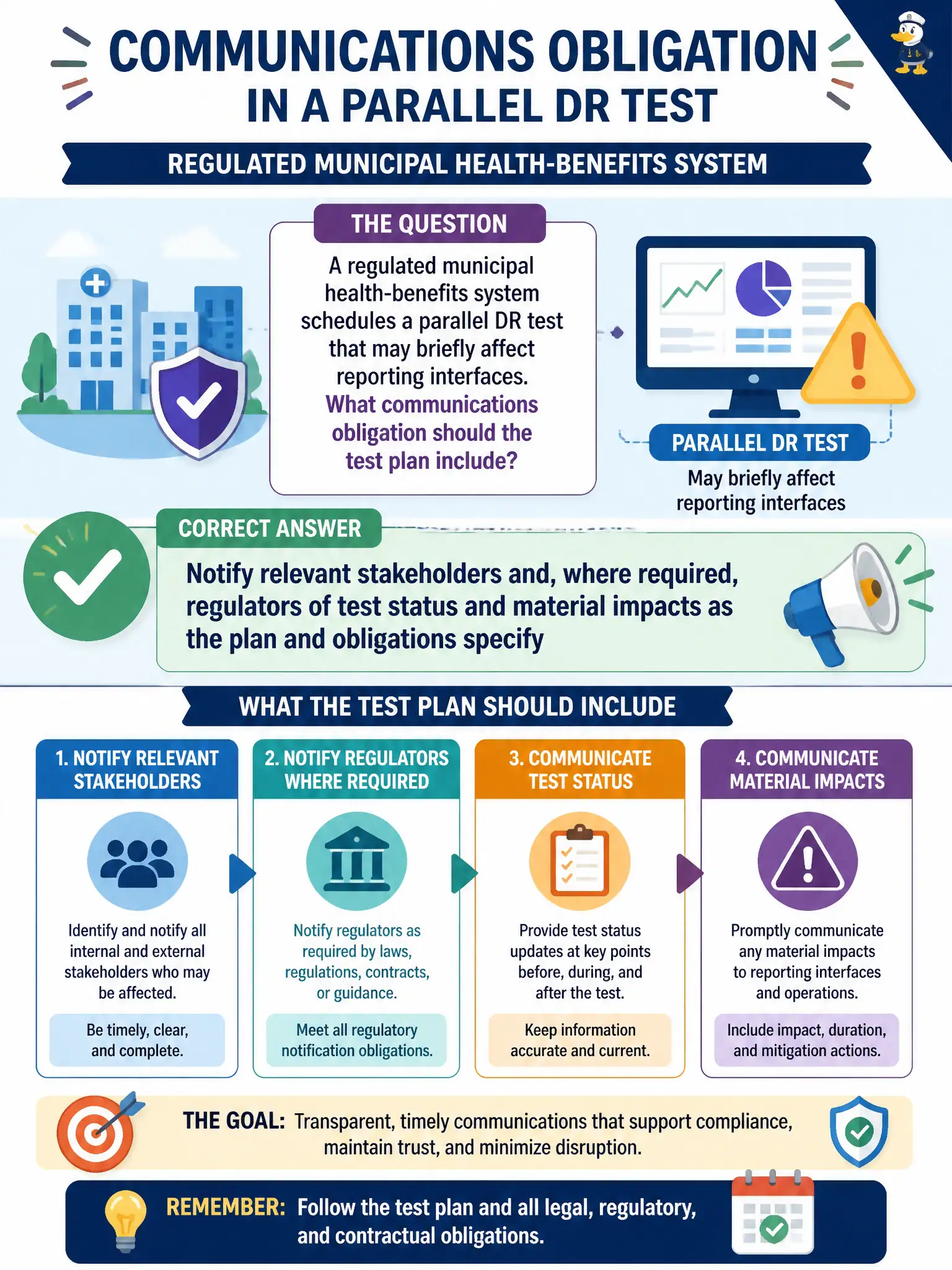
A regulated municipal health-benefits system schedules a parallel DR test that may briefly affect reporting interfaces. What communications obligation should the test plan include?
Select an answer to reveal the explanation.
Short Explanation
Some drills aren’t secret club activities. If a test can bump regulated interfaces, tell the stakeholders—and regulators when rules say so—so nobody mistakes a drill for a real outage.
Full Explanation
DRP testing on regulated municipal systems carries a communications obligation proportional to potential impact. When a parallel DR test for a health-benefits system may briefly affect reporting interfaces, the test plan should notify relevant stakeholders in advance or as impacts occur, and notify regulators when statutes, contracts, or program rules require awareness of testing status or material service effects. Transparent, planned communication prevents partners from treating drill anomalies as unexplained production failures and protects trust with oversight bodies.
Hiding the test from all stakeholders forever maximizes surprise risk and blocks organizational learning. Notifying only social media after a failure is reactive, incomplete, and may miss the contractual audiences that needed advance or concurrent notice. Assuming regulators never need awareness of DR testing for covered systems is unsafe for regulated health-benefits workloads where reporting integrity and availability can be scrutinized.
Exam caveat: testing programs include planning, execution, evaluation, and communication of results/status. Parallel tests run recovery alongside production and can still create interface side effects—those effects are why stakeholder communication appears in correct answers. Regulatory notice depends on context; the exam often signals it with “regulated” or compliance framing.
Operational check: embed a communications checklist in every DR test plan—who is informed before start, what constitutes a material impact trigger, which regulator or partner contacts apply, and how results are distributed—then verify the checklist was completed in the test after-action package.