
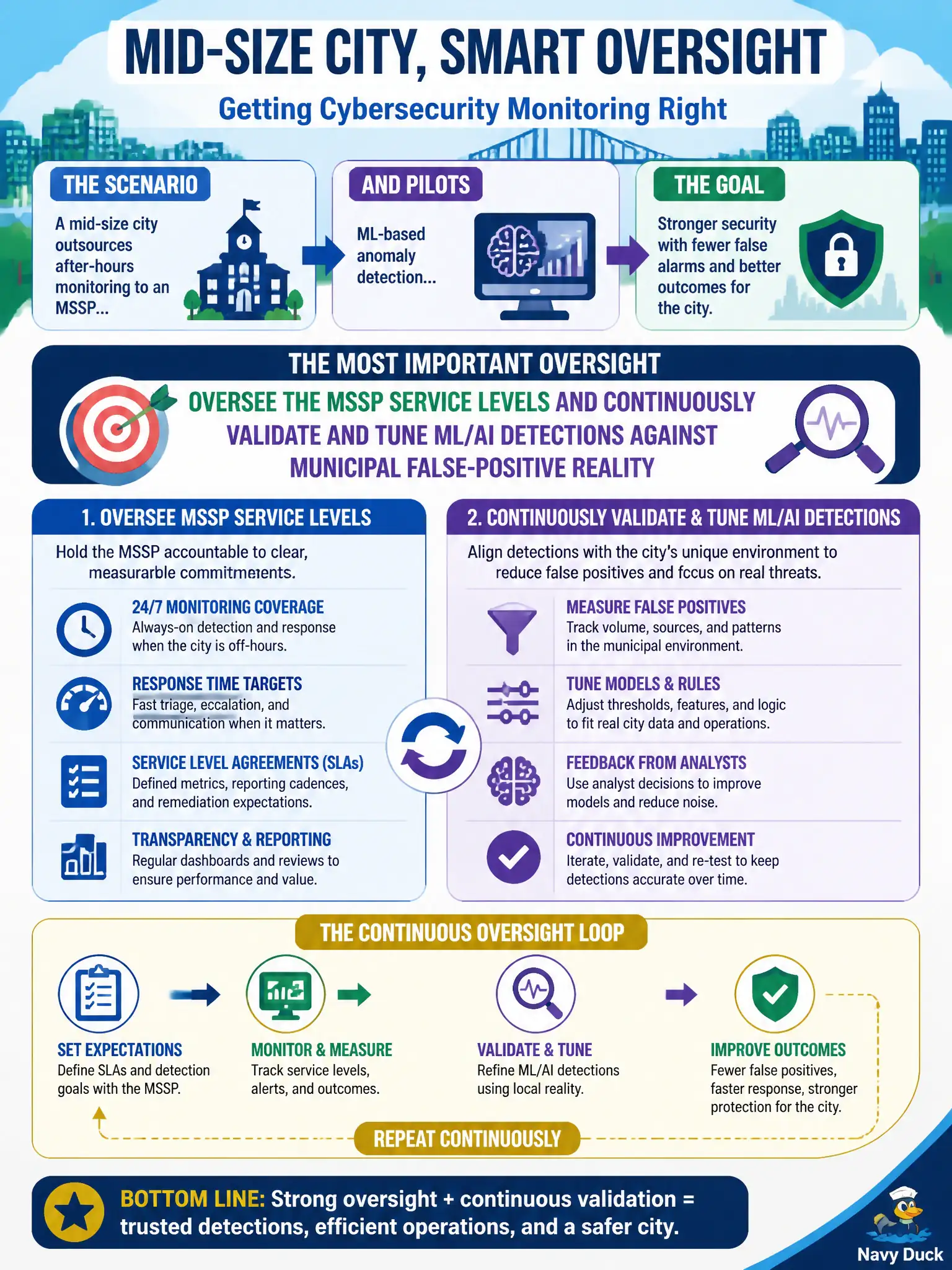
A mid-size city outsources after-hours monitoring to an MSSP and pilots ML-based anomaly detection. What oversight is most important?
Select an answer to reveal the explanation.
Short Explanation
Outsourcing nights and adding smart alerts does not mean you leave the cockpit. Watch MSSP SLAs and keep tuning the ML so city false positives do not bury real events. Blind trust in every beep is not oversight.
Full Explanation
Managed security service providers and machine-learning detections can extend a city’s night coverage and signal quality, but oversight remains a municipal responsibility. The CISO’s organization must oversee MSSP service levels—response times, escalation quality, coverage hours, and reporting—and continuously validate ML/AI detections against the false-positive reality of municipal traffic and workflows. Without validation, models trained on generic enterprise patterns may flood tickets with benign batch jobs or seasonal citizen spikes, burying true positives. Oversight includes sampling tickets, challenging stale use cases, and requiring transparency into how models are tuned and what data they consume.
Accepting every MSSP and ML alert as ground truth without validation guarantees fatigue and mis-prioritization. Hiding MSSP ticket metrics from the city CISO to avoid awkward reviews defeats governance and masks SLA breaches. Disabling human review because machine learning never needs tuning ignores concept drift, seasonal municipal patterns, and adversarial manipulation of features. Exam caveat: outsourcing operations does not outsource accountability for risk decisions and citizen data protection. Operationally, review MSSP scorecards monthly, maintain a tuning backlog with city SOC ownership, and periodically inject known-bad test cases to verify detection and escalation paths still work.