
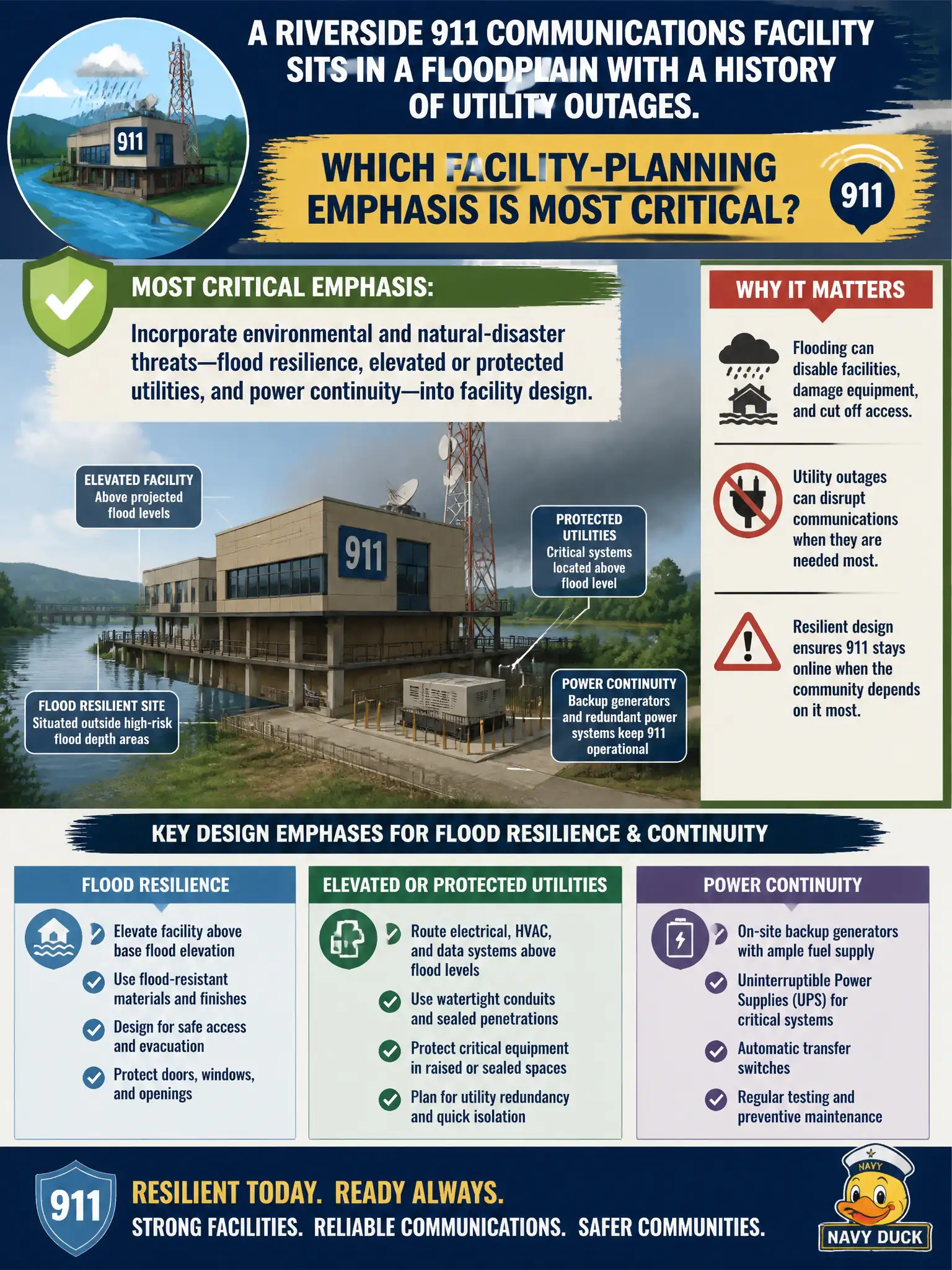
A riverside 911 communications facility sits in a floodplain with a history of utility outages. Which facility-planning emphasis is most critical?
Select an answer to reveal the explanation.
Short Explanation
A 911 center next to a rising river has to plan for water and blackouts, not hope. Elevate and protect power and gear; put generators where floods cannot drown them. Environment is part of security design.
Full Explanation
A riverside 911 communications facility in a floodplain with utility outage history must treat environmental and natural-disaster threats as first-class design inputs. Flood resilience, elevation or protection of critical equipment and utilities, drainage, and power continuity (UPS, generators above flood risk, fuel logistics) directly determine whether emergency communications remain available when the public needs them most. Facility planning that ignores flood maps and utility fragility is incomplete security engineering.
Claiming emergency systems are exempt from environmental risk is false and dangerous. Desktop wallpaper tips do not keep radio and CAD systems dry or powered. Placing generators below grade in the flood path shortens cable runs while maximizing the chance that backup power fails precisely when floods and outages coincide.
Exam caveat: CISSP facility design explicitly includes environmental threats—flood, fire, seismic, storm, utility failure—especially for critical municipal services such as PSAPs.
Operational check: incorporate flood maps into siting and elevation decisions; protect or elevate switchgear and generators; test failover during simulated utility loss; maintain fuel and vendor SLAs; document alternate PSAP or continuity sites; reassess after nearby flood events or infrastructure changes.