
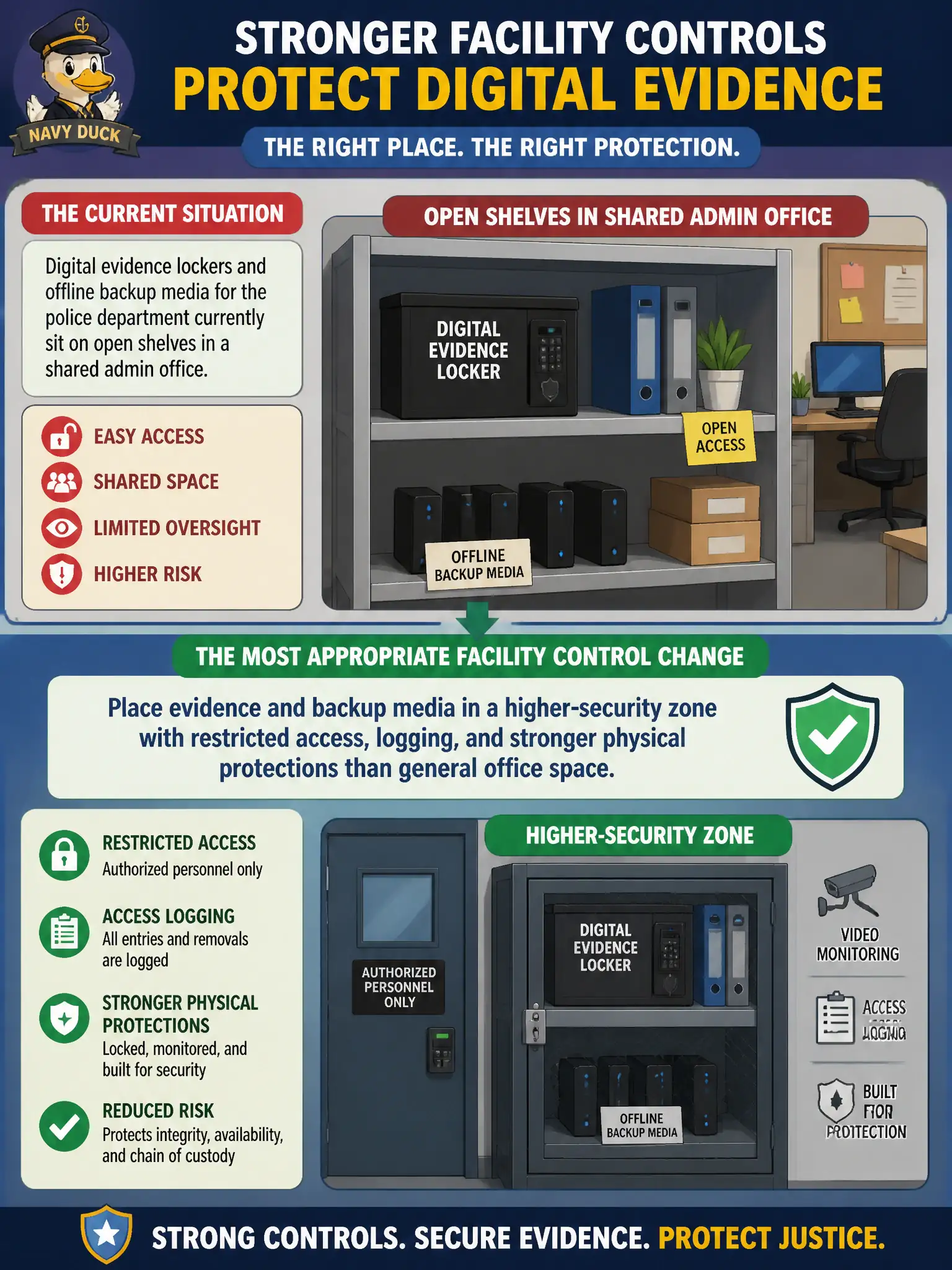
Digital evidence lockers and offline backup media for the police department currently sit on open shelves in a shared admin office. What facility control change is most appropriate?
Select an answer to reveal the explanation.
Short Explanation
Evidence and backup tapes are not coffee-room decor. They need a tighter zone—locks, limited keys, and logs—than the shared admin desks. Treat them like the high-value assets they are.
Full Explanation
Digital evidence and offline backup media for police operations require a higher-security facility zone than a shared admin office. Restricted rooms or lockers with limited access lists, entry logging, and stronger physical protections reduce theft, tampering, and chain-of-custody failures. Differentiating zones by asset sensitivity is a core facility-control practice: evidence and cold backups are high-value confidentiality and integrity assets that must not sit on open shelves beside routine paperwork.
Leaving media open for informal peer review undermines custody and invites unauthorized viewing or substitution. Moving evidence into a public lobby maximizes exposure. Storing evidence only on personal USB drives carried by interns destroys accountability, durability, and departmental control.
Exam caveat: CISSP expects physical control strength to scale with asset sensitivity; evidence and backup media are classic cases for elevated zoning beyond general office space.
Operational check: relocate media to badge- or key-controlled storage with dual-control or logged checkout where policy requires; inventory seals and media IDs; separate evidence workflows from general admin traffic; monitor environmental conditions; audit access logs; forbid ad-hoc portable copies outside approved evidence handling procedures.