
A city is building a resident AI chatbot that will process service requests containing personal data. Which secure-design principle should be baked into the project from the first architecture reviews?
Select an answer to reveal the explanation.
Short Explanation
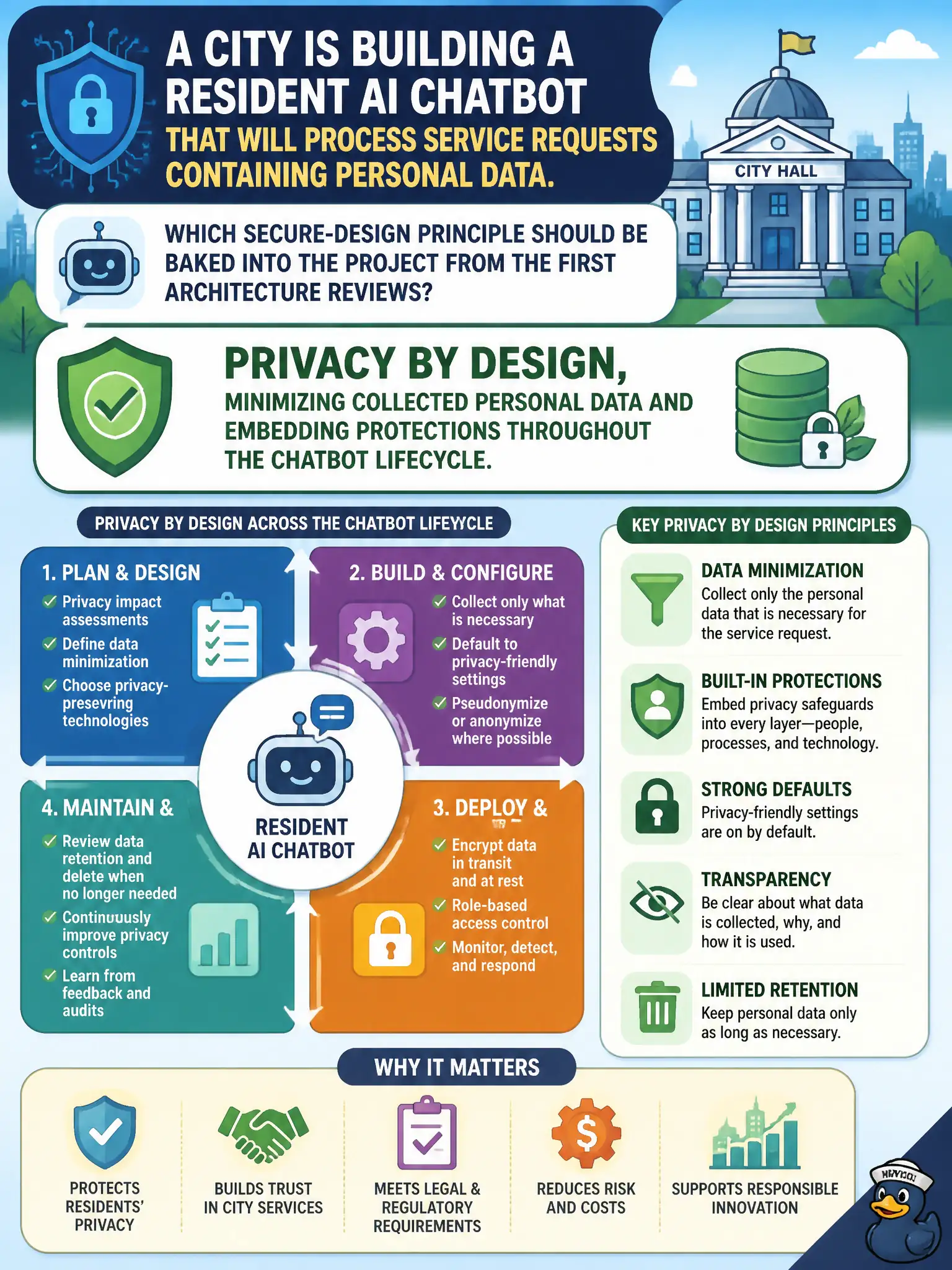
When a chatbot will hear residents' personal stories, privacy cannot be a sticker added at go-live. Privacy by design means collecting less, protecting what must be kept, and wiring that in from the first whiteboard sketch.
Full Explanation
A resident AI chatbot that will process service requests containing personal data must treat privacy as an architectural property from the first design reviews, not a go-live checkbox. Privacy by design means minimizing collected personal data to what the service request truly needs, defining retention and deletion, applying encryption and access controls to prompts and logs, assessing model-vendor data flows, and embedding DPIA-style reviews across the lifecycle—from prototyping through decommissioning. Shared responsibility that dumps all privacy duties on a cloud email vendor misassigns accountability for a city-built chatbot processing resident PII; the municipality remains the data controller for collection purpose and consent/notice. SASE may help branch connectivity later but does not by itself minimize chatbot data collection or govern model training retention. Hiding the chatbot URL from search engines is obscurity and fails as soon as the link is shared on the city homepage. Exam caveat: privacy by design / data minimization are first-class secure-design principles on CISSP; networking product categories and obscurity are frequent distractors. Operational check: document data elements the bot may collect, strip unnecessary fields, encrypt storage of transcripts, restrict admin access to conversations, contractually bar secondary use by the AI vendor where possible, and re-review privacy controls at each major release.