
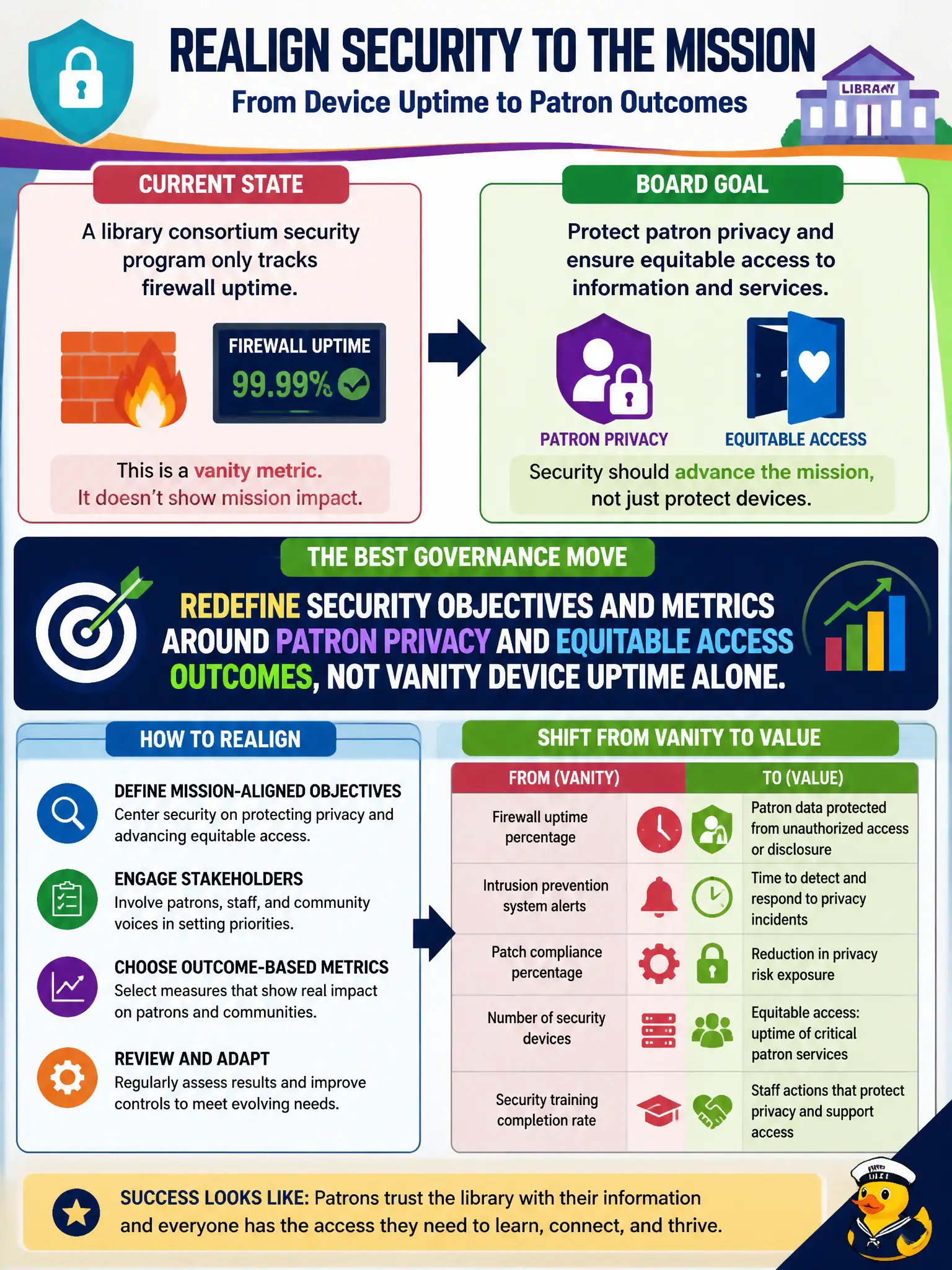
A library consortium security program only tracks firewall uptime while the board's goal is protecting patron privacy and equitable access. What governance move best realigns security to the mission?
Select an answer to reveal the explanation.
Short Explanation
If the board cares about patron privacy but the scorecard only celebrates firewall uptime, security is measuring the wrong game. Governance means tying goals and metrics to the mission — privacy and access — not shiny appliance green lights. Fix the scoreboard and the program follows.
Full Explanation
Security governance aligns objectives, metrics, and oversight with organizational mission and risk appetite. If a library consortium program only tracks firewall uptime while the board cares about patron privacy and equitable access, the corrective governance move is to redefine security objectives and metrics around those privacy and access outcomes rather than vanity device uptime alone. Controls and SLAs should serve mission outcomes; green appliance lights are insufficient evidence of program success.
Increasing firewall uptime SLAs while stopping privacy metrics doubles down on the misalignment and blinds the board to the risks it actually prioritized. Outsourcing all logging so the board no longer reviews security abandons governance rather than fixing it. Replacing the board with the firewall operations team inverts accountability: operations executes; the board sets direction and accepts residual risk.
Exam caveat: Governance questions punish 'more of the wrong metric.' Prefer answers that reconnect measurement to business or mission objectives stated in the stem.
Operational check: Build a balanced scorecard with privacy incident rates, access-equity service metrics, least-privilege audit results, and only then supporting infrastructure health; report those to the board on a fixed cadence with clear owners.