
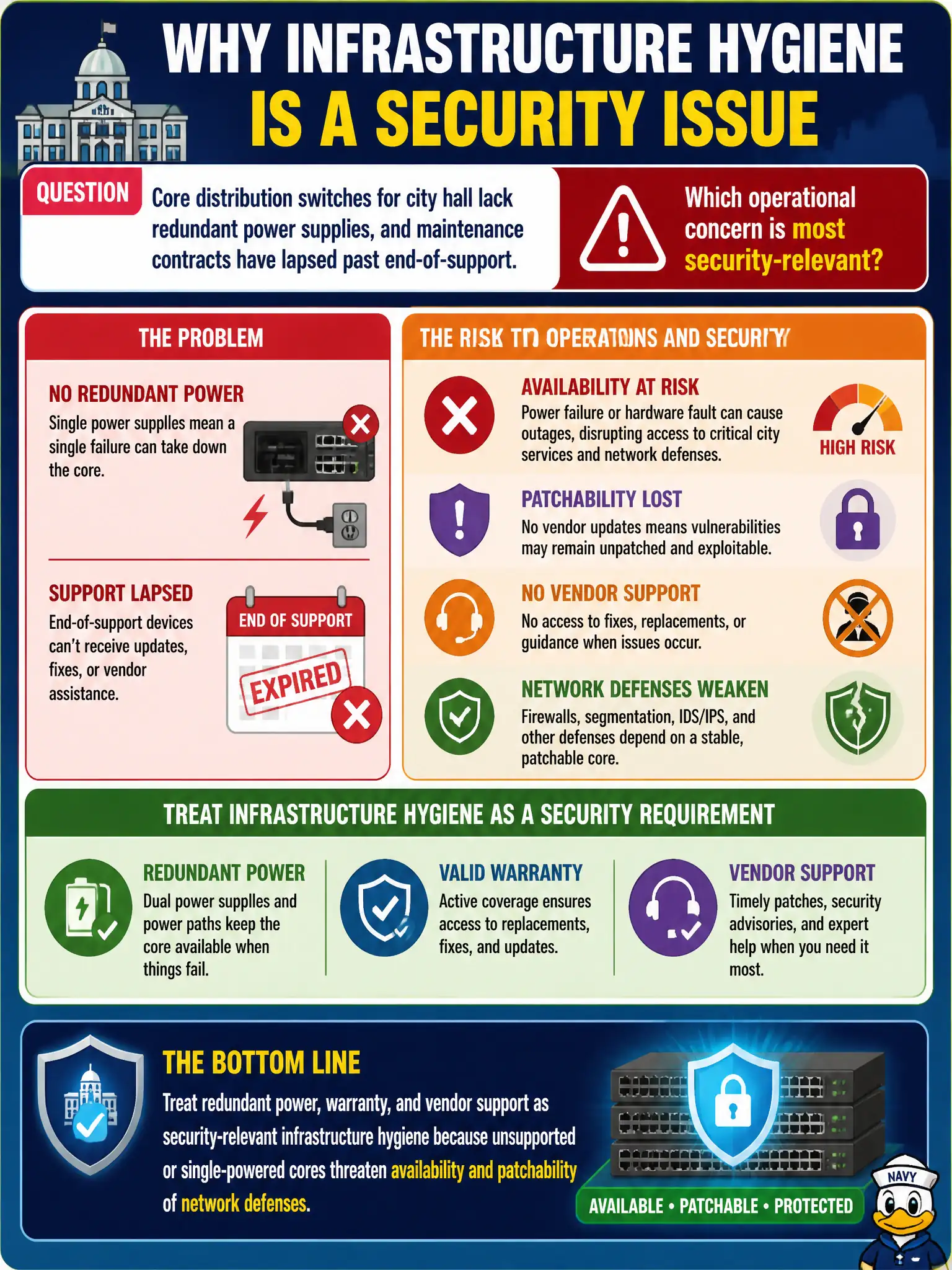
Core distribution switches for city hall lack redundant power supplies, and maintenance contracts have lapsed past end-of-support. Which operational concern is most security-relevant?
Select an answer to reveal the explanation.
Short Explanation
A core switch on one power brick with an expired support contract is a silent outage waiting to happen—and outages take your firewalls and segmentation with them. Power redundancy and supported gear are part of security hygiene, not 'just facilities.'
Full Explanation
Core distribution switches without redundant power and without current vendor support are not merely facilities problems—they are security-relevant failures waiting to erase the availability and patchability of network defenses. A single power supply outage can take down firewalls, segmentation enforcement, and monitoring that ride those cores. Lapsed maintenance past end-of-support means missing firmware fixes for known vulnerabilities and no assured path to remediate them. Treating redundant power, warranty, and support contracts as infrastructure hygiene keeps the platforms that enforce confidentiality and integrity alive and patchable.
Ignoring power and support because availability is supposedly separate from confidentiality controls misunderstands the CIA triad: availability of security enforcement points is itself a security requirement. Replacing only faceplates so audits show refreshed hardware without renewing support is cosmetic compliance that leaves unpatchable risk. Moving cores onto consumer power strips to save budget while freezing firmware forever compounds electrical and vulnerability exposure.
Exam caveat: CISSP operations and network security treat supported, resilient infrastructure as part of maintaining controls over time. End-of-support devices and single points of power failure are exam-relevant weaknesses.
Operational check: inventory core power redundancy and UPS/generator dependency; list devices past or near end-of-support; fund replacements or extended support before coverage gaps; schedule firmware updates under active contracts; and include power-loss failover tests in change calendars.