
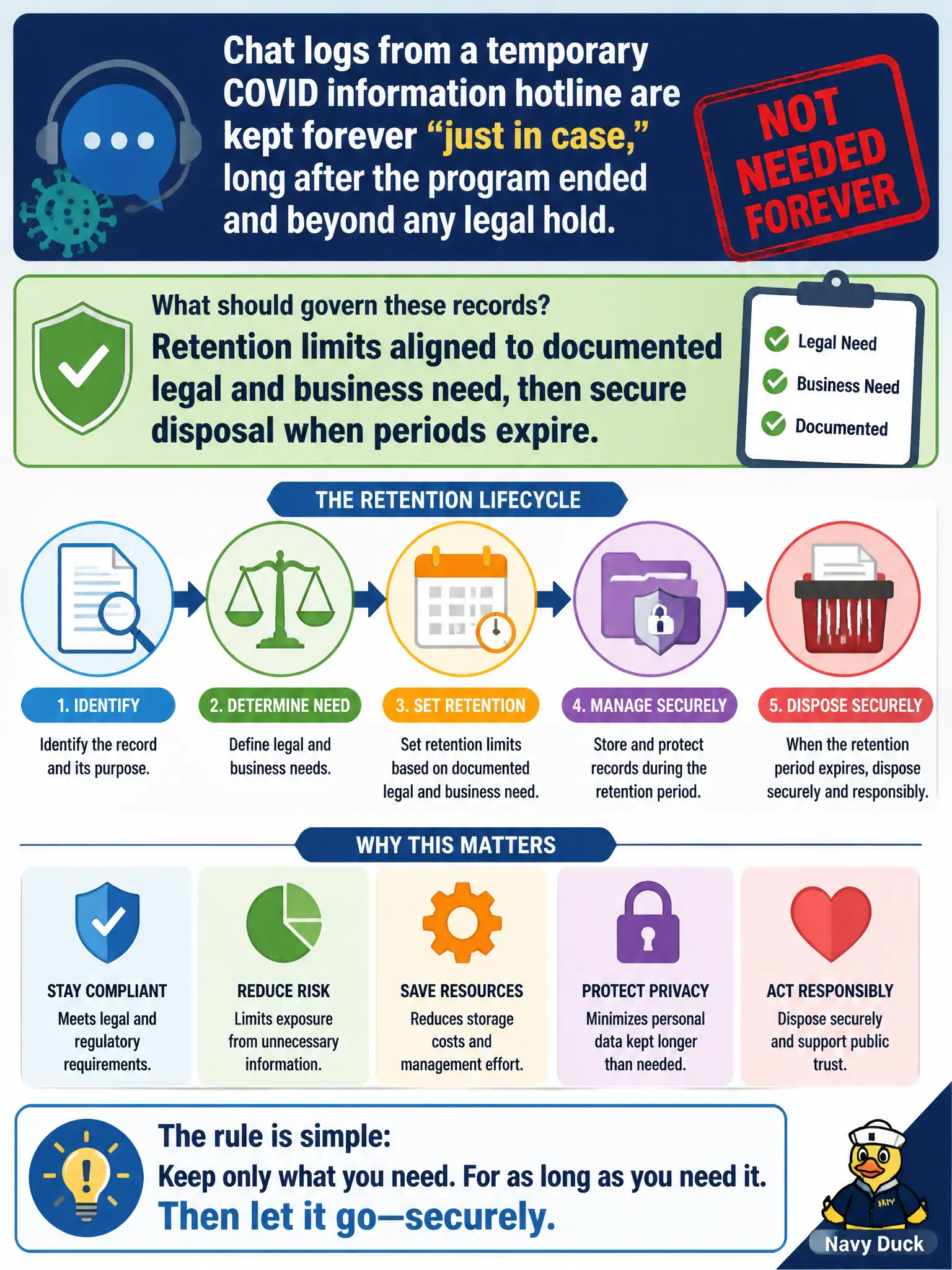
Chat logs from a temporary COVID information hotline are kept forever "just in case," long after the program ended and beyond any legal hold. What should govern these records?
Select an answer to reveal the explanation.
Short Explanation
"Just in case" is how file cabinets become landfills and breach treasures. Hotline chats need a retention clock tied to law and real business use—not eternal storage because someone might want them someday. When the clock runs out and no legal hold applies, dispose of them properly.
Full Explanation
COVID hotline chat logs kept forever "just in case" should instead follow retention limits aligned to documented legal and business need, then secure disposal when periods expire and no legal hold applies. Indefinite storage grows breach treasure and records clutter without serving a defined municipal purpose. Retention clocks tied to law and real program need—not nostalgia—govern temporary hotline records after the program ends. Asset security treats retention and disposal as lifecycle controls equal in importance to classification and encryption.
Indefinite retention as default best practice fails by concept: perpetual keep is not a municipal standard and conflicts with minimization and disposal duties. Deleting only when storage costs cross a dollar threshold fails because budget pressure is not a lawful retention schedule and ignores records calendars. Migrating all chats into public open data portals without review fails as reckless disclosure that ignores privacy, exemption analysis, and redaction requirements for citizen conversations.
Exam caveat: retention and secure disposal are core asset-security lifecycle controls; "just in case" is not a retention schedule. Operational check: map hotline chats to a records series with a defined period, confirm no active legal holds, then dispose via approved methods and document destruction for audit.