
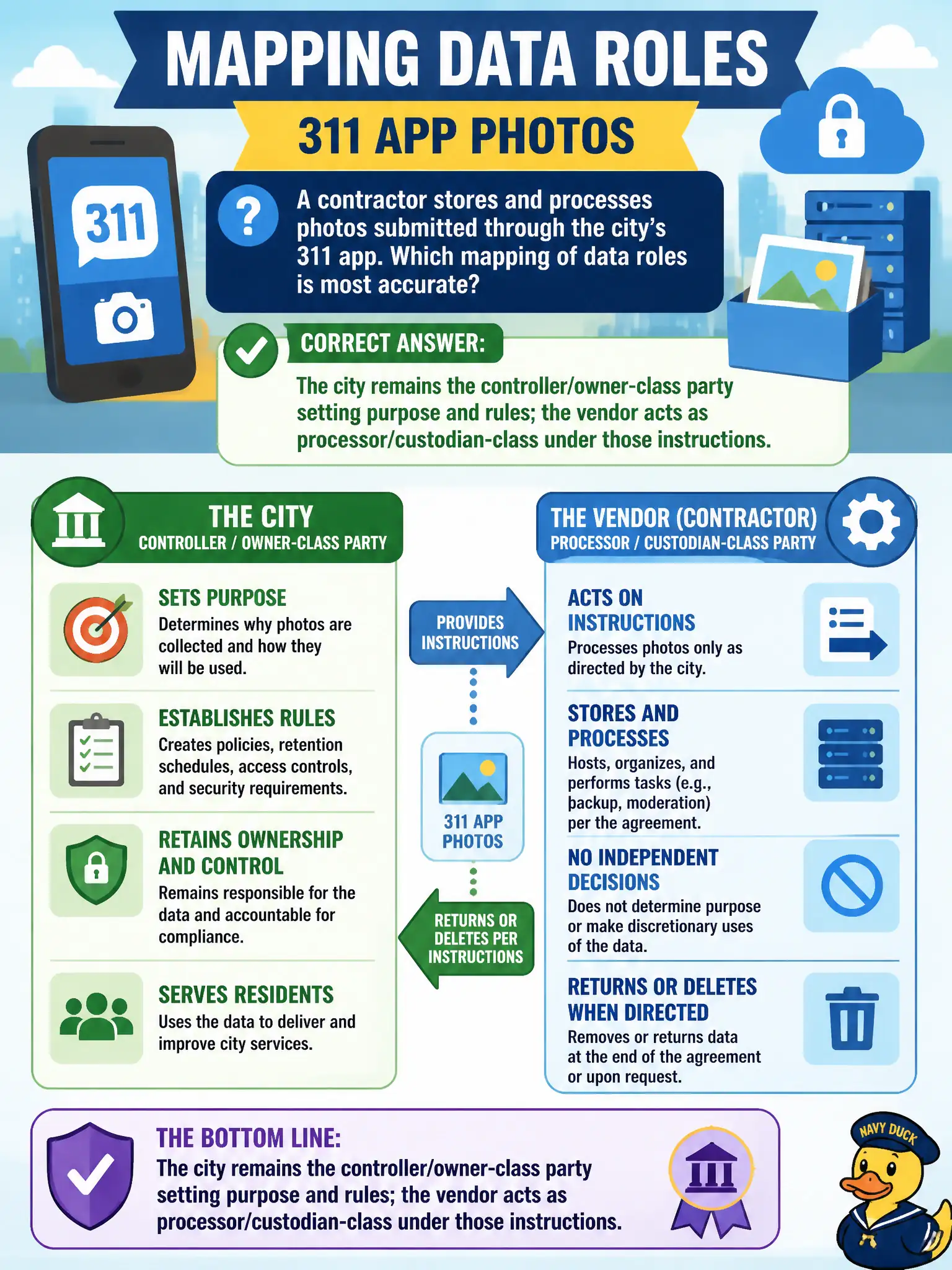
A contractor stores and processes photos submitted through the city's 311 app. Which mapping of data roles is most accurate?
Select an answer to reveal the explanation.
Short Explanation
Owning the purpose of the photo program is different from running the hard drives. The city still decides why photos are collected and who may see them; the vendor just processes under those rules. Hosting location does not steal ownership—or dump accountability—onto the contractor alone.
Full Explanation
For 311 photos stored and processed by a contractor, the city remains the controller/owner-class party setting purpose and rules, while the vendor acts as processor/custodian-class under those instructions. Hosting location does not transfer ownership of the civic purpose or accountability for lawful collection, retention, and access. The city decides why photos are collected and who may see them; the vendor processes under contract and instruction.
Declaring the vendor the sole data owner because photos sit on vendor servers fails by concept: custody of storage does not equal ownership of purpose and policy. Making 311 submitters system administrators responsible for encryption baselines fails as a role confusion—residents submitting photos are not operators of the city's security baselines. Claiming IT operations owns the business purpose without city policy input fails because purpose and lawful basis are business/policy decisions, not purely operational preferences.
Exam caveat: distinguish owner/controller from custodian/processor; cloud or contractor hosting does not dump municipal accountability. Operational check: contracts should state city ownership/control, permitted processing purposes, return/deletion on exit, and audit rights—confirm 311 photo purpose is documented in city policy, not only vendor terms.