
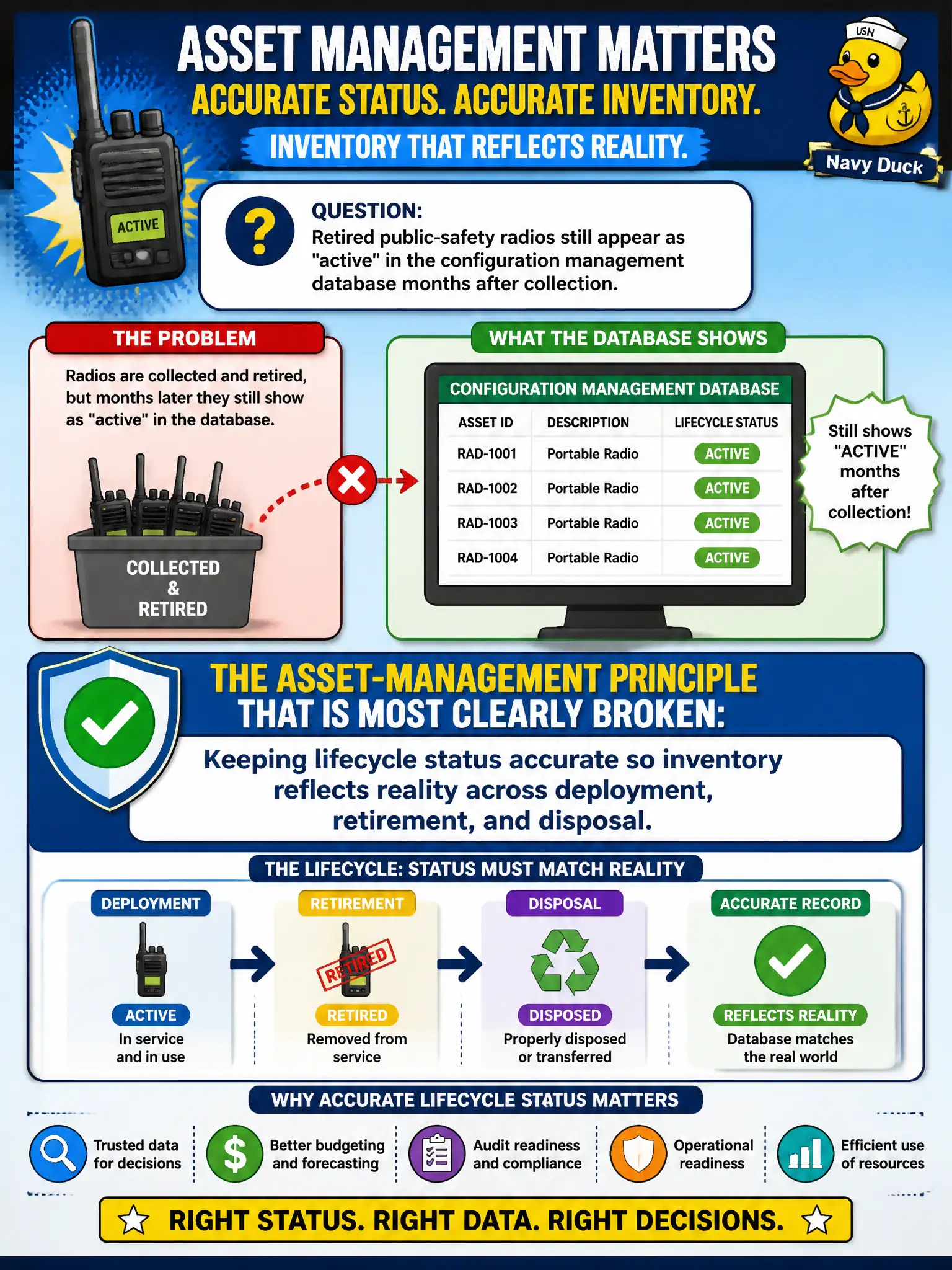
Retired public-safety radios still appear as "active" in the configuration management database months after collection. What asset-management principle is most clearly broken?
Select an answer to reveal the explanation.
Short Explanation
A phone book full of people who moved away last year is not a contact list—it is fiction. When retired radios still say "active," every audit, patch plan, and recovery count is wrong. Asset management means updating status through the whole lifecycle, including the day something leaves service.
Full Explanation
Retired public-safety radios still marked "active" months later break the principle of keeping lifecycle status accurate so inventory reflects reality across deployment, retirement, and disposal. Asset management is a continuous state machine: received, deployed, repaired, retired, disposed. Stale active status corrupts audits, patch and crypto plans, recovery counts, and accountability for radios that no longer exist in the field.
Encrypting firmware only after surplus marking fails as a timing/priority distraction and does not fix CMDB truthfulness. Classifying radios as Public so CMDB accuracy becomes optional fails because classification level does not waive inventory integrity. Purchasing without serial numbers at receipt is a receiving control failure, but the scenario's clear break is inaccurate lifecycle status after retirement, not the original buy.
Exam caveat: CISSP asset management stresses accurate inventory throughout the lifecycle, including timely status updates at retirement. Operational check: when radios are collected, update CMDB status the same day, reconcile active counts to physical custody, and block "active" records without a current assignee or location.