
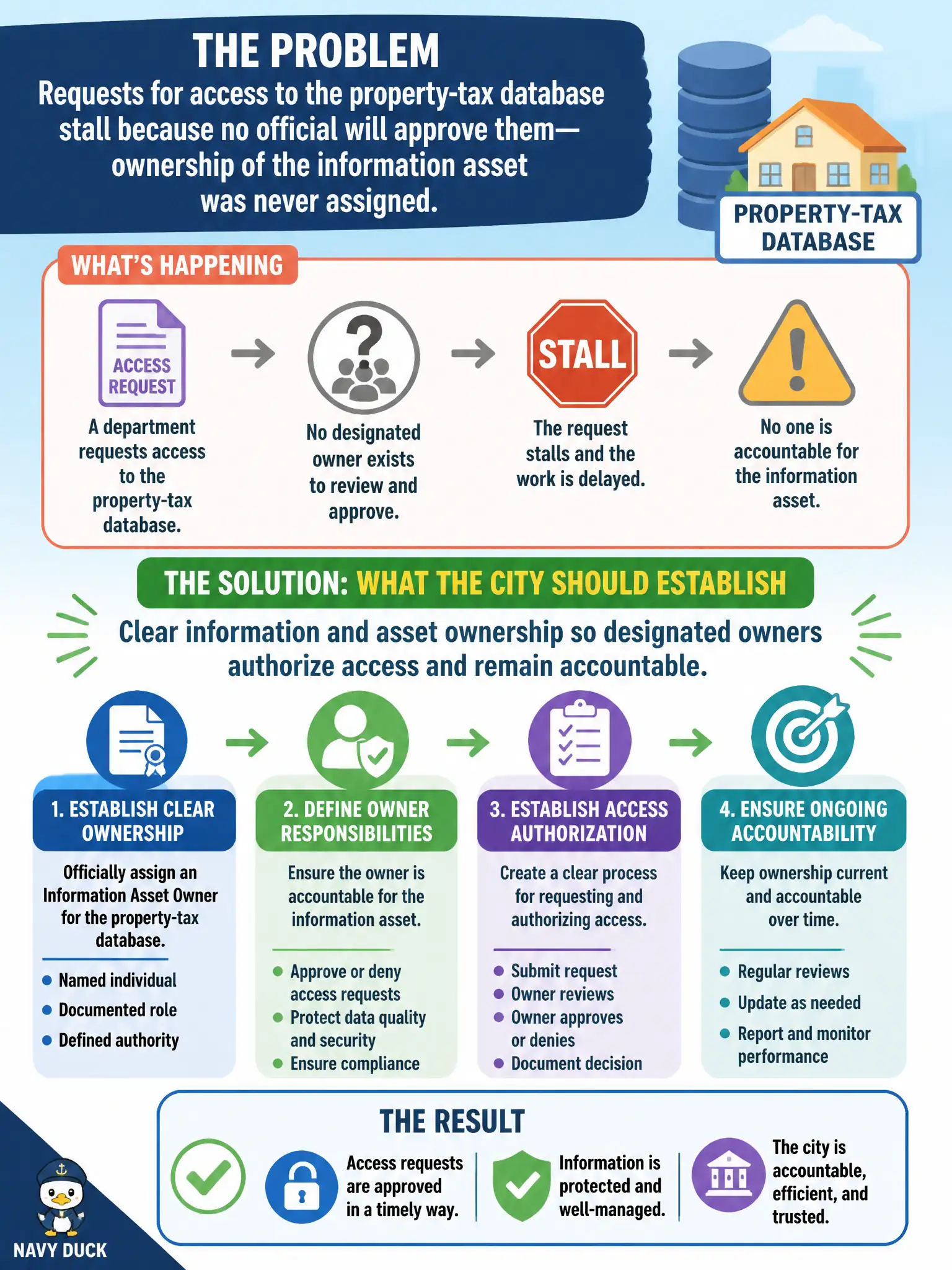
Requests for access to the property-tax database stall because no official will approve them—ownership of the information asset was never assigned. What should the city establish?
Select an answer to reveal the explanation.
Short Explanation
If nobody "owns" the playground, nobody mows it—and nobody decides who gets the key. Information assets need a named owner who can approve access and accept accountability. Without ownership, every request becomes a hot potato and security decisions stall.
Full Explanation
When access requests to the property-tax database stall because nobody will approve them, the city must establish clear information and asset ownership so designated owners authorize access and remain accountable. Ownership assigns decision rights and liability: a named business owner evaluates need-to-know, grants or denies access, and answers for misuse. Without ownership, every request becomes a hot potato and security governance freezes.
Anonymous shared admin accounts so anyone in Finance can grant access fails by concept: shared anonymous privilege destroys accountability and invents uncontrolled back doors. Declaring that IT automatically owns every database regardless of business purpose fails because IT may custodially operate systems while business owners set purpose and access policy for tax data. Opening the entire tax database publicly to eliminate bottlenecks fails as reckless oversharing that abandons confidentiality for throughput.
Exam caveat: CISSP separates data/system ownership from custodianship; stalled approvals usually signal missing owners, not missing shared passwords. Operational check: assign a Finance or Tax business owner for the property-tax database, document who may approve access, and measure request aging until ownership and SLAs exist.