
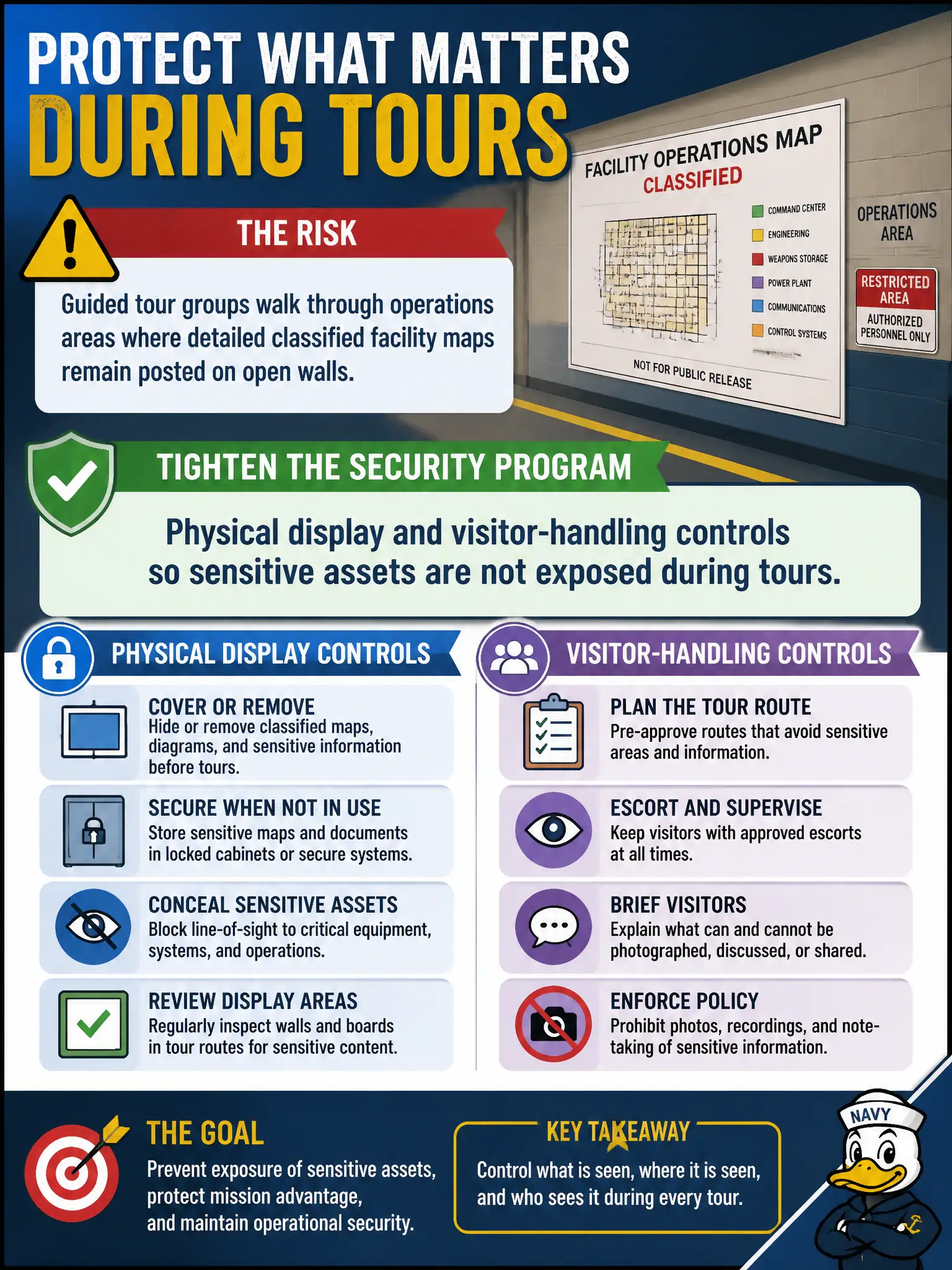
Guided tour groups walk through operations areas where detailed classified facility maps remain posted on open walls. What should the security program tighten?
Select an answer to reveal the explanation.
Short Explanation
If the "secret floor plan" is wallpaper in the hallway, the tour brochure just became your threat actor's research packet. Physical display rules and visitor routes matter as much as firewalls. Cover, remove, or relocate sensitive maps before outsiders stroll through.
Full Explanation
When guided tours walk past detailed classified facility maps posted on open walls, the security program should tighten physical display and visitor-handling controls so sensitive assets are not exposed during tours. Maps and diagrams are information assets in physical form; visitor routes, coverings, and temporary removal protect facility details that firewalls never see. Physical display rules and escort practices matter as much as logical access for operations-floor secrecy.
Tightening FOIA response times for post-tour map requests fails by concept: the immediate exposure is on-wall visibility during tours, not delayed formal requests. Password complexity on the lobby tour-scheduler kiosk fails because authentication strength on a kiosk does not hide wall-mounted maps. Focusing only on retention schedules for GIS archive copies fails as a digital-only distraction that ignores the live physical display risk visitors already exploit visually.
Exam caveat: asset security includes physical information assets and visitor control; classified diagrams in plain sight are a classic physical-security/information-handling intersection. Operational check: survey tour paths, remove or cover classified maps before public walks, enforce escort rules in operations areas, and re-approve what may remain visible.