
Two engineering stations share the same malware exposure and both sit on the operations VLAN. One can change a gas-plant safety PLC. The other only edits lobby graphics. Which risk reading is sound?
Select an answer to reveal the explanation.
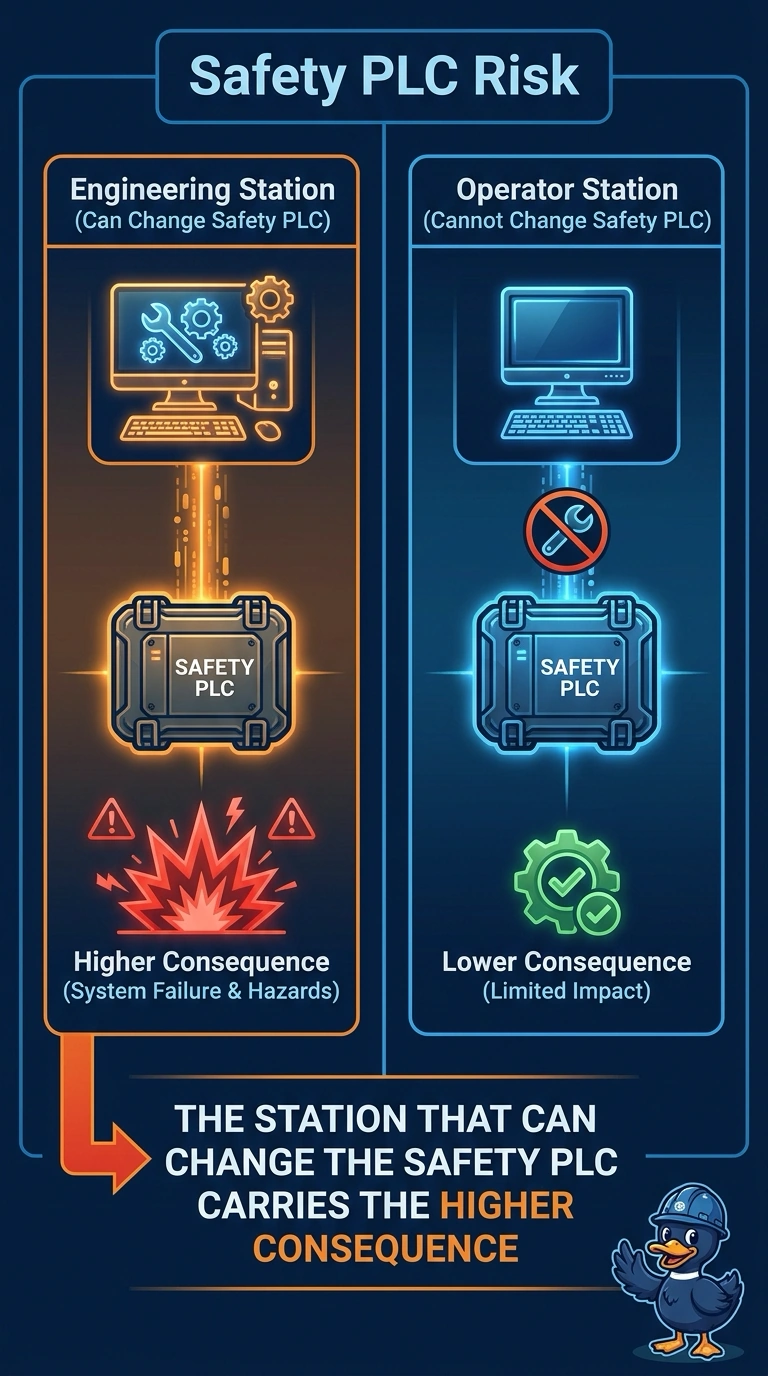
Short Explanation
Two PCs with the same cold are not the same problem when one of them can rewrite the safety system. You rank the gas-plant station higher because its role can change a safety PLC. The lobby editor can embarrass the front desk, and that is a smaller consequence.
Full Explanation
Risk is not just the exposure. It is also what a compromised host can do. These two stations share the malware exposure and the operations VLAN, so reachability does not separate them. The station that can change the gas-plant safety PLC can alter a safety function. That consequence is higher than a station that only edits lobby graphics. A public screen can leak or embarrass, and it cannot trip or reprogram the safety system. Calling the stations equal because the VLAN and the exposure match stops the analysis before the role of each host. Waiting until the safety PLC itself shows the same malware ignores the path already available: the engineering station is the machine that can write the controller. The finding on that station matters before the PLC looks infected. Exam caveat: the lobby station can still be abused, and it stays on the work list. It does not outrank a host that can change a safety controller. Operational check: confirm which station holds the safety programming tools and a path to the safety PLC, and put that station ahead of the lobby editor in the response order.