
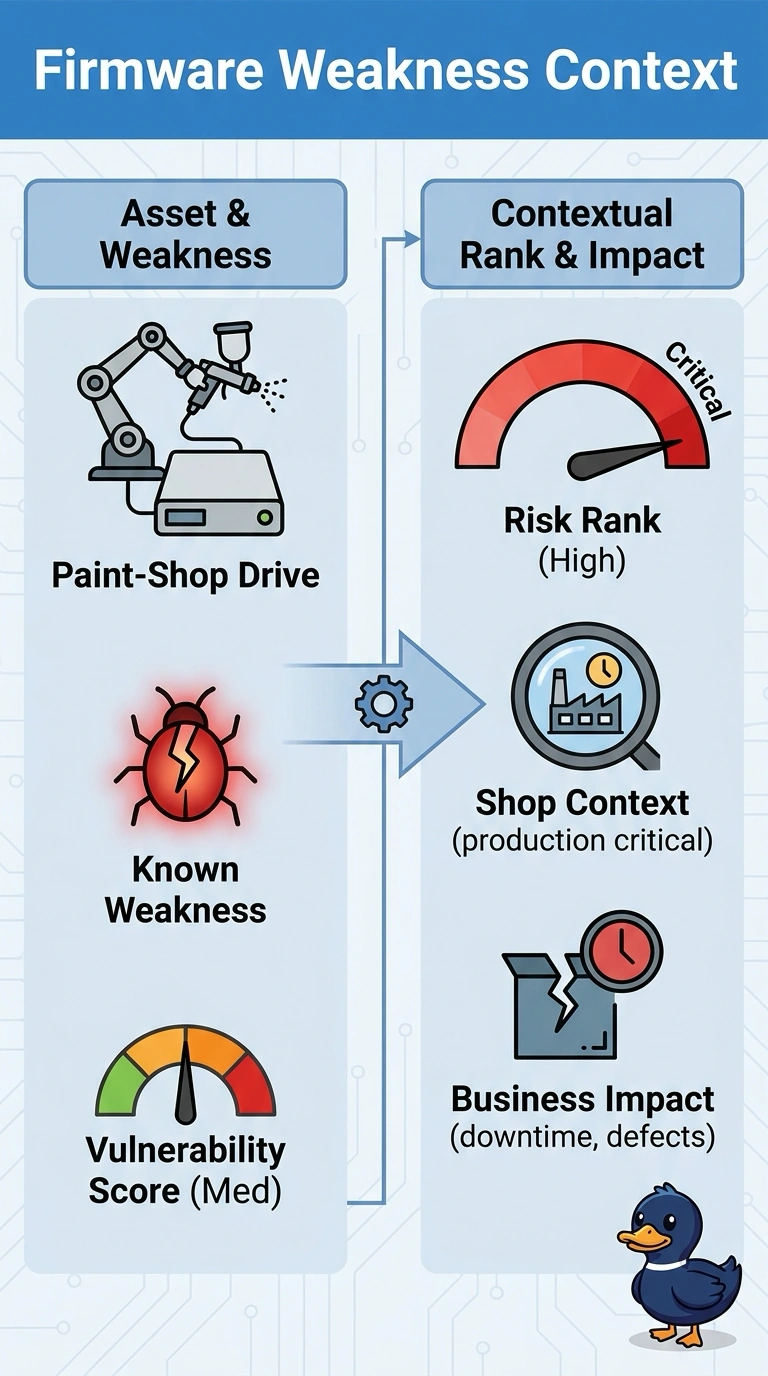
Cisco Cyber Vision associates a known vulnerability with the firmware of one paint-shop drive. No attack traffic is shown. Which reading fits?
Select an answer to reveal the explanation.
Short Explanation
A vulnerability note is a dent on one machine's nameplate, not a plant-wide evacuation order. You read it as a known weakness on this paint-shop drive and you rank it against what that drive does. No attack traffic in the report means the sensor did not claim an intrusion.
Full Explanation
Cisco Cyber Vision provides OT visibility using passive and optional active discovery; recording this vulnerability finding does not itself quarantine the drive. When it ties a known vulnerability to the firmware of one drive, the reading is that this component has a weakness you can rank against the drive's role in the paint shop. The report in this stem shows no attack traffic, so it is not claiming that someone is already using the flaw. The sensor does not quarantine a drive or stop a line. Treating the note as an automatic shutdown invents an inline action the product is not performing. One firmware note on one drive does not mean every controller on the site is compromised. Compromise is a separate observation. A duplicate address would be a different event, about two devices claiming one address, and it does not explain a vulnerability tied to firmware. Exam caveat: a vulnerability finding is not proof the flaw is unreachable, and it is not proof an attacker has succeeded. Rank this drive, then decide the maintenance action with operations. Operational check: confirm the firmware identity in the event matches the drive nameplate or the engineering record, and open a work item against that drive rather than against the whole site.