
During a live dairy packaging batch, someone plugged an unapproved contractor laptop into the cell switch. Which first response fits?
Select an answer to reveal the explanation.
Short Explanation
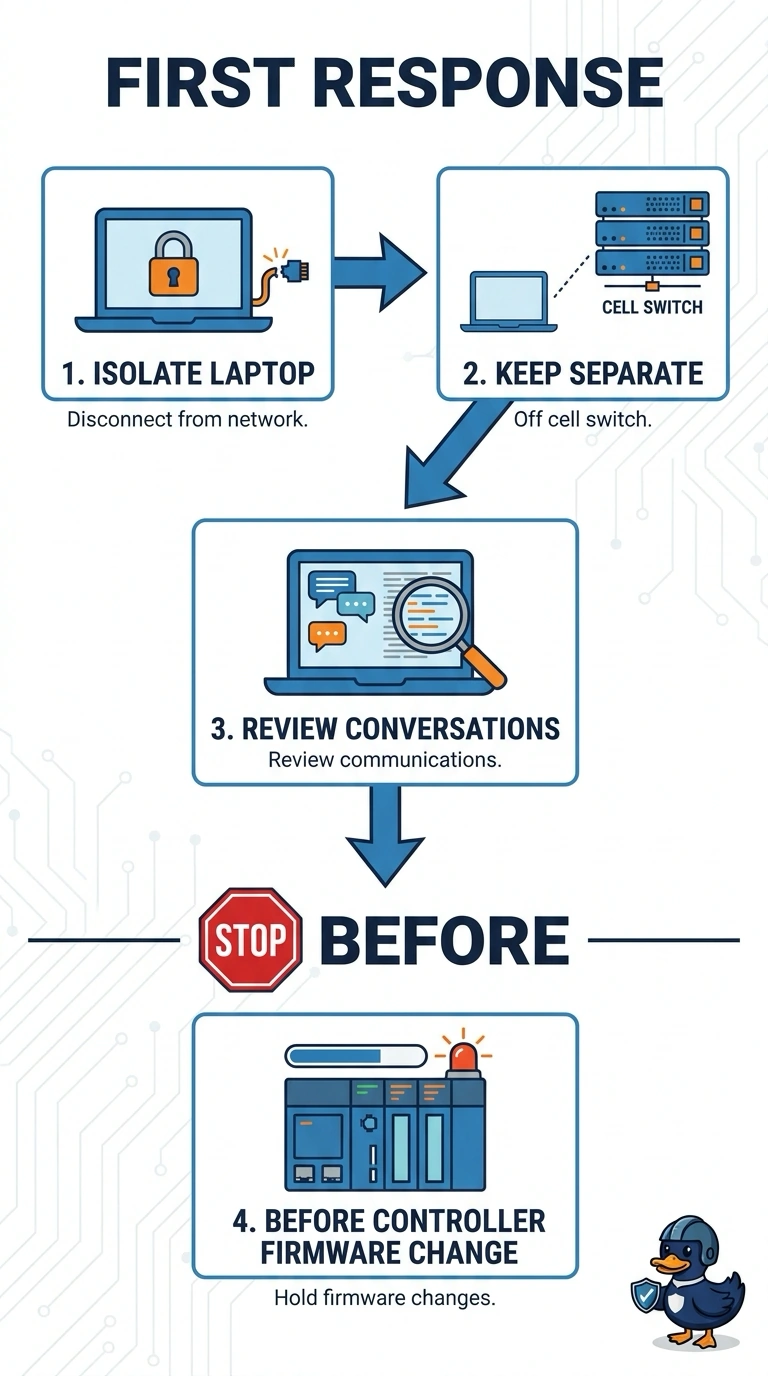
Treat the unapproved contractor laptop as an unknown visitor on the cell network: isolate it and review its conversations before considering controller firmware changes. Containment protects your live batch better than changing PLCs or probing them while production continues.
Full Explanation
An unapproved contractor laptop on a live packaging cell is an unknown host in the control network. Isolating it first stops it from continuing to communicate; reviewing its conversations identifies which controllers it reached before any controller firmware change is considered. Loading new firmware on every packaging PLC during the batch changes the machines making product, adds process risk, and does not establish what the laptop did. Leaving the laptop connected until the batch ends avoids a link change only by keeping the unknown host online, preserving the exposure rather than containing it. Running a vulnerability scan of every packaging PLC while the batch continues is an unsolicited active probe against controllers in production, not the first response to the newly connected laptop. Exam caveat: isolation means disconnecting or blocking the contractor laptop, not changing controller firmware mid-batch. Practical check: identify the cell-switch port, shut it or remove the cable, use cell logs to identify the laptop’s address and list the PLCs it contacted before deciding on a maintenance action.