
Two controllers share one vulnerability record and both are reachable from the site operations VLAN. One is the safety interlock for a pharma clean room. The other runs lobby lighting. Which risk reading fits?
Select an answer to reveal the explanation.
Short Explanation
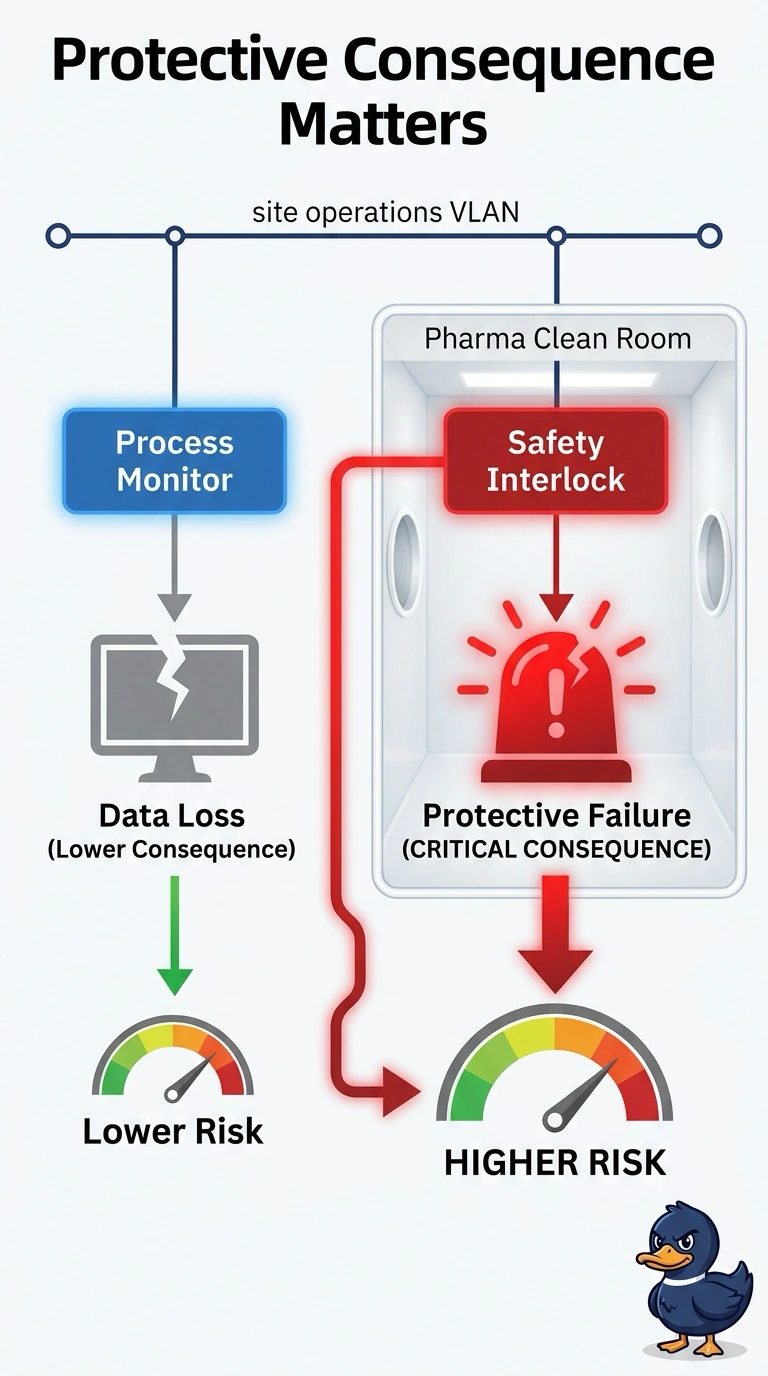
A crack in a brake line outranks the same crack in a lobby lamp. You place the clean-room safety controller higher because the consequence is loss of a protective function, and both devices are equally easy to reach. How visible the lobby lights are to visitors does not change that order.
Full Explanation
Risk here is not the vulnerability record alone. Both controllers share that record and both can be reached from the site operations VLAN, so exposure does not separate them. The clean-room safety interlock can affect a protective function if the flaw is abused. Lobby lighting cannot. The safety role raises the consequence, and that is why the interlock ranks higher. Ranking the lobby controller higher because visitors can see the lights uses publicity as a stand-in for operational impact and treats a protective function as something that can wait. Calling the risk equal stops at the matching record and the matching route, which leaves out the reason the safety controller exists. Waiting for a captured exploit packet on either VLAN confuses a vulnerability ranking with an incident already in progress. The ranking is how you decide what to treat first, and it is valid before any exploit is seen. Exam caveat: if the lobby controller were later exposed to the public internet and the safety controller were not, exposure could change the order. This stem holds reachability equal, so the protective consequence decides. Operational check: the risk register should list the clean-room safety controller ahead of the lobby controller and should name the protective function as the consequence.